


The Modern Sentinel: Navigating the World of Blank Guns and Air Rifles for Home Security
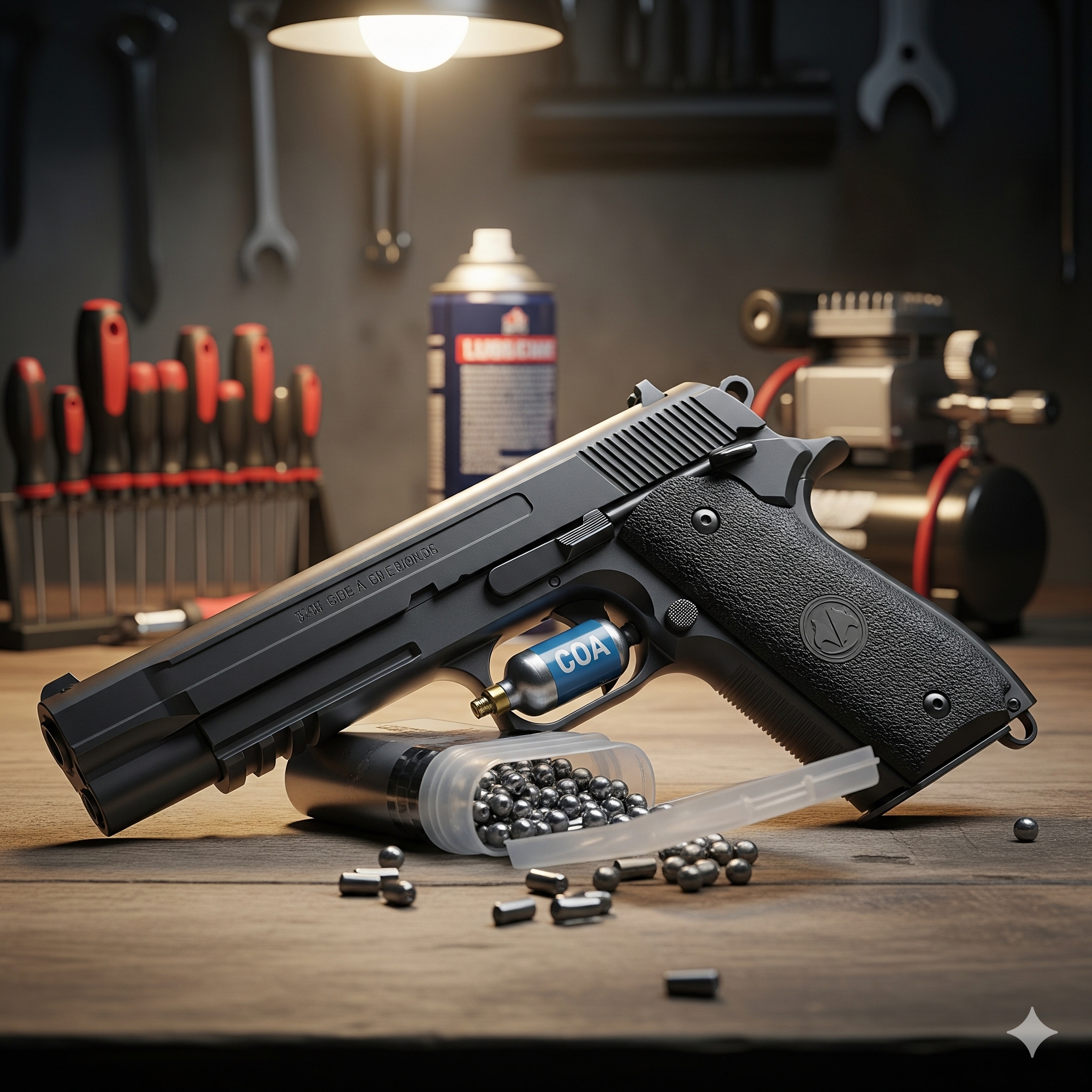
In an era where personal safety is a top priority for families and individuals alike, the market for alternative self-defense tools has expanded significantly. While traditional firearms remain a common choice, many are seeking "less-lethal" or deterrent-based options that offer protection without the extreme legal and safety complexities of live ammunition. Two of the most discussed categories in this space are blank-firing replicas and high-powered airguns.
Whether you are a homeowner looking to bolster your perimeter security or a hobbyist transitioning into the world of defensive tools, understanding the nuances of these devices is crucial. This guide explores the effectiveness, mechanics, and legalities of using a blank guns for self defence and how modern airgun technology fits into a comprehensive security strategy.
Part 1: Blank Guns – The Power of the Deterrent
A blank gun, or blank-firing pistol, is a non-lethal replica of a real firearm. It is designed to look, feel, and—most importantly—sound exactly like the real thing. Instead of a projectile, these guns fire blank cartridges filled with gunpowder that produce a deafening report and a realistic muzzle flash.
How Blank Guns Work in a Defensive Context
The primary philosophy behind using a blank gun for protection is psychological warfare. In most criminal encounters, the perpetrator is looking for an easy target. The sudden draw and discharge of a device that sounds identical to a 9mm firearm can cause an immediate "flight" response.
-
The Muzzle Flash: At night, the visual flare from a blank gun is blinding. It creates a momentary sensory overload for an intruder.
-
The Acoustic Impact: The sound level of a blank cartridge is often between 130 and 150 decibels—enough to cause temporary disorientation and alert neighbors or security services.
-
Gas-Firing Capabilities: Many modern blank guns are "front-venting," meaning they can fire pepper (OC) or tear gas (CS) cartridges. This adds a physical layer to the deterrent, deploying a cloud of irritant that can incapacitate an attacker.
Pros and Cons of Blank Guns
Pros:
-
No License Required: In many jurisdictions (like South Africa), blank guns do not require a formal firearm license, making them accessible.
-
Realistic Handling: They serve as excellent training tools for those who want to practice holster draws and malfunctions without the risk of live fire.
-
Non-Lethal Intent: They provide a way to defend oneself without the moral or legal weight of taking a life.
Cons:
-
No Projectile: If the psychological deterrent fails, you do not have a physical "stop" unless you are using pepper rounds.
-
Risk of Escalation: If an intruder is armed with a real firearm, they may return fire, believing your blank gun is a lethal threat.
Part 2: Air Rifles – Precision and Perimeter Control
While blank guns handle the "up close and loud" scenarios, the modern air gun has evolved from a backyard plinker into a serious tool for perimeter defense and pest control. High-velocity air rifles, particularly those using PCP (Pre-Charged Pneumatic) technology, offer a different kind of utility.
The Role of Airguns in Security
It is important to be direct: air rifles are generally not recommended for indoor, high-speed self-defense encounters. However, they serve a vital role in a "layered" security approach.
-
Vermin and Predator Control: Protecting your property often means defending livestock or gardens from invasive species. A high-caliber air rifle is the perfect tool for this, offering silent and precise removal.
-
Training and Marksmanship: The cost of airgun pellets is a fraction of live ammunition. Regular practice with an air rifle builds the muscle memory and "trigger squeeze" necessary for any defensive situation.
-
The Deterrent Factor: A large, scoped air rifle is a formidable sight. For patrolling a large rural property, carrying an air rifle can signal to trespassers that the property is actively monitored.
Choosing the Right Platform: Break-Barrel vs. PCP
-
Break-Barrel Rifles: These are simple and reliable. One cocking motion compresses a spring or gas piston. They are always ready but are typically single-shot.
-
PCP Rifles: These use a high-pressure air tank. They allow for multiple rapid-fire shots and much higher velocities, making them the choice for those who need power and follow-up speed.
Part 3: Legality and Responsibility
Owning these devices comes with a heavy burden of responsibility. Even though a blank gun or an air rifle may not be classified as a "firearm" in the traditional sense, they are often classified as "Dangerous Weapons" under the law.
The "Lawful Purpose" Doctrine
In many regions, you must be able to prove that you are carrying or using these tools for a lawful purpose. Self-defense is a valid reason, but brandishing a blank gun in public or using an air rifle in a reckless manner can lead to severe criminal charges.
Safety Tips for Owners:
-
Storage: Always store your blank guns and air rifles in a locked safe or case, away from children.
-
Transport: Never carry a blank gun tucked into your waistband in public. Use a proper gun bag or holster, and keep it concealed until it is needed for a legitimate emergency.
-
Identification: Ensure your air rifle is clearly distinguishable to avoid confusion with high-caliber firearms during transport.
Part 4: Building a Layered Defense Strategy
True safety doesn't come from a single tool; it comes from a system. If you are considering these options, think about how they fit together:
-
Detection: Lighting, cameras, and motion sensors are your first line.
-
Deterrence: A loud blank gun to scare off an intruder at the gate.
-
Physical Barriers: Strong locks and fencing.
-
Skill: Regular practice with your air rifle to ensure you are a capable marksman.
Conclusion: Making the Informed Choice
The decision between a blank gun and an air rifle—or choosing to own both—depends entirely on your specific environment. If you live in a dense urban area where noise and psychological deterrents are most effective, a blank-firing pistol loaded with pepper rounds is a strong contender. If you live on a farm or large plot where distance and precision are key, a high-powered air rifle is an indispensable asset.
By understanding the mechanics and limitations of these tools, you can move through the world with greater confidence, knowing you have the right tool for the right situation.
Frequently Asked Questions (FAQ)
1. Can a blank gun actually hurt someone?
Yes. While there is no bullet, the explosive gases and unburnt powder exiting the barrel are under extreme pressure. At point-blank range, a blank gun can cause severe burns, permanent hearing loss, or even fatal injuries if fired against the head or chest. Always treat a blank gun with the same respect as a lethal firearm.
2. Is it legal to use an air rifle for self-defense?
Legally, it is complicated. While you have the right to defend yourself with "proportionate force," air rifles are designed for target shooting and small game. Using one against a person could lead to legal scrutiny regarding whether the force used was necessary. Most experts recommend using air rifles for property protection (pests/vermin) and relying on dedicated self-defense tools for human threats.
3. Do blank guns jam often?
Because they rely on the pressure of the blank cartridge to cycle the slide (in semi-automatics), they can be more prone to jamming than real firearms if they are not kept clean. It is vital to use high-quality ammunition and clean the "carbon fowling" out of the barrel and chamber after every use.
4. What caliber air rifle is best for property protection?
For general property maintenance and pest control, a .22 (5.5mm) caliber is widely considered the "sweet spot." It offers more knockdown power than a .177 (4.5mm) but maintains a flatter trajectory and better accuracy than the much heavier .25 calibers.
5. Can I fire real bullets out of a blank gun?
Absolutely not. Blank guns are made from zinc alloys or materials that cannot withstand the pressure of a real bullet. Furthermore, the barrels are blocked or obstructed by design to prevent this. Attempting to modify or fire live rounds from a blank gun is illegal and will almost certainly cause the gun to explode in your hand.
6. Do I need a license for these items in South Africa?
Currently, blank-firing guns and air rifles (under a certain caliber and power limit) do not require a license under the Firearms Control Act. However, you must be 18 years or older to purchase them, and they must always be used responsibly and within the bounds of the law
Catégories
Lire la suite
What is Critical Damage Boost in Aion 2? The Critical Damage Boost node is a stat node that increases the damage of your critical hits. In Aion 2, critical hits occur when your attack lands as a “critical strike,” dealing higher damage than normal. This node does not affect your chance to land a critical; it only increases the damage once a critical happens. Node Type: Stat...

"Key Drivers Impacting Executive Summary Middle East and Africa Specialty Gas Market Market Size and Share CAGR Value The Middle East and Africa Specialty Gas market size was valued at USD 1.41 billion in 2024 and is expected to reach USD 2.08 billion by 2032, at a CAGR of 5.00% during the forecast period A few of the most important...
Dalam dunia permainan online, istilah slot gacor sudah tidak asing lagi bagi para pecinta slot. slot gacor mengacu pada permainan slot yang memiliki tingkat kemenangan tinggi atau pola yang sedang “panas”, sehingga peluang pemain untuk mendapatkan maxwin lebih besar dari biasanya. Salah satu situs yang dikenal sebagai bandar slot gacor terpercaya adalah Rajabandot, yang telah...
The rise of Large Language Models (LLMs) has dramatically changed how developers write, debug, and maintain code. What started as simple autocomplete tools has now evolved into intelligent AI pair programmers capable of understanding architecture, generating full applications, and even reviewing complex pull requests. In 2026, developers are no longer asking whether to use AI for coding —...

" Exactitude Consultancy That Adds Flavour To Your Success" Research on surgical instrument tracking. RFID and barcode solutions for hospital sterile processing. The global Surgical Instrument Tracking System Market is projected to reach USD 0.24 Billion in 2026 and USD 0.65 Billion by 2033, growing at a 15.3% CAGR. If you're looking for insights into the Surgical Instrument Tracking...