Long Lasting UPVC Ball Valve for Chemical Industries
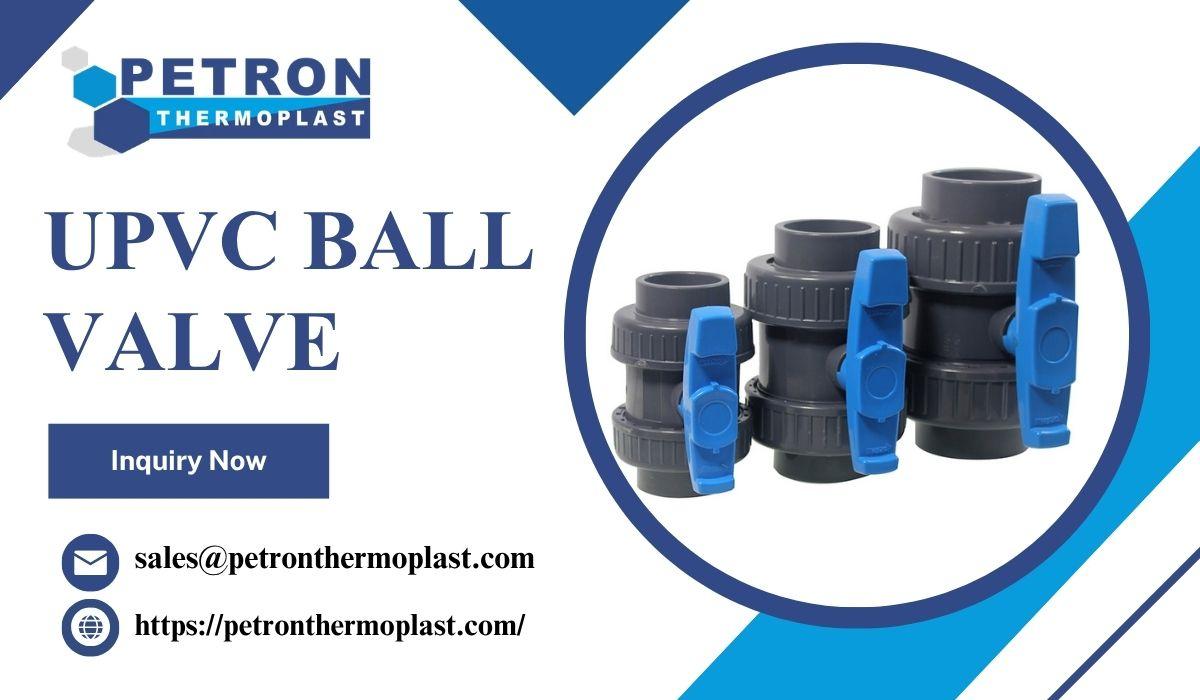
Chemical industries require highly durable and corrosion-resistant valve systems capable of handling aggressive fluids under continuous operating conditions. Among modern thermoplastic flow control solutions, UPVC ball valves are widely preferred due to their excellent chemical resistance, leak-proof performance, lightweight structure, and long operational lifespan.
At Petron Thermoplast, industrial-grade UPVC ball valves are manufactured using premium-quality thermoplastic materials engineered for demanding chemical processing environments. These valves provide reliable shut-off control, superior corrosion protection, and low maintenance operation across multiple industrial applications.
What is a UPVC Ball Valve?
A UPVC ball valve is a quarter-turn valve designed to control fluid flow through a rotating spherical ball with a central bore. When the bore aligns with the pipeline, the valve remains open, allowing fluid passage. Rotating the handle by 90 degrees closes the valve and stops the flow completely.
UPVC stands for Unplasticized Polyvinyl Chloride, a rigid thermoplastic material known for its high mechanical strength, chemical resistance, and dimensional stability.
UPVC ball valves are commonly used in:
- Chemical processing plants
- Water treatment systems
- Acid transfer applications
- Effluent treatment plants
- Industrial fluid handling systems
- Pharmaceutical industries
- Electroplating facilities
- Irrigation systems
- Industrial utility pipelines
The combination of corrosion resistance and operational simplicity makes UPVC ball valves suitable for long-term industrial service.
Importance of Long Lasting Valves in Chemical Industries
Chemical industries operate under highly corrosive conditions where valves are continuously exposed to aggressive chemicals, acids, alkalis, and solvents. Conventional metallic valves often suffer from:
- Corrosion damage
- Leakage problems
- Rust formation
- Scaling buildup
- Frequent maintenance requirements
- Reduced operational lifespan
UPVC ball valves eliminate these issues by offering non-corrosive construction and excellent resistance against chemical attack. Long-lasting valve systems help industries achieve:
- Reduced maintenance costs
- Improved process reliability
- Lower downtime
- Enhanced operational safety
- Better fluid control efficiency
The durability of UPVC valves makes them highly cost-effective for continuous industrial operations.
Key Features of UPVC Ball Valves
Excellent Chemical Resistance
UPVC ball valves provide outstanding resistance against corrosive chemicals, acids, alkalis, and industrial fluids. The material does not rust, oxidize, or degrade easily under normal operating conditions.
Long Operational Life
The corrosion-resistant thermoplastic structure significantly increases valve lifespan compared to metallic alternatives.
Leak-Proof Performance
Precision-engineered sealing systems ensure tight shut-off and minimize fluid leakage during operation.
Lightweight Construction
UPVC valves are lightweight and easy to handle, simplifying installation and reducing pipeline load stress.
Smooth Flow Characteristics
The full-port ball design enables unrestricted flow with minimal pressure drop.
Low Maintenance Requirements
UPVC valves require very little maintenance because they are resistant to scaling, corrosion, and chemical degradation.
Easy Operation
Quarter-turn operation allows fast opening and closing for efficient process control.
Technical Specifications of UPVC Ball Valves
Petron Thermoplast manufactures industrial UPVC ball valves according to international quality standards for chemical and industrial fluid handling systems.
Standard Technical Parameters
|
Parameter |
Specification |
|
Material |
UPVC |
|
Valve Type |
Ball Valve |
|
Operation |
Manual / Pneumatic |
|
Size Range |
15 mm to 100 mm |
|
Pressure Rating |
PN10 / PN16 |
|
Temperature Range |
Up to 60°C |
|
Sealing Material |
PTFE / EPDM |
|
End Connection |
Threaded / Socket / Flanged |
|
Applications |
Chemicals, Water, Acids, Alkalis |
Types of UPVC Ball Valves
Single Union Ball Valve
Single union valves allow convenient installation and maintenance while providing secure sealing performance.
Double Union Ball Valve
Double union valves simplify valve removal and replacement without disturbing the entire pipeline system.
Flanged Ball Valve
Flanged UPVC ball valves are suitable for larger industrial piping systems requiring strong bolted connections.
Actuated Ball Valve
Pneumatic and electric actuated UPVC ball valves are used in automated industrial process systems.
Applications in Chemical Industries
Acid Handling Systems
UPVC ball valves are widely used for handling hydrochloric acid, sulfuric acid, phosphoric acid, and other corrosive chemicals.
Chemical Transfer Pipelines
The valves provide safe and reliable fluid control in chemical transportation networks.
Water Treatment Plants
UPVC valves are suitable for dosing systems, filtration plants, and wastewater treatment applications.
Electroplating Industries
Acidic and alkaline process fluids used in electroplating operations require corrosion-resistant valves for long-term reliability.
Pharmaceutical Manufacturing
Chemical compatibility and contamination resistance make UPVC valves suitable for compatible pharmaceutical fluid systems.
Fertilizer and Process Industries
Industrial process plants handling corrosive media benefit from durable thermoplastic valve systems.
Advantages of UPVC Ball Valves Over Metal Valves
Corrosion-Free Operation
Unlike metal valves, UPVC valves do not rust or corrode when exposed to moisture and chemicals.
Lower Maintenance Costs
The absence of corrosion significantly reduces maintenance and replacement expenses.
Better Chemical Compatibility
UPVC material is compatible with a wide range of industrial chemicals and corrosive fluids.
Lightweight Design
The lower weight simplifies installation and reduces structural support requirements.
Long-Term Reliability
UPVC ball valves maintain consistent operational performance over extended service periods.
Factors to Consider While Selecting UPVC Ball Valves
Chemical Compatibility
Always confirm compatibility between the valve material and the process fluid before installation.
Operating Pressure
Select valves according to pipeline pressure ratings and process conditions.
Temperature Conditions
UPVC valves are suitable for moderate temperature applications. Higher temperatures may require CPVC or PVDF alternatives.
Valve Size
Proper valve sizing improves flow efficiency and system performance.
Automation Requirements
Automated systems may require pneumatic or electric actuated valves for remote operation.
Why Industries Prefer Petron Thermoplast UPVC Ball Valves?
Petron Thermoplast supplies high-quality UPVC ball valves designed for industrial chemical handling applications. The company manufactures precision-engineered thermoplastic valves capable of delivering reliable long-term performance under corrosive operating conditions.
Advantages Offered by Petron Thermoplast
- Premium-grade UPVC materials
- Excellent corrosion protection
- Leak-proof valve design
- Precision manufacturing standards
- Wide product range availability
- Industrial-grade pressure handling capability
- Customized flow control solutions
- Reliable technical support and fast delivery
The company also manufactures and supplies:
- UPVC Pipe Fittings
- CPVC Valves
- PVDF Valves
- PP Valves
- HDPE Piping Systems
- Butterfly Valves
- Chemical Storage Tanks
Installation Guidelines for UPVC Ball Valves
Proper installation practices are essential for maintaining long service life and operational efficiency.
Recommended Installation Practices
- Ensure correct pipeline alignment
- Avoid excessive tightening during installation
- Use compatible sealing materials
- Protect valves from excessive mechanical stress
- Perform pressure testing before operation
- Maintain recommended support spacing for pipelines
Correct installation reduces the risk of leakage and operational failures.
Maintenance Recommendations
UPVC ball valves require minimal maintenance compared to metallic valve systems.
Preventive Maintenance Tips
- Periodically inspect valve seals
- Operate valves regularly to prevent sticking
- Clean external surfaces when required
- Monitor pressure and temperature conditions
- Replace worn sealing components when necessary
Routine inspection helps maintain long-term operational reliability.
Growing Demand for Thermoplastic Valves
Modern chemical industries are increasingly shifting toward thermoplastic valve systems due to rising corrosion problems associated with metal components. UPVC ball valves continue to gain popularity because of:
- Lower maintenance requirements
- Improved chemical resistance
- Cost-effective operation
- Long service life
- Lightweight installation advantages
Industrial sectors such as water treatment, chemical manufacturing, pharmaceuticals, and process engineering are driving strong demand for corrosion-resistant thermoplastic flow control products.
Conclusion
Long-lasting UPVC ball valves provide reliable and economical solutions for chemical industries requiring corrosion-resistant and maintenance-free flow control systems. Their superior chemical compatibility, leak-proof sealing, lightweight structure, and extended operational lifespan make them ideal for demanding industrial environments.
Petron Thermoplast manufactures high-performance UPVC ball valves engineered for continuous industrial operation in corrosive chemical applications. With advanced manufacturing expertise and a comprehensive range of thermoplastic piping solutions, the company delivers durable and efficient valve systems designed for modern industrial requirements.
Κατηγορίες
Διαβάζω περισσότερα
Microsoft has unveiled a pair of recovery capabilities for Windows 11 during its Ignite developer conference, introducing Cloud Rebuild alongside Point-in-Time Restore (PITR). These innovations target minimizing operational disruptions while simplifying the process of bouncing back from update complications or system malfunctions. Both tools form part of Microsoft's broader Windows...

Art Therapy Courses – A Complete Guide by Happy Labs Introduction Have you ever felt like words weren’t enough to express how you feel? Maybe you’ve struggled to explain emotions, or perhaps you’ve found comfort in painting, music, or doodling. That’s where art therapy steps in—like a bridge between emotions and expression. Today, expressive art therapy...

The latest business intelligence report released by Polaris Market Research on Hospital Outsourcing Market Size, Share, Trends, Industry Analysis Report: By Hospital Size (Small & Medium Hospitals and Large Hospitals), Hospital, End User, and Region (North America, Europe, Asia Pacific, Latin America, and Middle East & Africa) – Market Forecast, 2025–2034. It covers the...

The security cameras market is poised for substantial growth, projected to reach a market size of USD 85.18 billion by 2035, expanding at a compound annual growth rate (CAGR) of 18.30% from 2024 to 2035. This dramatic influx can be attributed to rising global security concerns and the proliferation of smart technology. As governments and private sectors alike prioritize surveillance...

"Executive Summary Synchronous Drum Market Opportunities by Size and Share CAGR Value The global synchronous drum market size was valued at USD 1.27 billion in 2024 and is expected to reach USD 4.58 billion by 2032, at a CAGR of 17.3% during the forecast period Synchronous Drum Market research report is a verified and consistent source of information that puts forth a telescopic view...