Value Proposition ROI Calculator: Understanding ROI and Value Clearly
Understanding how a value proposition ROI calculator works is one of the simplest ways to learn how businesses measure value. For beginners, the key idea is this: while a value proposition explains why something is useful, ROI explains how much it is worth in measurable terms.
Structured approaches like the QKS ROI Benchmark Framework™ help translate value into financial outcomes such as cost savings, revenue impact, or efficiency gains. When combined with ROI calculators, they allow teams to clearly show the return on investment instead of relying on general claims.
These approaches are gaining popularity because decision-makers increasingly expect clear financial justification. ROI claims are often questioned unless they are supported by structured and validated data.
What ROI is and how it is calculated
ROI (Return on Investment) measures how much value you gain compared to what you spend. To understand the meaning of ROI percentage, let’s look at the ROI formula.
The basic formula is:
ROI = (Return – Investment) ÷ Investment
Here’s a simple example:
- Investment = $1,000
- Return = $1,300
- Profit = $300
ROI = 300 ÷ 1,000 = 0.3 or 30%
A 30% ROI means you gained 30% more than your original investment.
ROI calculators simplify this process. Instead of doing manual calculations, they help estimate returns by considering factors like cost savings, revenue increases, and efficiency improvements.
Difference between ROI and value proposition
A common point of confusion is ROI vs value proposition. While they are related, they serve different purposes.
Value proposition
This explains the benefit of a product or service. It answers the question: “Why should someone use this?”
For example:
- “This tool saves time.”
- “This solution improves efficiency.”
ROI
This quantifies the benefit. It answers the question: “How much value does it create?”
For example:
- “This tool saves 10 hours per week.”
- “This solution reduces costs by 20%.”
In simple terms:
- Value proposition is qualitative (descriptive)
- ROI is quantitative (measurable)
Both are important. A strong value proposition attracts interest, while ROI helps justify the investment.
Frameworks like the QKS ROI Benchmark Framework™ bridge this gap by turning value propositions into measurable outcomes. They provide:
- Benchmark-backed ROI insights for stronger credibility.
- Validated financial assumptions aligned with real outcomes.
- Aggregated data that supports consistent decision-making.
This makes it easier to move from “this is useful” to “this delivers measurable value.”
What a 30% ROI means in practice
A 30% ROI means that you earn 30% more than your initial investment. So, for every $100 invested, you gain $30.
For example:
- Investment = $10,000
- Return = $13,000
- Profit = $3,000
This is considered a strong return in many business contexts, but it always depends on factors such as:
- Risk level
- Timeframe
- Size of the investment
For instance:
- A 30% ROI over one year is different from 30% over five years.
- A low-risk investment with 30% ROI is more attractive than a high-risk one.
This is why ROI should always be viewed in context instead of viewing it in isolation.
Using a value proposition ROI calculator helps provide that context. It connects the value being offered with measurable outcomes, making it easier to understand whether the return is meaningful.
Conclusion
A value proposition ROI calculator helps bridge the gap between explaining value and proving it. Evaluating business decisions can be made simple by using an ROI formula, understanding ROI vs value proposition, and interpreting metrics. By quantifying the potential gains and comparing them with the initial investment, organizations can make informed decisions that are both strategic and evidence-based.
Furthermore, using such calculators allows stakeholders to visualize the tangible benefits of a proposal, facilitating clearer communication and consensus among decision-makers. When integrated into business processes, these tools encourage a disciplined evaluation of opportunities and help set realistic expectations for future returns.
Categorias
Leia mais
The Daman Game has turned into a popular digital entertainment option for those who enjoy simple and engaging online games. It was created to be straightforward, allowing both beginners and experienced players to participate without complicated rules. Many users are attracted to the platform due to the quick gameplay, colorful interface, and accessibility through mobile devices. As online...

Market Overview The global automotive silicone market is witnessing healthy expansion as automakers prioritize lightweight materials, durability, and enhanced vehicle performance. According to Polaris Market Research, the market was valued at USD 2.18 billion in 2021 and is projected to reach USD 3.80 billion by 2030, growing at a CAGR of 6.9% during the forecast period....

In today’s fast-paced digital world, businesses rely heavily on technology to operate smoothly. Any unexpected downtime can lead to lost productivity and revenue. That’s why having access to 24/7 IT support Melbourne is essential for companies of all sizes. круглосуточная support ensures that technical issues are resolved quickly, minimizing disruptions and keeping operations...
Togel HK is a topic that draws significant attention in many online communities where people discuss number-based entertainment, statistical habits, and the cultural background surrounding Hong Kong–style lottery formats. Over the years, the term has become widely recognized, often appearing in conversations where individuals talk about numerical outcomes, draw schedules, and...

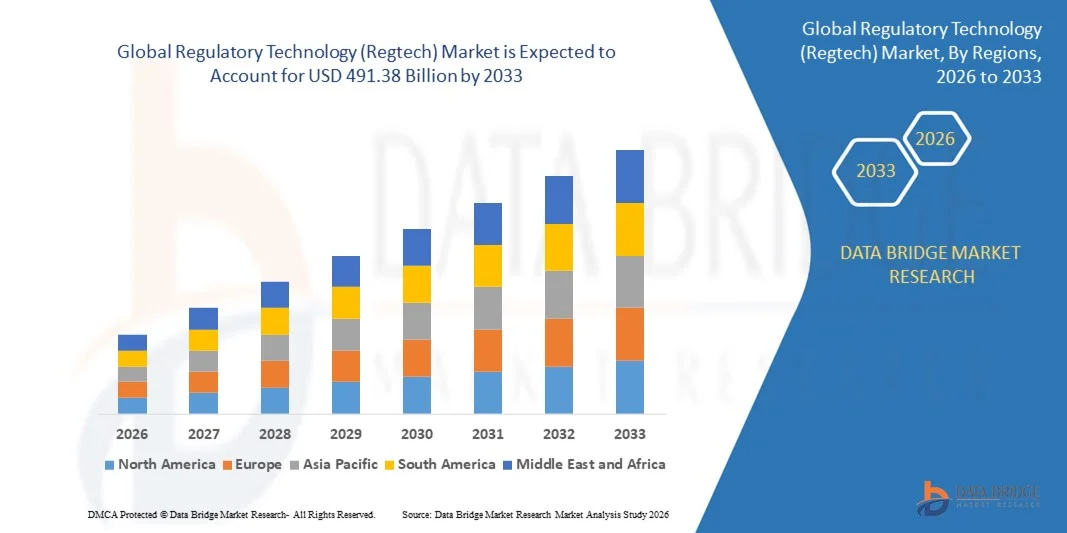
"Regulatory Technology (Regtech) Market Summary: According to the latest report published by Data Bridge Market Research, the Regulatory Technology (Regtech) Market The global regulatory technology (Regtech) market size was valued at USD 16.57 billion in 2025 and is expected to reach USD 491.38 billion by 2033, at a CAGR of 52.75% during the forecast...