


Safeguarding Industrial Longevity: The Science of Modern Scale Inhibition

Industrial water systems are the lifeblood of global manufacturing, power generation, and municipal infrastructure. However, these systems face a constant, silent adversary: the formation of mineral scale. When water containing high concentrations of calcium, magnesium, and silica is subjected to changes in temperature or pressure, these minerals precipitate and bond to internal surfaces. The antiscalants scale inhibitors market provides the essential chemical solutions needed to arrest this process, ensuring that heat exchangers, boilers, and reverse osmosis membranes remain free of restrictive deposits. As industries move toward high-recovery water recycling and more aggressive operating environments, these specialized inhibitors have transitioned from simple additives to critical components of operational reliability and environmental sustainability.
The Mechanism of Mineral Defense
The primary function of an antiscalant is to interfere with the natural crystallization process of minerals in water. Unlike traditional acid cleaning, which removes scale after it has already formed, inhibitors work proactively through several sophisticated chemical pathways.
-
Threshold Inhibition: This is perhaps the most efficient mechanism, where the inhibitor interferes with the initial nucleation of crystals. Even at extremely low concentrations, these chemicals keep scale-forming salts in a "supersaturated" state, preventing them from precipitating out of the water.
-
Crystal Modification: When crystals do begin to form, inhibitors bond to the crystal surface, distorting its natural shape. Instead of forming a hard, interlocking structure that adheres to metal surfaces, the minerals become "soft" and irregular, making it nearly impossible for them to stick to equipment.
-
Dispersion: Advanced formulations act as dispersants, giving the incipient mineral particles a negative charge. This causes them to repel each other and stay suspended in the water column, eventually being carried out of the system in the reject stream rather than settling on sensitive membranes or pipes.
Driving Force: The Rise of Desalination and RO Technology
A significant driver of the scale inhibitor sector is the global expansion of Reverse Osmosis (RO) technology. As freshwater scarcity intensifies, industries and municipalities are increasingly turning to seawater and brackish water desalination.
RO membranes are extremely sensitive to fouling. Even a microscopic layer of scale can significantly increase the pressure required to move water through the membrane, leading to higher energy costs and potential membrane failure. Modern antiscalants allow these systems to operate at much higher recovery rates—extracting more clean water from a single gallon of feed—by preventing the highly concentrated minerals in the reject stream from scaling.
Industry-Specific Challenges: From Oilfields to Power Plants
Different industrial environments present unique scaling challenges, necessitating a diverse range of chemical formulations.
-
Oil and Gas: In "produced water" and water-flooding operations, scale inhibitors must remain stable under extreme pressure and temperatures often exceeding 100°C. They must also work in environments with incredibly high salinity, where traditional chemicals would simply fail.
-
Power Generation: In cooling towers and boilers, scale acts as an insulator. Even a thin layer of calcium carbonate can drastically reduce the heat transfer efficiency of a boiler, forcing the plant to burn more fuel to achieve the same temperature. Scale inhibitors are essential here for maintaining thermal efficiency and reducing carbon footprints.
-
Mining and Minerals: Mining operations often use low-quality water for processing and transport. Without robust inhibitors, the pipes and pumps used to move slurries would quickly become clogged with mineral deposits, leading to expensive downtime and manual cleaning.
The Shift Toward Green Chemistry
As environmental regulations tighten globally, the industry is witnessing a major shift toward biodegradable and phosphorus-free formulations. Traditional phosphonates and polyacrylates, while highly effective, can contribute to nutrient loading in wastewater, leading to environmental issues like algae blooms.
The next generation of "green" antiscalants utilizes natural polymers such as lignin, starch, and biodegradable polysaccharides. These bio-based inhibitors are designed to provide high-level protection during the industrial process but break down quickly and safely once they are discharged into the environment. This evolution is allowing companies to meet their environmental, social, and governance (ESG) goals without sacrificing the protection of their capital equipment.
Digital Dosing and Real-Time Monitoring
The integration of digital technology is further optimizing the use of these chemicals. Gone are the days of "fixed-rate" dosing. Modern water treatment systems now use in-situ sensors and real-time analytics to measure the exact scaling potential of the water at any given moment.
These "smart" systems can automatically adjust the dosage of scale inhibitors in response to changes in feedwater quality or temperature. This precision not only ensures maximum protection during high-risk periods but also prevents the waste of chemical products during periods of low scaling risk, representing a significant step forward in both cost-efficiency and chemical management.
Conclusion: Protecting the Future of Water Management
The antiscalants and scale inhibitors market represents a fundamental intersection of chemistry and engineering. By mastering the micro-level behavior of mineral crystals, these solutions allow for the macro-level operation of our most vital industrial systems. As the world continues to industrialize and the need for efficient water reuse grows, the ability to prevent scale will remain a cornerstone of global infrastructure maintenance. Through a combination of advanced chemical synthesis, eco-friendly innovation, and digital precision, these inhibitors ensure that the world’s most critical machinery continues to run smoothly, efficiently, and sustainably.
Explore additional reports to understand evolving market landscapes:
Categorias
Leia mais
The WB is making a major push into theatrical films, committing to a multimillion-dollar package for New Line’s Lord of the Rings trilogy in a shared, decade-long network window with Turner’s TBS and TNT. The minimum fee for the three films is about $75 million, but the overall price could climb to roughly $160 million or more depending on the sequels’ box-office returns;...

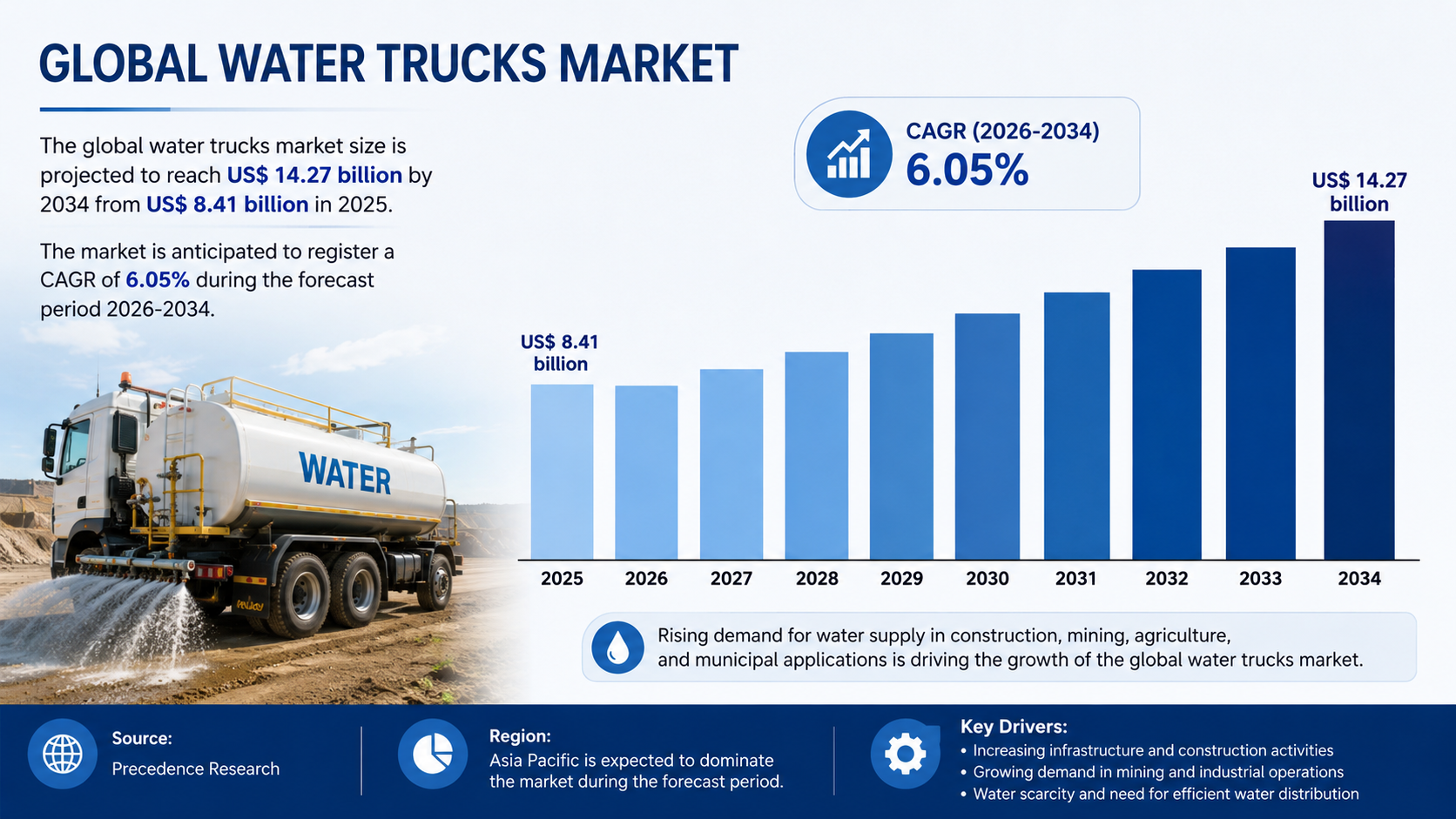
The global water trucks market size is projected to reach US$ 14.27 billion by 2034 from US$ 8.41 billion in 2025. The market is anticipated to register a CAGR of 6.05% during the forecast period 2026-2034. This significant growth is driven by the increasing demand across various industrial sectors, including construction, mining, and agriculture, where dust suppression and...
Crawl spaces are often overlooked areas of a home, yet they play a crucial role in maintaining structural integrity and indoor air quality. Excess moisture in your crawl space can lead to mold, wood rot, and even foundation issues. Many homeowners in Newton, MA, searching for crawl space waterproofing contractors in Newton, MA want solutions that not only protect their home but also...

Electric mobility is steadily reshaping India’s transportation ecosystem as businesses adopt cleaner and more economical alternatives. With increasing operational costs and growing environmental concerns, electric vehicles (EVs) are becoming a smart choice for both passenger travel and cargo movement. For urban transport, electric 3 wheeler passenger vehicles provide an efficient solution...

The Light Fidelity (Li-Fi) Devices Market is emerging as a transformative segment within the global wireless communication landscape. As data consumption accelerates and spectrum congestion intensifies, Li-Fi technology is gaining traction as a high-speed, secure, and energy-efficient alternative to traditional radio-frequency-based wireless systems such as Wi-Fi. By leveraging...