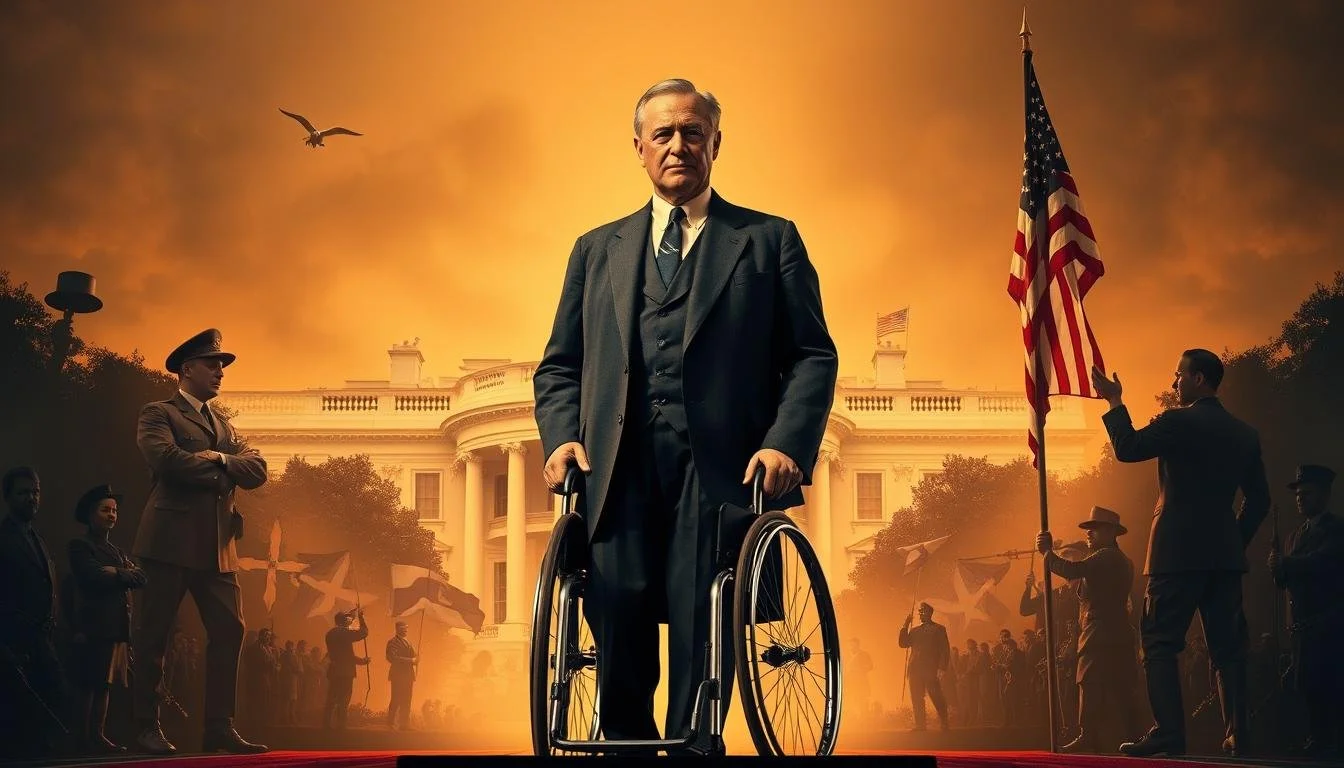
Franklin D. Roosevelt, often known simply as FDR, holds a unique place in American history as the only president to serve four consecutive terms. His presidency, spanning from 1933 to 1945, redefined the nature of political leadership, reshaped the United States during two of its darkest periods—the Great Depression and World War II—and left behind a legacy that permanently altered the structure of American democracy. FDR’s unprecedented four-term presidency was not just a political phenomenon but a reflection of the trust and faith the American people placed in him during unparalleled national crises.
1. The Nation in Turmoil: Why America Needed FDR
When Franklin D. Roosevelt assumed office in 1933, the country was in the depths of the Great Depression. Unemployment had skyrocketed to nearly 25%, banks were failing, and millions of Americans had lost their homes and life savings. The economic collapse had shaken public confidence in both capitalism and the government itself.
FDR’s first term marked a period of immediate, bold action. His New Deal—a sweeping series of programs, public work projects, and financial reforms—aimed to stabilize the economy, provide relief to struggling citizens, and restore faith in the nation’s institutions. Through policies like the Civilian Conservation Corps (CCC), the Works Progress Administration (WPA), and Social Security, Roosevelt rebuilt the economic foundation of the country.
By the end of his second term, many Americans viewed him not just as a politician but as a symbol of hope and progress. He had guided the country through economic ruin and helped millions regain stability. His leadership style, marked by optimism and compassion, made him deeply beloved by the public. When 1940 approached, voters faced a crucial decision—whether to maintain the two-term tradition or re-elect the man they trusted most.
2. Breaking Tradition: The Historic Third Term
Before Roosevelt, no president had ever sought more than two terms in office. The tradition was set by George Washington, who voluntarily stepped down after his second term in 1797, establishing a precedent for peaceful transfer of power. This unwritten rule became an integral part of American political culture, seen as a safeguard against tyranny.
However, 1940 was not a typical year. The world was on the brink of global conflict. In Europe, Adolf Hitler’s Germany was expanding rapidly, and World War II was well underway. Although the United States was still neutral, Roosevelt recognized that the war could soon involve America. He believed that his experience and steady leadership were essential in preparing the nation for what was to come.
Many citizens agreed. The fear of war, combined with Roosevelt’s popularity and proven leadership, made him the natural choice for another term. When he announced his candidacy for a third term, it shocked the political establishment but was widely supported by ordinary Americans. He ran against Republican Wendell Willkie and won decisively, breaking the 150-year-old two-term precedent.
3. Leading Through World War II: The Fourth Term
By the time Roosevelt’s third term was ending in 1944, the United States was deeply involved in World War II. The war had completely transformed the nation—factories were producing weapons and supplies, the economy was booming again, and millions of Americans were serving overseas. Despite declining health, Roosevelt decided to run for a fourth term, arguing that changing leadership during wartime could jeopardize victory and peace.
The American people once again placed their trust in him. His opponent, Thomas E. Dewey, represented a younger generation of politicians, but voters chose continuity over change. Roosevelt’s global leadership and his close relationships with Allied leaders like Winston Churchill and Joseph Stalin made him indispensable during this pivotal moment in world history.
Tragically, Roosevelt did not live to see the full fruits of victory. He died in April 1945, just months before the war ended. His death shocked the nation and marked the end of an era. Nevertheless, his leadership through crisis had already cemented his place as one of the most influential presidents in U.S. history.
4. The Public’s Trust and FDR’s Leadership Style
One of the most remarkable aspects of FDR’s four-term presidency was the depth of public trust he commanded. Through his “Fireside Chats”—radio broadcasts that spoke directly to citizens in plain language—Roosevelt created an emotional bond with the American people. He explained complex policies in ways that made ordinary Americans feel involved and reassured. His calm, confident tone during times of uncertainty made him a source of strength for millions.
Roosevelt’s ability to communicate effectively was matched by his political skill. He built a powerful coalition of farmers, workers, minorities, and intellectuals, known as the New Deal Coalition, which dominated American politics for decades. His combination of compassion and pragmatism allowed him to maintain support across social and political divides.
5. Criticism and Concerns Over Power
Despite his achievements, Roosevelt’s decision to serve more than two terms was not without controversy. Critics accused him of consolidating too much power and undermining the democratic tradition of leadership rotation. Some opponents warned that allowing one person to hold office for too long could lead to authoritarianism.
However, FDR himself never showed signs of dictatorial ambition. He operated within the boundaries of democracy and relied on Congress, the courts, and the Constitution to implement his policies. His repeated electoral victories were the result of free and fair elections, demonstrating that his extended presidency reflected the people’s will, not political manipulation.
6. The Legacy: Birth of the 22nd Amendment
After Roosevelt’s death, political leaders and citizens began debating whether any future president should be allowed to serve more than two terms. The fear of an overextended executive branch led to the passage of the 22nd Amendment to the U.S. Constitution in 1951. The amendment officially limited presidents to two terms, ensuring that FDR’s unprecedented tenure would remain unique in American history.
This amendment became a direct result of Roosevelt’s presidency. While many admired his leadership, they also recognized the need for clear boundaries in democratic governance. The 22nd Amendment restored the balance between continuity and accountability in presidential power.
7. A Legacy That Endures
Franklin D. Roosevelt’s four-term presidency remains a defining chapter in American history. His leadership not only transformed the country’s economy and global standing but also expanded the role of the federal government in citizens’ lives. From creating Social Security to guiding the world through war, Roosevelt reshaped the modern presidency into an institution of proactive, visionary leadership.
Even today, historians and political scientists study his presidency to understand how one leader could earn the nation’s trust across four elections. His success reflected both his personal charisma and his ability to rise to the challenges of his time. Few leaders have faced crises of such magnitude, and even fewer have emerged with such enduring respect.
8. Conclusion: The Man Who Redefined the Presidency
FDR’s unprecedented four-term presidency was a product of extraordinary circumstances, national confidence, and global challenges. In times of deep despair and war, the American people turned to Roosevelt not once, but four times, believing in his vision and leadership. His presidency redefined the limits of executive power, inspired the creation of constitutional safeguards, and left behind a blueprint for leadership during crisis.
While the 22nd Amendment ensures that no future president will repeat his four-term tenure, Roosevelt’s impact on American politics and society endures. His courage, innovation, and empathy continue to symbolize what effective leadership looks like in the face of adversity—a reminder that great leaders rise when their nations need them most.