


Why Are My Period Cramps Getting Worse With Age?
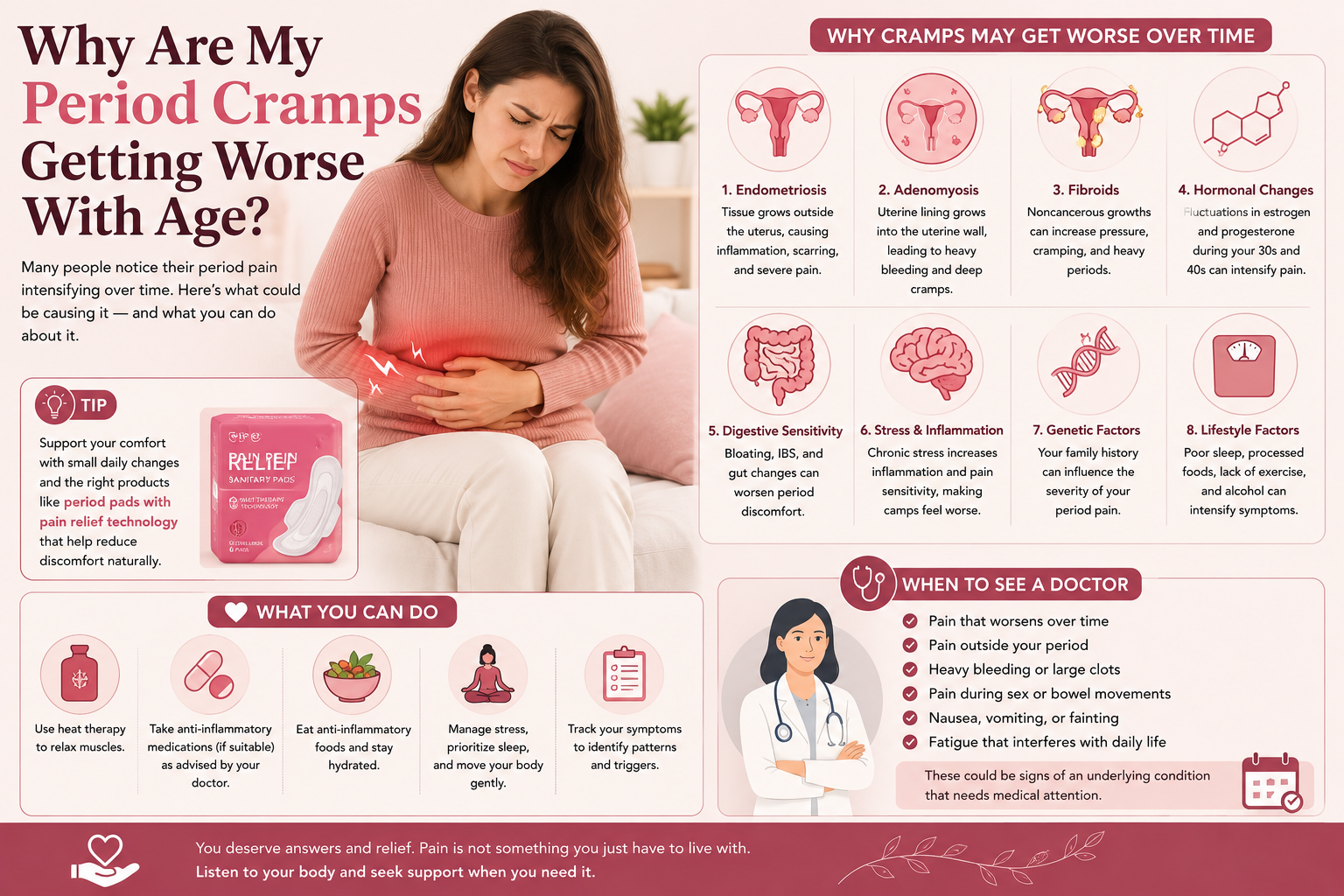
Many people assume period cramps should improve as they get older. So when cramps suddenly become more intense in your late 20s, 30s, or even 40s, it can feel confusing and concerning. If you have noticed worsening period cramps over time — stronger pain, heavier bleeding, nausea, fatigue, or pain that lasts longer than it used to — you are not imagining it, and you are certainly not alone.
In practice what often happens is that people normalize worsening symptoms because the changes happen gradually. A cycle that once caused mild discomfort may slowly evolve into one that disrupts sleep, work, social plans, or physical activity. Some individuals try supportive measures such as heat therapy, lifestyle adjustments, and products like period pads with pain relief technology while they figure out what may be contributing to the increased pain.
It is worth noting that worsening cramps are not always caused by aging itself. Many discussions around natural approaches to menstrual pain management and supplementation highlight that hormonal shifts, inflammation, stress, and underlying reproductive conditions often play a much larger role than age alone.
Are Period Cramps Supposed to Get Worse With Age?
The answer is complicated because menstrual experiences vary widely between individuals.
Some people notice improvement in cramps after adolescence, while others experience increased pain as they move through adulthood. Based on how this typically works, worsening cramps are often linked to changes in hormones, reproductive health conditions, or lifestyle factors rather than simply “getting older.”
A common mistake people make is assuming severe cramps are automatically normal if they have always had painful periods. Pain that becomes progressively more intense deserves attention, especially if it starts interfering with daily life.
Why Period Cramps Can Change Over Time
Hormones naturally shift throughout adulthood. Stress levels, sleep quality, inflammation, diet, pregnancy history, and medical conditions can all influence menstrual symptoms.
Over time, these factors may affect:
- Prostaglandin production
- Uterine contractions
- Blood flow
- Digestive sensitivity
- Pain perception
- Hormonal balance
This is one reason period symptoms often feel different at different stages of life.
One Common Cause: Endometriosis
Endometriosis is one of the leading reasons period pain worsens over time.
This condition occurs when tissue similar to the uterine lining grows outside the uterus. The tissue still responds to hormonal changes each month, which can create inflammation, scar tissue, and significant pain.
In practice what often happens is that endometriosis symptoms slowly intensify for years before diagnosis. Many people are initially told their cramps are “just bad periods,” even when symptoms become severe.
Symptoms may include:
- Intense cramps
- Pain during intercourse
- Heavy bleeding
- Digestive discomfort
- Fatigue
- Lower back pain
- Pain during bowel movements
It is worth noting that endometriosis severity does not always match imaging results. Some people with minimal visible lesions experience severe pain, while others with extensive disease have milder symptoms.
Adenomyosis Can Also Develop With Age
Adenomyosis occurs when tissue from the uterine lining grows into the muscular wall of the uterus.
This condition becomes more common during the later reproductive years and may cause:
- Heavy bleeding
- Deep cramping
- Pelvic pressure
- Enlarged uterus
- Prolonged periods
Many people describe adenomyosis pain as a deep aching or crushing sensation rather than standard cramps.
Because symptoms overlap with other conditions, diagnosis may take time.
Fibroids and Their Role in Painful Periods
Fibroids are noncancerous growths that develop in or around the uterus.
Some fibroids cause no symptoms at all, while others contribute to:
- Heavier periods
- Pelvic pressure
- Increased cramping
- Frequent urination
- Lower back discomfort
Based on how this typically works, larger fibroids or fibroids located near the uterine lining tend to create more noticeable symptoms.
A common mistake people make is assuming fibroids always require surgery. Treatment depends on symptom severity, size, location, and reproductive goals.
Hormonal Changes in Your 30s and 40s
Hormones rarely remain completely stable throughout adulthood.
As people approach perimenopause, estrogen and progesterone fluctuations may become less predictable. These hormonal changes can sometimes increase inflammation, clotting, or cramping temporarily.
In practice what often happens is that cycles become more inconsistent before eventually becoming lighter or stopping altogether during menopause.
However, worsening pain during this stage should still be evaluated rather than automatically blamed on hormones alone.
Stress and Chronic Inflammation Matter More Than Many People Realize
Stress affects far more than mood.
Chronic stress influences cortisol, sleep quality, digestion, inflammation, and pain sensitivity. When stress levels stay elevated for long periods, menstrual symptoms may feel more intense.
Based on how this typically works, people often notice worse cramps during periods of:
- Sleep deprivation
- Emotional burnout
- Poor nutrition
- High work stress
- Reduced physical activity
This does not mean the pain is “all in your head.” Stress changes how the nervous system processes discomfort.
Digestive Changes Can Make Cramps Feel Worse
The digestive system and reproductive system are closely connected.
Hormonal fluctuations during menstruation can affect bowel movements, gas, bloating, and intestinal sensitivity. Some people experience nausea or diarrhea alongside worsening cramps.
A common mistake people make is separating digestive symptoms from menstrual symptoms when the two are often deeply linked.
Conditions such as IBS may also flare around menstruation, making cramps feel even more overwhelming.
Could Lifestyle Habits Be Contributing?
Lifestyle changes alone do not explain every case of worsening cramps, but they can influence symptom intensity.
Factors that may contribute include:
- Poor sleep
- Sedentary lifestyle
- High alcohol intake
- Smoking
- Highly processed diets
- Chronic dehydration
It is worth noting that even small supportive habits sometimes improve resilience during painful cycles.
When Period Pain Is No Longer “Normal”
Mild to moderate cramping during menstruation is common. Pain that disrupts daily functioning consistently is different.
Seek medical evaluation if you experience:
- Pain worsening over time
- Heavy bleeding with large clots
- Vomiting or fainting
- Pelvic pain outside menstruation
- Pain during sex
- Severe fatigue
- Bleeding between periods
In practice what often happens is that people wait years before seeking help because they assume worsening pain is just part of aging.
What Doctors May Look For
Healthcare providers may evaluate worsening cramps using:
- Pelvic exams
- Ultrasounds
- Blood tests
- MRI scans
- Symptom history
In some cases, laparoscopy may be needed to diagnose conditions such as endometriosis.
A common mistake people make is expecting one test to provide immediate answers. Some reproductive conditions are complex and may require ongoing evaluation.
Ways to Manage Worsening Period Cramps
Treatment depends on the cause, severity, and individual health needs.
Heat Therapy
Heating pads and warm baths may help relax uterine muscles and improve circulation.
Anti-Inflammatory Medication
NSAIDs are often used to reduce prostaglandin production and decrease cramping.
Hormonal Treatments
Birth control or hormonal therapies may help regulate bleeding and reduce pain for some individuals.
Nutrition and Lifestyle Support
Balanced nutrition, hydration, sleep, stress management, and movement may help reduce overall symptom burden.
Specialist Care
For persistent or severe symptoms, consultation with a gynecologist or pelvic pain specialist may be appropriate.
It is worth noting that effective treatment often involves trial and adjustment rather than instant results.
Why Tracking Symptoms Helps
Keeping track of symptoms can reveal important patterns over time.
Recording:
- Pain intensity
- Bleeding changes
- Digestive symptoms
- Fatigue
- Medication response
- Cycle timing
may help both you and your healthcare provider better understand what is happening.
Based on how this typically works, detailed symptom tracking often improves diagnostic conversations significantly.
Final Thoughts
Worsening period cramps are not something you should automatically dismiss as a normal part of getting older. While hormonal shifts and aging can influence menstrual experiences, increasing pain may also point to conditions such as endometriosis, adenomyosis, fibroids, or chronic inflammation.
The important thing is recognizing when symptoms are changing in ways that affect your quality of life. Severe cramps, heavy bleeding, digestive symptoms, or pain that keeps intensifying deserve proper attention rather than silent endurance.
Menstrual health is rarely simple or identical for everyone. Listening to your body, tracking changes carefully, and seeking medical guidance when needed can make a meaningful difference over time.
Categorie
Leggi tutto
Dental care has evolved far beyond traditional checkups and treatments. Today, patients expect comfort, precision, and technology-driven solutions that make dental visits stress-free and highly effective. At 4 Seasons Dental, patient comfort and clinical excellence go hand in hand. By combining advanced techniques with compassionate care, the practice has become a trusted destination for...
ISO Auditor Training: Building Competence for Effective Audits Introduction to ISO Auditor TrainingISO auditor training is designed to equip professionals with the knowledge, skills, and confidence needed to evaluate management systems against international standards. Whether you're working in quality, environment, safety, or information security, auditor training helps you understand how...

The way audiences consume content has shifted dramatically in recent years. While live television once dominated households worldwide, on-demand content is now becoming the preferred choice for modern viewers. This change is not accidental. It reflects evolving expectations around convenience, control, and personalization. For startups, entrepreneurs, and business professionals, this trend...

In today’s fast-moving corporate environment, organizations frequently relocate offices, upgrade infrastructure, and redistribute hardware across multiple branches. During these transitions, the safe and systematic movement of IT equipment becomes critical. IT assets such as servers, laptops, desktops, networking devices, and storage units are high-value resources that demand careful...

Maintaining balanced glucose levels is one of the most important parts of overall wellness. When your body properly manages sugar in the bloodstream, you feel energetic, focused, and healthy. But when levels rise or fall too much, it can lead to fatigue, mood swings, and long-term health concerns. That is why understanding blood sugar health is essential for everyone—not just...