Android App Development Cost Breakdown: What Businesses Need to Know
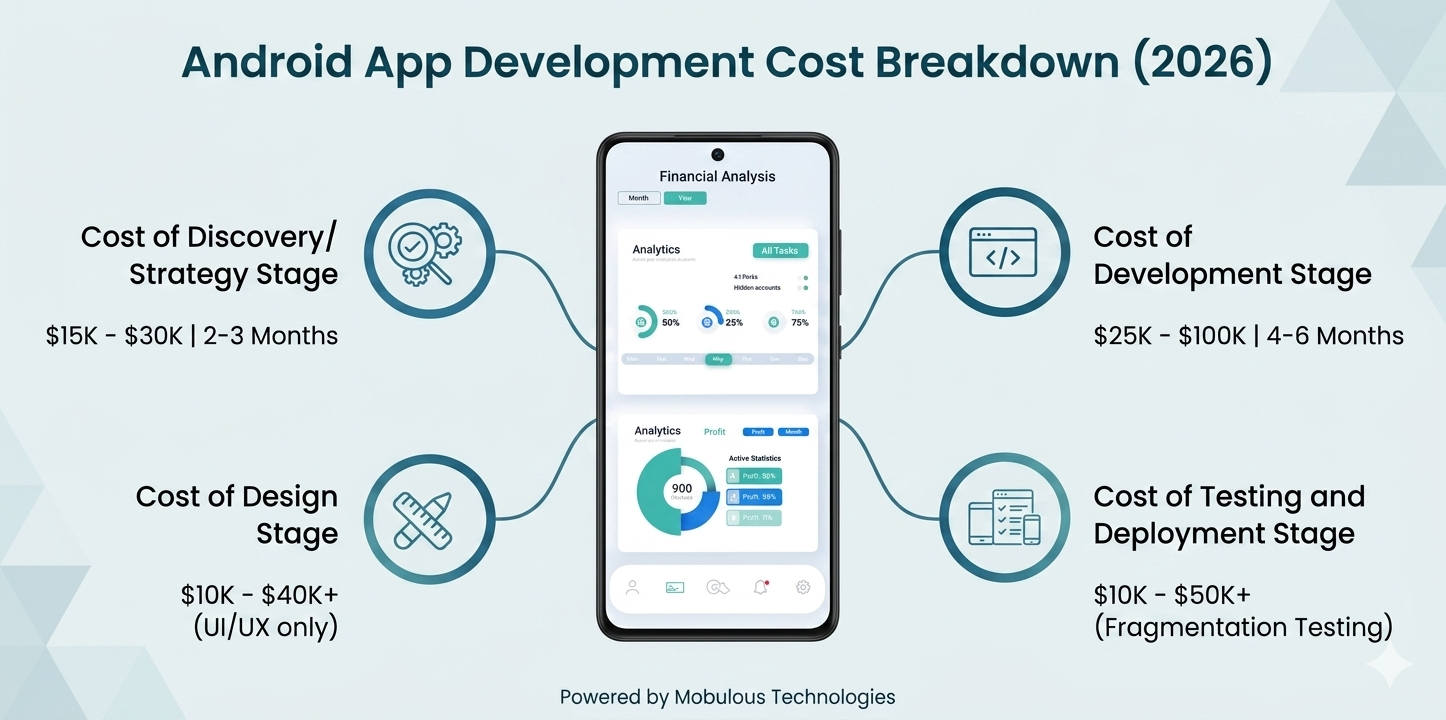
Building an Android app sounds exciting until the budget conversation starts. I’ve seen many businesses underestimate the actual cost of app development, only to face delays, feature cuts, or unexpected expenses later. The truth is simple: Android app development costs depend on what you build, how you build it, and who builds it.
In this guide, I’ll break down the real costs behind Android app development so you can plan smarter and avoid expensive surprises.
How Much Does Android App Development Cost?
The average Android app development cost in 2026 ranges between $20,000 and $350,000+, depending on app complexity, features, integrations, and design requirements.
A basic Android app typically costs between $20,000 and $50,000 and usually takes around 2 to 3 months to develop. These apps generally include simple features such as user login, dashboards, and basic functionality.
A medium-complexity Android app can cost anywhere from $50,000 to $150,000, with an estimated development timeline of 4 to 6 months. These apps often include advanced UI/UX, third-party integrations, payment gateways, and more interactive features.
For enterprise-level or advanced Android applications, the development cost usually starts from $150,000 and can exceed $350,000. The development process for these apps may take 6 to 12 months or longer, depending on the complexity, scalability requirements, backend infrastructure, and custom functionalities involved.
A simple business app with login, dashboard, and notifications costs far less than a real-time delivery or fintech application.
Before Go Forward Check Our Flexible App Development Pricing Models For Your Project
Key Factors That Affect Android App Development Cost
1: App Complexity
This is the biggest pricing factor.
A basic app usually includes:
- User login/signup
- Simple UI
- Basic database
- Limited functionality
A complex app may include:
- Real-time chat
- AI features
- GPS tracking
- Payment gateways
- Video streaming
- Cloud infrastructure
Every advanced feature increase development hour and testing requirements.
2: UI/UX Design
Good design is not just about appearance. It directly affects user retention.
Custom animations, interactive screens, and premium user experiences require more design and frontend work. Businesses that invest in better UX often see stronger engagement and app store ratings.
Typical design costs:
- Basic UI design: $2,000 – $5,000
- Custom UI/UX: $10,000 – $30,000+
3: Backend Development
Many businesses forget backend costs while planning budgets.
If the app stores user data, supports real-time syncing, or handles payments, a backend system becomes essential.
Backend development may include:
- Database architecture
- APIs
- Cloud hosting
- Admin panels
- Security layers
Complex backend systems can account for 15%–25% of the total app budget.
4: Android Device Testing
Android development often costs more than expected because of device fragmentation.
Unlike iOS, Android apps must work across:
- Different screen sizes
- Multiple manufacturers
- Various Android OS versions
This increases QA testing time significantly.
5: Development Team Location
Developer rates vary by region.
Average hourly rates:
- US/UK Agencies: $100–$200/hour
- Eastern Europe: $40–$80/hour
- India: $20–$50/hour
This is why many startups outsource development to reduce costs while maintaining quality.
Native vs Cross-Platform Development
Businesses often ask me whether they should build native Android apps or use cross-platform frameworks like Flutter.
Native Android Development
Best for:
- High-performance apps
- Gaming apps
- Apps with advanced Android features
Cross-Platform Development
Best for:
- Startups
- MVPs
- Faster launch timelines
Cross-platform development can reduce costs by 35%–40% compared to building separate Android and iOS apps.
Hidden Costs Businesses Often Ignore
Many app owners focus only on launch costs and forget long-term expenses.
Here are the ongoing costs I always recommend budgeting for:
- App maintenance
- Security updates
- Server hosting
- API subscriptions
- Google Play fees
- Performance optimization
- Feature upgrades
Annual maintenance alone usually costs 15%–25% of the original development cost.
How I Would Reduce Android App Development Costs
If I wanted to control costs without sacrificing quality, I would:
- Start with an MVP
- Prioritize core features first
- Use cross-platform development when possible
- Invest in proper planning before coding
- Choose an experienced development team instead of the cheapest option
Cutting corners early often creates technical debt that becomes expensive later.
Source of this content: CLICK HERE
Conclusion
Android app development costs are not fixed numbers. The final budget depends on app complexity, design quality, backend infrastructure, testing, and the development approach you choose.
I believe businesses should focus less on finding the cheapest quote and more on building scalable, maintainable products that support long-term growth. A well-planned app saves money over time and delivers a better user experience.
If you’re looking for reliable development expertise, Mobulous Technologies is a leading mobile app development company known for building scalable and user-focused applications for startups and enterprises alike.
Read Our Latest Blog:
Categorii
Citeste mai mult
In a recent social media move, author J.K. Rowling shared a parody of Emma Watson's appearance on Jay Shetty's "On Purpose" podcast, expressing amusement with the caption "I'm here for all the spoofs." The parody, created by comedian Intellady, mocked Watson's recent comments about their strained relationship. This marks a new chapter in the ongoing tension between the "Harry Potter" creator...

Houston has many family-owned businesses built on trust, referrals, and strong local relationships. From restaurants and dental clinics to home service companies, retail shops, wellness providers, and local contractors, these businesses often grow because people know them and trust their work. That trust still matters, but customer behavior has changed. People now search online before they...

Online gaming continues growing rapidly among sports and entertainment enthusiasts. From live IPL cricket action to fantasy sports and casino-style entertainment, users now have multiple ways to enjoy interactive online experiences. For beginners entering this space, understanding the basics is important for smoother and safer gaming experiences. This Fairplay Guide helps new users understand...

IPL 2026 is now in its closing battle, where every team is pushing hard to secure a place in the playoffs. Gurubhai247 AUS VS BAN The competition is at its peak, and every match is turning into a high-pressure contest filled with intensity and focus. One of the key highlights in this stage is the importance of execution. Teams that are able to carry out their plans perfectly—whether in...

In a fast-paced city like Chennai, many individuals look for premium companionship that combines elegance and personality. Russian Escorts in Chennai are widely known for their style, beauty, and ability to engage in meaningful conversations, making them a preferred choice for elite clients. Professional Escorts in Chennai often provide companionship for social gatherings, private dinners, and...