HRMS Software Is No Longer Optional — It’s the Backbone of Modern Businesses
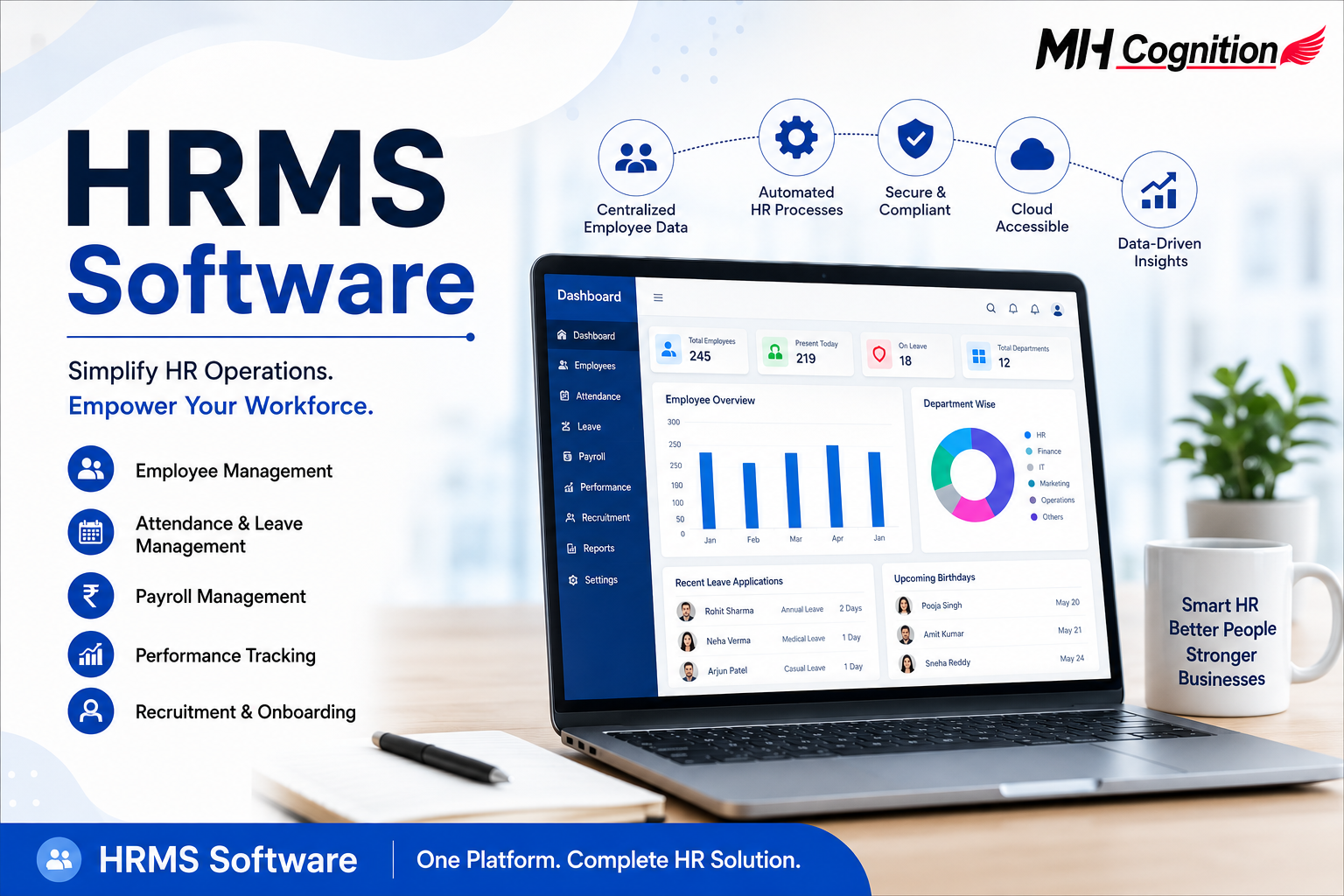
Walk into any growing company today, and one thing becomes clear very quickly - managing people is no longer a simple task.
Employees work remotely. Teams operate across cities. Attendance is tracked digitally. Payroll needs to be accurate to the last rupee. Recruitment happens faster than ever. And employees expect smooth, technology-driven experiences at work.
This is exactly why HRMS software has become one of the most important business tools in modern organizations.
A few years ago, HR departments mostly relied on spreadsheets, paperwork, and endless email chains. Today, businesses in India are moving towards intelligent HR systems that automate operations, improve employee experiences, and help companies grow without operational chaos.
But HRMS software is not just about automation.
It’s about creating a workplace where people and processes work together efficiently.
What Exactly is HRMS Software?
HRMS software stands for Human Resource Management System software. It is a centralized digital platform that helps businesses manage all HR-related activities from one place.
Instead of handling employee records manually, companies use HRMS solutions to manage:
-
Attendance
-
Payroll
-
Recruitment
-
Leave requests
-
Employee performance
-
Shift scheduling
-
Document management
-
Compliance
-
Employee communication
Think of it as the operational control center for workforce management.
Everything becomes organized, trackable, and faster.
And in a country like India, where businesses are scaling rapidly - this transformation matters more than ever.
Why Indian Businesses Are Rapidly Adopting HRMS Software
The Indian workplace has changed dramatically over the last decade.
Startups are scaling faster. IT companies manage hybrid teams. Educational institutions handle large staff networks. Manufacturing industries need accurate shift tracking. Even small businesses are moving toward digital operations.
Yet many organizations still struggle with:
-
Manual attendance systems
-
Payroll delays
-
Data duplication
-
HR paperwork overload
-
Employee communication gaps
-
Compliance confusion
These issues slow down productivity and increase operational stress.
This is where HRMS software changes the game.
Instead of spending hours on repetitive administrative tasks, HR teams can focus on improving employee engagement, company culture, and business growth.
The Biggest Advantage of HRMS? Simplicity
One of the reasons modern HRMS platforms are becoming popular is that they simplify complicated HR operations.
A manager can approve leave requests in seconds.
Employees can download payslips without contacting HR.
Attendance reports can be generated automatically.
Recruitment pipelines become easier to track.
Everything works inside one connected ecosystem.
That level of convenience saves enormous time for organizations.
Employee Management Becomes Smarter
Managing employee information manually becomes difficult as businesses grow.
Files get misplaced.
Spreadsheets become outdated.
Data becomes inconsistent.
HRMS software solves this problem through centralized employee management.
Every employee profile contains important information like:
-
Contact details
-
Job role
-
Salary structure
-
Attendance history
-
Leave records
-
Performance reports
-
Important documents
This improves organization and eliminates unnecessary confusion.
Businesses looking to modernize workforce operations can also understand the importance of digital employee management through
Employee Management System in HRMS
Payroll Processing Without Stress
Payroll is one of the most sensitive areas in any organization.
Even small calculation errors can create employee dissatisfaction.
Traditional payroll systems often involve manual calculations, spreadsheets, and repetitive verification work. This increases the chances of mistakes.
HRMS software automates payroll processes such as:
-
Salary calculations
-
Tax deductions
-
PF and ESI calculations
-
Incentives and bonuses
-
Payslip generation
The result?
Faster salary processing, fewer errors, and better employee trust.
Attendance and Leave Tracking Become Effortless
Manual attendance systems are outdated for modern businesses.
Today’s HRMS platforms support:
-
Biometric attendance
-
GPS-based mobile attendance
-
Shift management
-
Real-time leave tracking
-
Automated holiday calendars
Employees can apply for leave directly through the system, and managers can approve requests instantly.
This reduces paperwork and improves transparency inside organizations.
Recruitment Is Becoming Faster and More Intelligent
Hiring the right people quickly has become a major challenge for businesses.
HRMS software now includes recruitment tools that simplify hiring workflows.
Companies can:
-
Post job openings
-
Track applications
-
Schedule interviews
-
Shortlist candidates
-
Digitally onboard employees
This improves hiring speed and creates a smoother experience for candidates.
For startups and growing businesses, this becomes extremely valuable.
The Rise of Cloud-Based HRMS Software
One of the biggest shifts in recent years is the move toward cloud-based HRMS software.
Unlike traditional systems installed on office computers, cloud HRMS platforms work online.
That means HR teams and employees can access information anytime, anywhere.
This became especially important after hybrid and remote work models increased across India.
Cloud-based systems offer several advantages:
-
Easy accessibility
-
Lower maintenance costs
-
Real-time updates
-
Better scalability
-
Secure data storage
-
Faster implementation
Businesses interested in digital transformation can learn more from
Cloud-Based HRMS Software
HRMS Software Improves Employee Experience Too
Many people think HRMS software only benefits HR departments.
That’s not true.
Employees benefit equally.
Modern employees expect quick and seamless workplace experiences. Nobody wants to wait days for simple HR requests.
Through employee self-service portals, users can:
-
Check attendance
-
Apply for leave
-
Download payslips
-
Update personal information
-
Access company documents
This creates transparency and reduces dependency on HR teams.
When employees feel empowered, workplace satisfaction improves naturally.
Small Businesses Need HRMS Just as Much as Large Companies
A common misconception is that HRMS software is only useful for large corporations.
In reality, small and medium businesses often benefit the most.
Why?
Because smaller teams usually operate with limited HR resources.
Automation helps them save time, reduce operational pressure, and scale efficiently without building massive administrative departments.
Even startups with 10–20 employees can improve organization significantly using the right HRMS platform.
Data-Driven HR Is the Future
Modern businesses no longer make HR decisions based only on assumptions.
They use data.
HRMS software provides real-time reports and analytics related to:
-
Employee attendance
-
Productivity
-
Recruitment trends
-
Workforce performance
-
Employee retention
This helps businesses make smarter workforce decisions.
Instead of reacting to problems later, companies can identify issues early and improve operational efficiency proactively.
Why HRMS Software Matters More in India
India has one of the world’s fastest-growing business ecosystems.
With increasing competition and workforce expansion, companies need systems that help them operate efficiently.
HRMS software supports Indian businesses by helping them:
-
Handle workforce complexity
-
Improve compliance management
-
Reduce manual errors
-
Support remote work
-
Increase productivity
-
Build better employee experiences
As digital adoption continues growing, HR technology will become a core part of every successful organization.
Choosing the Right HRMS Software
Not every HRMS platform is the same.
Businesses should focus on solutions that are:
-
Easy to use
-
Scalable
-
Secure
-
Mobile-friendly
-
Cloud-enabled
-
Customizable
The ideal HRMS should simplify operations 0- not make them more complicated.
Organizations should also ensure the platform offers reliable customer support and regular updates.
To explore additional business advantages of digital HR systems, visit
Benefits of HRMS Software
Final Thoughts
The future of workforce management is digital.
Companies that continue relying entirely on manual HR processes will eventually struggle with inefficiency, operational delays, and workforce management challenges.
HRMS software is no longer just a “nice-to-have” tool.
It has become an essential business investment.
From payroll automation and employee management to recruitment and analytics, HRMS platforms help businesses build smarter, faster, and more organized workplaces.
As Indian businesses continue evolving digitally, solutions like MH Cognition Connekt are helping organizations simplify HR operations while creating modern employee experiences that align with today’s workforce expectations.
The companies that invest in intelligent HR systems today are the ones building stronger workplaces for tomorrow.
Categorias
Leia Mais
The United States represents a significant contributor to the growth of membrane water treatment chemicals due to increasing demand for clean water, expanding wastewater recycling initiatives, and growing investments in industrial water treatment systems. Industries including power generation, food and beverage, pharmaceuticals, oil and gas, and municipal utilities are increasingly adopting...

Small companies and personal firms are flourishing in India. Currently, a legal identity is very necessary if you wish to start a small business. Legal identity is established by the Udyam Registration process. You have come here if you are a person entrepreneur, and wish to legally identify your business before the government. Here is a straightforward explanation of what Udyam Registration...
In today's digital landscape, businesses need to leverage the power of Search Engine Optimization (SEO) to maintain a competitive edge. However, managing SEO can be time-consuming and requires specialized expertise. For many businesses, the solution lies in partnering with the best SEO reseller company. But how do you find the right partner, and what should you look for? This article dives into...
Once upon a time, “office space” meant sterile cubicles, fluorescent lights, and that one coffee machine everyone secretly pitied. Today? Businesses are ditching the boring and moving into industrial office and warehouse spaces that are, frankly, way more interesting. So why is everyone suddenly obsessed with these spaces? Let’s break it down. Flexibility That Would Make a...

The Secure Sockets Layer (SSL) Certification Market Growth Analysis highlights strong global expansion as organizations increasingly prioritize web security, data encryption, and trusted online communication. The Secure Sockets Layer Certification Market is experiencing rapid growth due to rising cyber threats, increasing e-commerce transactions, and widespread adoption of HTTPS protocols...