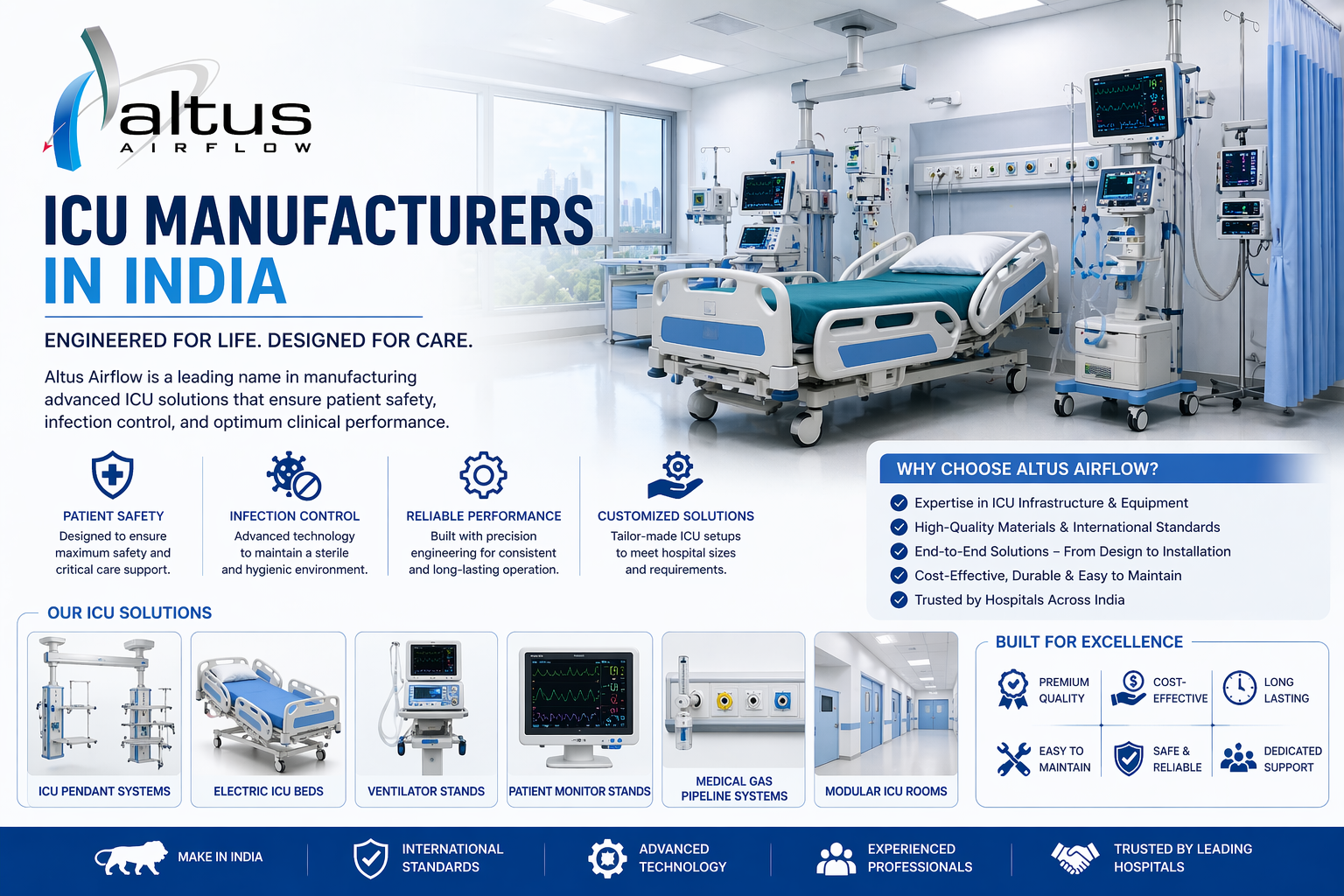
many ICU manufacturers in India do export their equipment globally. Over the past decade, India has become a growing hub for medical equipment manufacturing, including intensive care unit (ICU) systems such as ventilators, patient monitors, infusion pumps, ICU beds, and centralized monitoring systems.
Indian manufacturers supply both developed and developing countries, depending on regulatory approvals, product certifications, and international demand.
India’s Growing Role in ICU Equipment Manufacturing
India has developed a strong medical devices industry supported by:
- Expanding healthcare infrastructure
- Government initiatives for medical manufacturing
- Cost-effective production capabilities
- Skilled biomedical engineering workforce
Because of these factors, Indian ICU equipment is increasingly competitive in global markets.
What ICU Equipment Is Commonly Exported?
Indian manufacturers export a wide range of ICU-related products, including:
1. Ventilators
Used for critical respiratory support in ICUs, especially during emergencies.
2. Patient Monitoring Systems
These include ECG, SpO2, blood pressure, and multi-parameter monitors.
3. ICU Beds
Advanced electric ICU beds with adjustable positioning and safety features.
4. Infusion Pumps
Used for controlled drug and fluid delivery in critical care settings.
5. Central Monitoring Systems
Allow hospitals to monitor multiple ICU patients from a single control station.
Why Indian ICU Equipment Is in Global Demand
Cost Advantage
Indian ICU equipment is often more affordable compared to European or American alternatives.
Quality Improvements
Manufacturers follow international quality standards such as ISO and CE certifications.
Rapid Production Capacity
India has large-scale manufacturing capability to meet bulk international orders.
Customization
Equipment can be customized based on hospital requirements and budgets.
Key Export Markets for Indian ICU Equipment
Indian ICU manufacturers export to several regions, including:
- Middle East (UAE, Saudi Arabia, Qatar)
- Africa (Nigeria, Kenya, South Africa)
- Southeast Asia (Indonesia, Vietnam, Philippines)
- South Asia (Bangladesh, Sri Lanka, Nepal)
- Latin America (Brazil, Mexico, Chile)
These markets often prefer Indian equipment due to affordability and reliability.
Regulatory Requirements for Export
To export ICU equipment globally, manufacturers must comply with international standards such as:
- CE certification (Europe)
- FDA approval (USA, for specific devices)
- ISO 13485 medical device quality standards
- Local regulatory approvals in destination countries
Compliance ensures safety, reliability, and global acceptance.
Challenges in Global Export
Even though exports are growing, manufacturers face certain challenges:
Strict Regulations
Different countries have different medical device approval systems.
Logistics and Shipping Costs
Heavy ICU equipment requires careful handling and high shipping costs.
Competition
Global competitors from Germany, USA, and Japan dominate premium segments.
After-Sales Support
International servicing and maintenance can be complex.
Future of ICU Manufacturing in India
The future looks strong due to:
- Increasing global demand for affordable healthcare equipment
- Expansion of “Make in India” initiatives
- Growth of hospital infrastructure worldwide
- Rising focus on emergency and critical care systems
Indian manufacturers are expected to expand their global presence further in the coming years.
Conclusion
Yes, many ICU manufacturers in India actively export their products worldwide. With improving quality standards, competitive pricing, and expanding production capabilities, India has become an important supplier in the global ICU equipment market. While regulatory compliance and global competition remain challenges, the export potential continues to grow significantly.
FAQs
1. Do ICU manufacturers in India export their products internationally?
Yes, ICU manufacturers in India export ventilators, monitors, ICU beds, and other critical care equipment to global markets.
2. Which countries import ICU equipment from India?
Major importers include countries in the Middle East, Africa, Southeast Asia, and Latin America.
3. What makes Indian ICU equipment competitive globally?
Affordable pricing, improving quality standards, and large-scale manufacturing make Indian ICU products competitive.
4. Are Indian ICU products certified for global use?
Yes, many products have international certifications like CE and ISO, depending on the manufacturer.
5. What ICU equipment is most commonly exported?
Ventilators, patient monitors, ICU beds, infusion pumps, and central monitoring systems are commonly exported.