


Student to Strategist: The Mental Shift Required for a BA Role
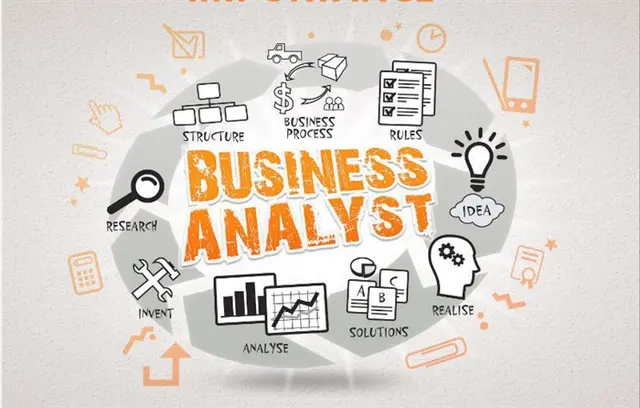
The transition from the classroom to the boardroom is often described as a "learning curve," but for a Business Analyst (BA), it feels more like a structural reconfiguration of the brain. In a university setting, success is defined by finding the "right" answer—the one the professor is looking for, the one that fits neatly into a multiple-choice bubble or a 2,500-word essay.
However, in the professional world of 2026, there is rarely a single right answer. There are only trade-offs, risks, and varying degrees of "better." Moving from a student mindset to a strategist mindset is the most challenging, yet rewarding, hurdle you will face. While a Business Analyst Internship provides the technical toolkit, the true transformation happens in how you perceive problems, people, and processes.
1. From "What is the Answer?" to "What is the Problem?"
Students are trained to be answer-generators. When given a case study, the instinct is to jump immediately to a solution. "We should build an app!" or "We need to use AI for this!"
A strategist, however, is a problem-detective. In 2026, businesses are drowning in solutions but starving for clarity. The first mental shift you must make is to fall in love with the problem, not the solution. When a stakeholder asks for a new feature, a student-minded BA writes down the requirement. A strategist-minded BA asks "Why?" five times until they uncover the root cause.
"If I had an hour to save the world, I would spend 55 minutes defining the problem and five minutes finding the solution." — This Einsteinian philosophy is the bedrock of strategic analysis.
2. From Certainty to Ambiguity
In academia, variables are controlled. In business, variables are chaotic. The student mindset craves a complete syllabus—a clear set of instructions on how to complete a task.
As a BA, your "syllabus" is often a contradictory mess of stakeholder opinions, legacy system constraints, and shifting market regulations. The mental shift involves becoming comfortable with ambiguity. You must learn to make recommendations based on incomplete data. You have to accept that "Version 1.0" will be imperfect and that the real strategy lies in how you iterate based on feedback.
3. From Individual Contributor to Collaborative Facilitator
In school, your GPA is yours alone. Collaboration is often limited to group projects where the biggest challenge is making sure everyone does their fair share.
In a Business Analyst Internship, you realize that you don't "own" the work; you facilitate it. The strategist doesn't sit in a corner and come up with a brilliant plan in isolation. They are the "connective tissue" between the CEO, the developer, and the end-user. The shift here is moving from "How do I succeed?" to "How do I ensure this team reaches a consensus?"
4. The "Systems Thinking" Lens
Students often look at tasks as isolated assignments. A strategist looks at the System.
If you change a field in a database to make a marketing report easier to read, what happens to the downstream accounting API? Does it break the billing cycle? In 2026, systems are hyper-integrated. A strategist develops "peripheral vision"—the ability to see how a small pebble thrown into one pond creates ripples across the entire corporate ecosystem.
| Student Mindset | Strategist Mindset |
| Focuses on the task at hand. | Focuses on the end-to-end value chain. |
| Seeks instructions. | Seeks outcomes. |
| Avoids failure at all costs. | Views failure as data for the next iteration. |
| Values technical correctness. | Values business impact and feasibility. |
5. From "Hard Skills" to "Hard-Earned Influence"
Technical skills like SQL, Python, or BPMN are the "entry fee" for the profession. They are essential, but they are not the job. The mental shift happens when you realize that your most powerful tool isn't your software—it’s your influence.
As an intern, you have no formal authority. You cannot fire anyone, and you cannot dictate budgets. Yet, you are expected to drive change. This requires a shift toward Empathetic Negotiation. You must learn to speak the language of different departments. You speak "Risk and ROI" to the CFO, and you speak "Latent and Scalability" to the CTO.
6. The "So What?" Filter
The most important question a strategist asks is "So what?"
-
Student: "I’ve analyzed the data, and 20% of users are dropping off at the login page."
-
Strategist: "20% of users are dropping off at login, which equates to a $50k monthly revenue loss. If we implement Biometric Authentication, we can recover 15% of that loss within the first quarter."
The shift is moving from descriptive analysis (telling what happened) to prescriptive strategy (telling what we should do about it).
7. Navigating the 2026 Digital Landscape
Today, AI can generate a process map or write a basic functional spec in seconds. If you stay in the "Student" mindset of just performing these tasks, you will be automated out of a job.
The strategist mindset embraces AI as a "Co-Pilot" but provides the Context. AI doesn't understand the office politics, the long-term brand vision, or the specific ethical nuances of your industry. During your Business Analyst Internship, you will learn that your value lies in the "Human Layer"—the ability to judge the AI’s output against the reality of the business world.
How to Accelerate the Shift
If you are struggling to move past the student mindset, try these three practical steps:
A. Ask "Why" Until it Hurts
Never accept a requirement at face value. If a manager says "We need a new dashboard," ask why. If they say "To track sales," ask why the current reports aren't sufficient. Keep digging until you find the emotional or functional gap.
B. Shadow the "Decision Makers"
Use your internship to get into rooms you aren't "supposed" to be in. Watch how leaders make decisions. Notice what questions they ask. You’ll find they rarely ask about the technical "how"; they almost always ask about the strategic "what next?"
C. Build a "Mental Model" Library
Start reading beyond business analysis. Read about behavioral economics, game theory, and design thinking. These are the frameworks strategists use to make sense of the world.
Conclusion: The Birth of a Strategist
The transition from student to strategist isn't a switch that flips overnight; it’s a muscle that you build through every meeting, every failed requirement, and every successful project.
It starts with the realization that your degree is just a foundation. The real education begins when you stop looking for the answer and start looking for the impact. By embracing ambiguity, mastering systems thinking, and focusing on human-centric influence, you move beyond the "Intern" label.
Whether you are currently in a Business Analyst Internship or preparing for one, remember: the business world doesn't need more people who can follow instructions. It needs people who can lead through analysis. The shift is yours to make. Start thinking like a strategist today, and the rest of your career will follow suit.
Categorias
Leia mais
"Executive Summary Integrated Cardiology Devices Market Size and Share Across Top Segments CAGR Value The global integrated cardiology devices market size was valued at USD 2.21 billion in 2025 and is expected to reach USD 4.81 billion by 2033, at a CAGR of 10.21% during the forecast period Analysis and discussion of important industry trends, market...

Breast fat transfer is an increasingly popular cosmetic procedure that enhances breast size and shape using your body’s own fat. Unlike traditional breast implants, this technique involves removing fat from areas like the abdomen, thighs, or flanks through liposuction and injecting it into the breasts for a natural-looking result. The growing interest in breast fat transfer comes from its...

The market research for the global Unified Threat Management market is an accumulation of first-hand facts and quantitative and qualitative evaluation and analysis for the forecast period (2024-2032). The report offers a comprehensive assessment of macro-economic indicators, parent market trends, and several factors influencing the market dynamics. In addition, it also assesses...

The Tote Bags Market has evolved into a dynamic and fast-growing segment of the global accessories and lifestyle industry. Once considered a simple utility product, tote bags are now positioned at the intersection of fashion, sustainability, branding, and everyday convenience. Rising environmental awareness, changing consumer preferences, and the rapid expansion of retail and...

Polaris Market Research has published a brand-new report titled Enzymatic DNA Synthesis Market Size, Share, Trends, Industry Analysis Report By Services (Oligonucleotide Synthesis and Gene Synthesis), By Technology, By Application, By End Use, and By Region – Market Forecast, 2025–2034 that includes extensive information and analysis of the industry dynamics. The...
