The Hidden Growth Story Behind Industrial Plots Near Jewar Airport
Introduction
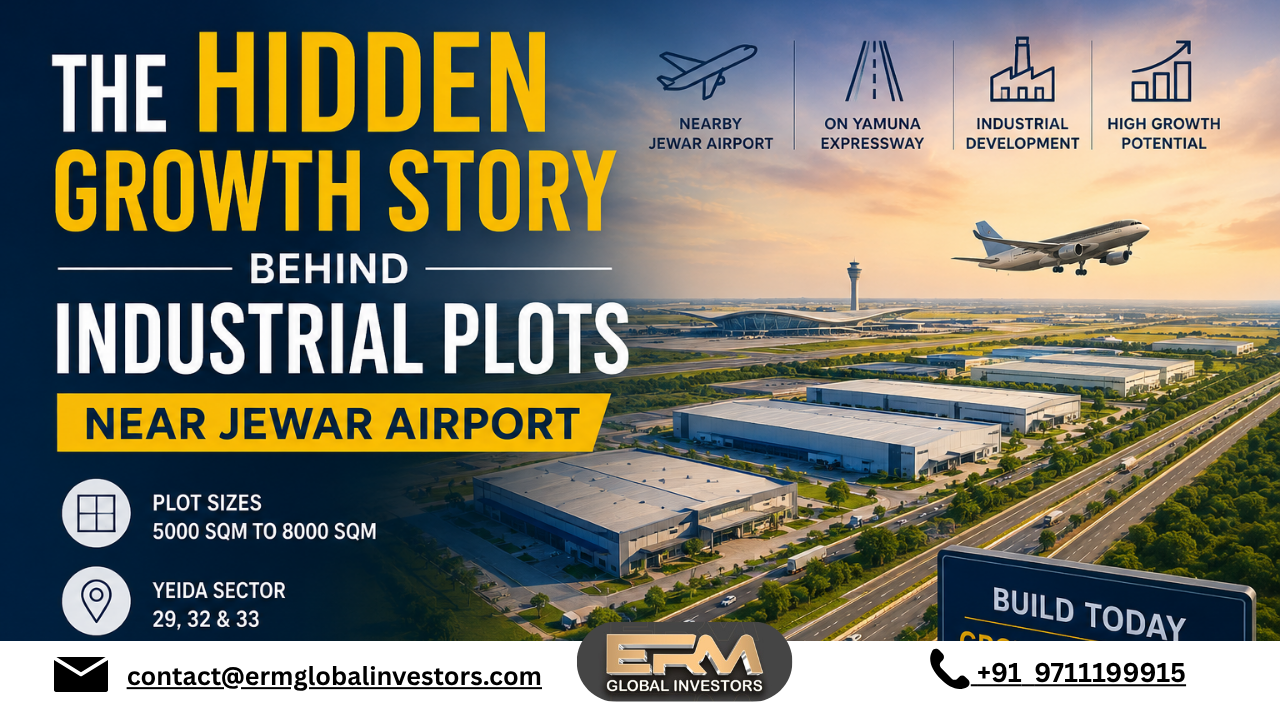
The conversation around the Yamuna Expressway is no longer limited to residential projects and airport-driven growth. Over the last few years, industrial plots near Jewar Airport have quietly become one of the most closely watched opportunities for manufacturers, logistics operators, MSMEs, and long-term land investors.
According to ERM Global Investors, the real momentum is coming from planned industrial ecosystems rather than short-term speculation. This is an important difference because industrial growth usually creates long-term economic activity, employment demand, warehousing expansion, and infrastructure development around it.
What makes this region interesting is not just the airport itself, but the combination of connectivity, government-backed planning, and sector-focused industrial zones being developed by Yamuna Expressway Industrial Development Authority.
Why the Yamuna Expressway Region Is Attracting Industrial Demand
Many industrial corridors in India grow after years of infrastructure development. In the Yamuna Expressway region, multiple growth drivers are arriving almost simultaneously.
Some of the strongest factors include:
-
Proximity to Jewar International Airport
-
Direct connectivity through Yamuna Expressway
-
Planned logistics and warehousing expansion
-
Dedicated industrial sectors under YEIDA
-
Proposed Film City and Data Centre Park
-
Government focus on manufacturing and exports
For business owners, location efficiency matters more than hype. A manufacturing unit operating near major transport corridors can reduce logistics costs, improve delivery timelines, and access larger markets across North India.
That is one reason industrial land in YEIDA sectors 29, 32, and 33 is receiving increasing attention from serious buyers instead of only speculative investors.
The Real Story Is Infrastructure-Led Development
A common mistake many investors make is focusing only on current land prices. Experienced industrial buyers usually study future infrastructure first.
The Yamuna Expressway belt is developing as a multi-sector economic zone rather than a standalone industrial pocket. This creates stronger long-term sustainability.
Some upcoming developments already influencing market sentiment include:
Medical Devices Park
Sector-28 is planned to support medical manufacturing and related industries. If executed properly, this can attract ancillary businesses, suppliers, and warehousing demand.
Data Centre Park
Data infrastructure requires large-scale support services, power infrastructure, and commercial ecosystems. Such projects often create secondary demand for industrial and mixed-use spaces nearby.
Film City
The proposed Film City in Sector-21 is expected to increase commercial activity, hospitality demand, and employment movement across the corridor.
Semiconductor & Electronics Manufacturing
Government-backed semiconductor and electronics initiatives could improve the industrial profile of the region significantly over the next decade.
For investors, these projects matter because industrial land usually performs better when surrounded by real economic activity rather than isolated development.
Who Should Consider Industrial Plots in YEIDA
Not every property buyer should enter the industrial segment. However, certain categories of buyers may find strong long-term value here.
MSME Owners
Businesses planning manufacturing expansion near Delhi-NCR may benefit from planned industrial infrastructure and expressway connectivity.
Logistics & Warehousing Operators
The airport and expressway combination naturally supports logistics growth over time.
Long-Term Land Investors
Investors with a 7–10 year horizon often look at infrastructure corridors before price appreciation becomes mainstream.
Sector-Specific Manufacturers
YEIDA has categories for toy manufacturing, apparel units, handicrafts, ODOP industries, and furniture production. This structured planning can help businesses operate within policy-supported ecosystems.
Important Risks Buyers Should Understand
Every industrial investment comes with risks, and experienced advisors always discuss both sides before making recommendations.
Scheme Availability Changes Frequently
Some industrial schemes remain inactive for periods of time. Buyers should track official YEIDA announcements instead of relying on market rumors.
Industrial Land Requires Patience
Industrial growth takes longer than residential speculation cycles. Investors expecting immediate returns may become disappointed.
Compliance & Documentation Matter
Industrial allotments usually involve auctions, interviews, project reports, and eligibility checks. Many first-time buyers underestimate this process.
Infrastructure Execution Takes Time
While announcements are positive, actual on-ground development may happen in phases over several years.
This is why due diligence becomes critical before making any investment decision.
Why Plot Size Flexibility Is Important
One practical advantage in this region is the availability of multiple plot sizes starting from around 5000 Sqm and extending much higher.
This flexibility helps different types of businesses plan according to operational requirements instead of forcing standard-sized investments.
For example:
-
Small manufacturers may prefer lower land holding costs
-
Warehousing operators may require larger land parcels
-
Export-focused industries often prioritize expansion potential
This variety improves usability across different industries rather than limiting the market to one business category.
Long-Term Outlook for Industrial Growth Near Jewar Airport
The strongest industrial corridors are usually built around connectivity, policy support, and economic activity. The Yamuna Expressway region currently shows signs of all three.
However, the biggest opportunity may still be in its early stages. Many investors are focused only on residential conversations linked to the airport, while industrial infrastructure is gradually building the foundation for long-term regional growth.
That hidden transition is what experienced land investors are watching carefully.
Conclusion
Industrial growth near Jewar Airport is gradually becoming one of the most important long-term development stories in the Yamuna Expressway region. While residential discussions often dominate headlines, the deeper economic transformation is being driven by manufacturing, logistics, infrastructure, and sector-focused industrial planning.
For buyers and businesses willing to take a long-term view, Industrial Plots in YEIDA may offer strategic value beyond simple land appreciation. According to ERM Global Investors, the key is understanding which sectors, plot categories, and infrastructure developments are likely to create sustainable demand over time.
FAQs
Q1. What are Industrial Plots in YEIDA?
Ans. Industrial plots in YEIDA are land parcels planned for manufacturing, warehousing, logistics, and sector-specific industrial activities along the Yamuna Expressway region.
Q2. Why are Industrial Plots near Jewar Airport gaining attention?
Ans. The region is benefiting from airport development, expressway connectivity, industrial parks, and future infrastructure projects.
Q3. Who can apply for YEIDA industrial plots?
Ans. MSMEs, manufacturers, logistics companies, textile units, handicraft businesses, and other eligible industrial operators can apply depending on scheme criteria.
Q4. What is the typical plot size available?
Ans. Plot sizes generally start from around 5000 Sqm and vary based on the sector and scheme.
Q5. Are these plots good for short-term investment?
Ans. Industrial land is usually considered a medium- to long-term investment rather than a quick appreciation opportunity.
Q6. What are the major upcoming projects near these sectors?
Ans. Medical Devices Park, Data Centre Park, Film City, semiconductor projects, and logistics infrastructure are some major developments planned in the region.
Q7. Is the allotment process simple?
Ans. The process may involve auctions, interviews, eligibility checks, and documentation requirements, so professional guidance is often helpful.
Categorias
Leia Mais
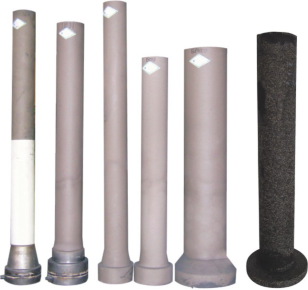
Operators often see cracks and damage in ladle shrouds, long nozzles, and refractory parts. This happens because of a few main reasons: · Fast temperature changes can cause thermal shock and peeling. · Mechanical stress comes from handling, hitting, or working forces....
Dubai, UAE — 2025: As consumers across the UAE shift toward clean eating, gut health, and natural foods, fermented products are rapidly becoming one of the most talked-about wellness food categories. Leading this movement locally is Tabchilli, a Dubai-based brand specializing in naturally fermented chilli condiments and kimchi, crafted using traditional slow fermentation methods. From...

Understanding the market for equipment that fuses metal requires careful segmentation, as AC arc welding machines range from tiny portable units to massive automated systems. The AC Arc Welding Machine Market Size reached 6.07 billion USD in 2024 and is on a steady ascent to 10.2 billion USD by 2035. This valuation reflects the sale of complete power sources, automated cells, portable...
Dubai is one of the fastest-growing digital hubs in the world, but with great innovation comes great risk. As businesses embrace advanced technologies and online systems, cyber threats are evolving at an alarming rate. This is where a reliable Cyber Security Company in Dubai becomes essential. Cybersecurity isn’t just an option anymore — it’s a necessity for survival in...

No one ever expects to be injured because of someone else’s negligence, but when it happens, the impact can be life altering. Between hospital visits, missed work, and the emotional stress that follows, it’s easy to feel lost. This is where having a knowledgeable personal injury lawyer can change everything. They don’t just handle paperwork they stand beside you, fighting for...