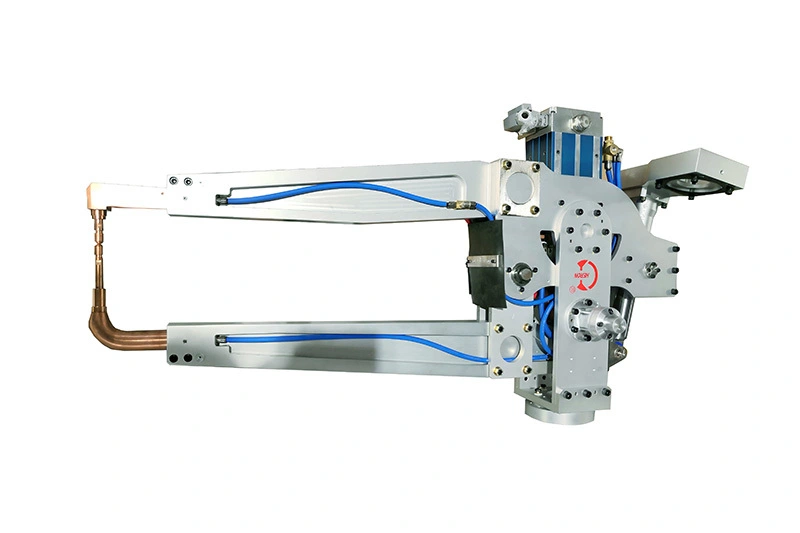
Aluminum has become one of the most important materials in modern manufacturing due to its lightweight properties, corrosion resistance, and high strength-to-weight ratio. However, joining aluminum efficiently especially in high-volume production environments remains a technical challenge. This is where an aluminum spot welder plays a critical role in delivering consistent, high-quality welds for industrial applications.
For OEMs, automotive suppliers, battery manufacturers, and automation integrators, aluminum spot welding is not just a joining process it is a production-critical capability that directly impacts product reliability, cost efficiency, and manufacturing throughput.
In this article, we explore how aluminum spot welders work, their key industrial applications, challenges in welding aluminum, and why advanced resistance welding solutions from industry leaders such as Heron Welder are transforming modern production lines.
What Is an Aluminum Spot Welder?
An aluminum spot welder is a specialized resistance welding system designed to join aluminum sheets or components by applying controlled pressure and high electrical current at localized points.
Unlike steel welding, aluminum welding requires significantly higher precision due to aluminum’s:
- High electrical conductivity
- Rapid heat dissipation
- Strong oxide layer on the surface
The spot welder overcomes these challenges by delivering extremely fast, high-current pulses that generate heat at the interface of the metal sheets, forming a solid-state or fusion bond.
In industrial environments, aluminum spot welders are widely used in automated production lines where consistency, speed, and repeatability are essential.
How an Aluminum Spot Welder Works
The working principle of aluminum spot welding is based on resistance heating.
1. Electrode Pressure Application
Two copper alloy electrodes clamp the aluminum sheets together with controlled force.
2. High Current Passage
A very high electrical current passes through the contact point.
3. Resistance Heating
Due to electrical resistance at the interface, heat is generated rapidly.
4. Nugget Formation
The aluminum softens and forms a weld “nugget” under pressure.
5. Cooling Phase
The joint solidifies under maintained pressure, forming a strong bond.
Advanced systems from Heron Welder integrate intelligent controllers and precision current control to ensure stable weld formation even in high-speed production environments.
Key Challenges in Aluminum Spot Welding
Welding aluminum is significantly more complex than welding steel. Engineers must account for several technical challenges:
1. Oxide Layer Formation
Aluminum naturally forms a thin oxide layer that increases electrical resistance and affects weld consistency.
2. High Thermal Conductivity
Heat spreads quickly, making it difficult to maintain a concentrated weld zone.
3. Narrow Process Window
Aluminum requires precise control of current, pressure, and time to avoid weak welds or material expulsion.
4. Electrode Wear
High current and heat lead to faster electrode degradation, increasing maintenance requirements.
Modern aluminum spot welding systems solve these issues through advanced process control, adaptive current regulation, and optimized electrode design.
Types of Aluminum Spot Welders
Different aluminum welding applications require different resistance welding technologies:
1. AC Spot Welders
Traditional systems suitable for basic applications but less precise for modern aluminum alloys.
2. MFDC Spot Welders (Medium Frequency Direct Current)
Highly efficient systems widely used in automotive and industrial manufacturing. They offer:
- Better energy control
- Reduced heat input
- Stronger weld consistency
3. Capacitor Discharge Spot Welders
Ideal for thin aluminum sheets and battery applications. They deliver:
- Extremely fast energy release
- Minimal heat distortion
- High precision micro-welding
4. Automated Robotic Spot Welding Systems
Integrated into production lines for high-volume manufacturing, ensuring:
- Repeatability
- Speed
- Reduced labor dependency
Heron Welder specializes in MFDC-based and automated resistance welding systems optimized for aluminum joining applications in demanding industrial environments.
Industrial Applications of Aluminum Spot Welding
Aluminum spot welding is widely used across multiple industries where lightweight and high-strength assemblies are required.
Automotive Manufacturing
- Body-in-white structures
- Door panels
- EV lightweight frames
Electric Vehicle (EV) Production
- Battery enclosures
- Busbars
- Aluminum cooling plates
Aerospace Industry
- Aircraft panels
- Structural components
- Lightweight assemblies
Home Appliance Manufacturing
- Refrigerator panels
- Air conditioning units
- Washing machine components
Energy Storage Systems
- Battery module assembly
- Conductive tab welding
- Power distribution components
The demand for aluminum spot welding continues to grow as industries shift toward lightweight, energy-efficient materials.
Best Practices for High-Quality Aluminum Spot Welding
To achieve consistent weld quality, manufacturers must follow strict process controls:
1. Surface Preparation
Removing contaminants and controlling oxide layers improves weld stability.
2. Optimized Electrode Design
Using high-conductivity, wear-resistant electrodes reduces degradation and improves consistency.
3. Precise Parameter Control
Fine-tuning:
- Current intensity
- Welding time
- Electrode force
is essential for repeatable results.
4. Cooling and Duty Cycle Management
Proper cooling prevents overheating and extends machine life.
5. Automation Integration
Using robotic welding systems ensures repeatability in high-volume production.
Advanced systems from Heron Welder incorporate intelligent monitoring systems that automatically adjust welding parameters for optimal aluminum joint quality.
Aluminum Spot Welder vs Other Welding Methods
Spot Welding vs MIG Welding
- Spot welding is faster and cleaner for sheet metal
- MIG welding offers deeper penetration but is slower and requires filler material
Spot Welding vs Laser Welding
- Laser welding provides high precision but requires higher investment
- Spot welding is cost-effective for mass production
Spot Welding vs Riveting or Mechanical Fastening
- Spot welding reduces material usage and assembly time
- Mechanical fastening adds weight and increases assembly complexity
For high-volume manufacturing, aluminum spot welding remains one of the most efficient joining technologies available.
Why Choose Advanced Solutions from Heron Welder
Modern manufacturing requires more than just basic welding equipment it demands integrated, intelligent systems that deliver precision, speed, and reliability.
Heron Welder provides advanced aluminum spot welding solutions designed for:
- Automotive and EV production lines
- High-speed automated manufacturing
- Heavy-duty industrial applications
- Custom OEM integration projects
Their systems are engineered to improve weld stability, reduce cycle time, and optimize energy efficiency. With expertise in resistance welding technologies including MFDC, capacitor discharge, clinching, and automated welding lines, Heron supports manufacturers in achieving scalable and consistent production performance.
FAQs About Aluminum Spot Welders
1. What is an aluminum spot welder used for?
It is used to join aluminum sheets or components in industries such as automotive, aerospace, and battery manufacturing.
2. Why is aluminum difficult to spot weld?
Because aluminum has high conductivity and forms an oxide layer that makes heat generation and bonding more challenging.
3. Which type of spot welder is best for aluminum?
MFDC and capacitor discharge spot welders are most effective for aluminum due to better energy control and precision.
4. Can aluminum be welded in automated production lines?
Yes, aluminum spot welding is widely used in robotic and automated production systems for high-volume manufacturing.
5. How can weld quality be improved?
Through proper surface preparation, optimized welding parameters, high-quality electrodes, and advanced control systems.
Conclusion: Driving Manufacturing Efficiency with Aluminum Spot Welding
As industries continue to adopt lightweight materials and advanced manufacturing techniques, aluminum spot welding has become a critical process for achieving strength, efficiency, and scalability.
From automotive production to EV battery systems, the demand for reliable aluminum joining solutions is increasing rapidly. Choosing the right aluminum spot welder is essential for maintaining product quality and production efficiency.
For manufacturers seeking high-performance welding systems and custom automation solutions, Heron Welder delivers engineered technologies designed to meet the demands of modern industrial production.
Contact Heron Welder today to request a quote or consult with experts for customized aluminum welding and automation solutions tailored to your production needs.