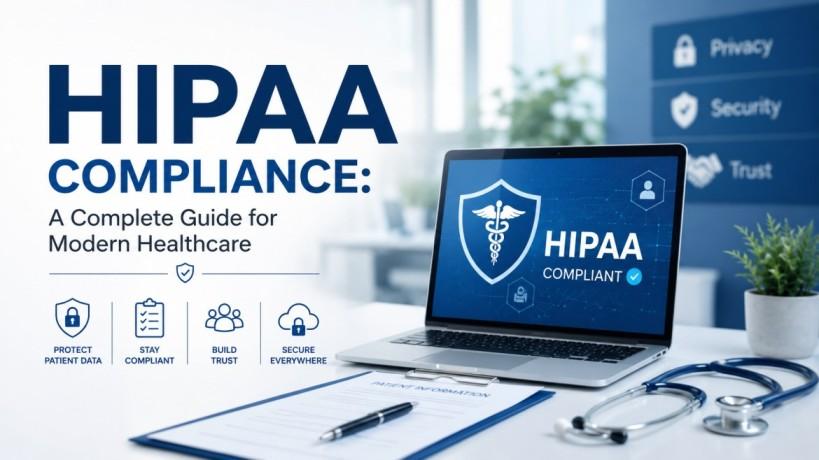
HIPAA Compliance: A Complete Guide for Modern Healthcare
In an era where digital transformation defines the medical landscape, HIPAA compliance remains the gold standard for protecting sensitive patient information. Whether you are a small clinic or a large-scale healthcare provider, understanding the intricacies of the Health Insurance Portability and Accountability Act is no longer just a legal obligation—it is a cornerstone of patient trust.
As cyber threats evolve and data fabric architectures become more complex, maintaining a robust HIPAA compliance posture requires more than just a checklist; it requires a culture of security.
The Core Pillars of HIPAA Compliance
To navigate the complexities of federal regulations, one must first understand the primary "Rules" that govern the protection of Protected Health Information (PHI).
The Privacy Rule
National guidelines for the security of specific health information are established by the Privacy Rule. The maximum penalty for multiple infractions is $1.5 million a year, with fines ranging from $100 to $50,000 each infraction.
The Security Rule
While the Privacy Rule covers all PHI, the Security Rule specifically addresses Electronic Protected Health Information (ePHI). It mandates three types of safeguards:
-
Administrative Safeguards: Policies and procedures designed to show how the entity will comply with the act.
-
Physical safeguards: Limiting physical access to prevent unauthorized access to confidential information.
-
Technical Safeguards: Controlling access to computer systems and enabling entities to protect ePHI transmitted over open networks from being intercepted by anyone other than the intended recipient.
The Breach Notification Rule
This rule requires HIPAA-covered entities and their business associates to provide notification following a breach of unsecured protected health information.
Why Cybersecurity and HIPAA Compliance Are Inseparable
In 2026, the intersection of healthcare IT and cybersecurity is more critical than ever. With the rise of telehealth and remote patient monitoring, the surface area for potential breaches has expanded. Implementing HIPAA compliance is your first line of defense against ransomware and data leaks.
Managed IT Services and Data Protection
Many organizations are turning to managed service providers to handle their technical safeguards. By utilizing cloud infrastructure that features end-to-end encryption and zero-trust authentication, providers can ensure that their patient data remains secure even in a hybrid work environment.
The Role of Business Associate Agreements (BAA)
If you share PHI with third-party vendors—such as cloud storage providers or billing services—you must have a signed BAA in place. This legal document ensures that the third party also adheres to the strict standards required for HIPAA compliance.
Technical Requirements for Modern Compliance
Implementing the right technology is half the battle. Here are the essential technical components every healthcare entity should monitor:
Encryption and Access Control
Encryption is required for all ePHI, both in transit and at rest. Furthermore, unique user identification and emergency access procedures ensure that only authorized personnel can view sensitive files.
Audit Controls and Integrity
In information systems that use or contain ePHI, you must put in place hardware, software, and/or procedural processes that capture and analyze activities. This allows for forensic analysis in the event of a security incident.
Common HIPAA Compliance Pitfalls to Avoid
Even well-intentioned organizations can fall short of full regulatory adherence. Here are the most common mistakes:
-
Lack of Risk Analysis: Failing to conduct a regular, thorough risk assessment is the most frequent reason for federal fines.
-
Insufficient Employee Training: Your staff is your weakest link. Regular training sessions on phishing and data handling are vital.
-
Improper Disposal: PHI doesn't just live on servers. Physical records and old hard drives must be destroyed according to specific standards.
-
Slow Breach Reporting: Waiting too long to notify the Department of Health and Human Services (HHS) after a leak can result in massive penalties.
Steps to Achieving HIPAA Compliance in 2026
If you are looking to bolster your security posture, follow these steps:
-
Self-Audit. Review your current policies and physical security measures.
-
Remediation Plans. If you find gaps, document a plan to fix them immediately.
-
Appoint a Compliance Officer. Designate someone to be responsible for the development and implementation of HIPAA policies.
-
Regular Documentation. In the eyes of auditors, "if it isn't documented, it didn't happen." Keep logs of every training session and system update.
By staying proactive, HIPAA compliance becomes a seamless part of your daily operations rather than a looming administrative burden.
FAQs
What information is protected under HIPAA?
HIPAA protects "individually identifiable health information," which includes names, social security numbers, addresses, and medical records related to a patient's past, present, or future physical or mental health condition.
Who needs to be HIPAA compliant?
Covered entities (healthcare providers, health plans, and healthcare clearinghouses) and their business associates (IT providers, lawyers, and accountants) who handle PHI must comply.
What are the penalties for HIPAA violations?
Depending on the degree of carelessness, different penalties apply. The maximum penalty for multiple infractions is $1.5 million a year, with fines ranging from $100 to $50,000 each infraction.
Does HIPAA apply to paper records?
Yes. While the Security Rule focuses on electronic data, the Privacy Rule covers PHI in any form, whether it is spoken, written on paper, or stored digitally.
How frequently should a risk assessment be carried out?
While the law doesn't specify a frequency, industry best practices suggest performing a full risk analysis annually or whenever there is a significant change in your IT infrastructure.
Conclusion
Maintaining HIPAA compliance is a continuous journey of improvement and vigilance. As technology continues to evolve, staying ahead of regulatory changes and emerging cyber threats is essential for any healthcare organization aiming for long-term success. Protecting patient data is not just about avoiding fines; it’s about providing a safe and secure environment for care.
If you are concerned about your current security posture or need assistance with managed IT solutions, we can help. For more information on securing your digital infrastructure, visit our HIPAA compliance services page or contact us today to speak with a specialist about your specific needs.
الأقسام
إقرأ المزيد
Modern career opportunities are increasingly driven by digital skills, and coding remains at the heart of every technology innovation. Whether it is web development, software programming, data engineering, or automation, coding knowledge is the foundation for building a successful IT future. In Kerala, Kochi has evolved as one of the fastest-growing skill development cities,...

According to a new report from Intel Market Research, the global CW DFB Laser Diode Market was valued at USD 1.24 billion in 2024 and is projected to grow from USD 1.32 billion in 2025 to USD 1.88 billion by 2034, exhibiting a robust CAGR of 6.2% during the forecast period. Growth is driven by increasing demand in telecommunications, sensing technologies, and defense applications, along with...
Exactitude Consultancy has just released a new report that dives into the global Mobile Security market. It explores everything from market size and share to demand and forecasts all the way through 2033. By analyzing historical data alongside current trends, the report sheds light on competitive strategies and the key factors driving market growth. Get FREE Sample Copy of this...
Old photo negatives hold some of the most valuable memories families own. From childhood moments and wedding celebrations to holidays and family gatherings, negatives often contain images that were never printed or shared. Sadly, these memories can fade, scratch, or become damaged over time if they are not properly preserved. This is where a modern negative scanner becomes essential. Today,...
An AC electric motor is a widely used device that converts alternating current (AC) electrical energy into mechanical energy. These motors are essential in numerous applications, ranging from household appliances to industrial machinery. By providing reliable and consistent rotational power, an AC electric motor supports various equipment functions and enhances operational efficiency in...