Why Your Micro Display Runs Too Hot (And How to Cool It)
Product architecture teams developing augmented reality (AR) smart glasses, industrial thermal imaging viewfinders, and defense-grade head-up displays (HUDs) operate under extreme spatial restrictions. To package high-resolution imaging engines into compact, lightweight form factors, engineering leads universally choose an ultra-dense micro display as their core optical component.
However, during continuous operational testing or high-luminance field trials, development teams regularly encounter a critical hardware bottleneck: thermal runaway and heat throttling. When the panel is pushed to the extreme nit levels required to overcome bright daylight or complex optical waveguide losses, it generates massive localized heat within seconds.
For B2B hardware manufacturers, an overheating display causes immediate color shifts, rapid pixel degradation, and automatic system shutdowns to prevent component melting. To build a commercially viable product, engineering teams must look beyond standard passive cooling fins and resolve the core silicon-level thermal bottlenecks causing the breakdown.
The Engineering Bottleneck: Why Micro Displays Overheat
To fix thermal issues in near-eye devices, we have to look closely at the physical architecture of an integrated micro display. Unlike large-scale consumer screens that have space for spread-out circuitry and active air currents, ultra-compact displays concentrate millions of driving circuits into a silicon backplane smaller than a postage stamp.
The core thermal failure stems from extreme current density combined with poor structural thermal dissipation pathways.
[ High-Luminance Micro Display Panel ]  --> Generates Dense Localized Heat
                  ↓
[ Compact Plastic / Composite Housing ] --> Traps Thermal Energy
                  ↓
[ Optical Waveguide / Lens Interface ]  --> Suffers Structural Deformation
When an AR headset demands high peak brightness (often exceeding $5,000\text{ nits}$), the driving transistors on the silicon substrate must channel high current levels continuously. This concentrated power creates a massive heat load within a highly restricted area.
Because near-eye hardware frames are often constructed from lightweight, low-conductivity polycarbonates or carbon composites to preserve user comfort, the generated heat has nowhere to go. It becomes trapped directly behind the optical engine. As the internal temperature climbs past $65^\circ\text{C}$, the organic or liquid crystal layers inside the display begin to lose structural stability. This triggers permanent drop-offs in brightness efficiency, erratic color imbalances, and structural warping of nearby optical lenses.
The Feasible Solution: Silicon Backplane Micro-Channels and Graphite Paths
Resolving this thermal bottleneck requires moving away from heavy, bulky copper heat sinks and integrating microscale thermal management technologies directly into your optical packaging pipeline.
1. Integrate Pyrolytic Graphite Sheets (PGS) Into the Module Packaging
Instead of standard aluminum thermal tape, utilize ultra-thin Pyrolytic Graphite Sheets (PGS) wrapped directly around the back of the display’s silicon wafer. PGS features exceptional thermal conductivity—up to four times higher than copper—while remaining highly flexible and incredibly lightweight. Layering a $25\,\mu\text{m}$ graphite sheet allows you to capture localized hotspots from the silicon backplane and spread the thermal energy horizontally across the broader surface of the headset frame, avoiding hot spots.
2. Implement Micro-Channel Silicon Coolers (MCSC)
For mission-critical or high-power defense hardware, design the display housing to include etched micro-channels right onto the back of the silicon carrier block.
[ Silicon Backplane Carrier Block ]
  =================================
    ≈ ≈ [ Liquid Micro-Channels ] ≈ ≈  <-- Forces heat away via micro-convection
  =================================
[ Flexible Pyrolytic Graphite Layer ]
These microscopic channels act as a micro-scale heat exchanger. By using a sealed, closed-loop micro-convective fluid layer or vapor chamber directly behind the display module, you can force heat away from the sensitive organic layers instantly. This keeps the panel operating smoothly within its ideal temperature zone, even during sustained maximum-brightness use.
3. Transition to High-Efficiency Micro LED Emitters
If your thermal budget is completely locked by headset weight constraints, update your procurement standards to favor Micro LED-based micro displays over traditional Micro OLED alternatives. Micro LED structures are built from inorganic gallium nitride (GaN) materials, which possess a naturally higher thermal tolerance and offer significantly better luminous efficiency. This allows the display to achieve equivalent nit outputs at a fraction of the power consumption, cutting heat generation at the source.
Strategic Commercial and Production Impact
Optimizing the thermal profile of your display engines directly changes the product lifecycle economics and market readiness of your hardware.
| Thermal Sourcing Approach | Standard Passive Assemblies | Advanced Graphite & Micro-Channel Cooling |
| Thermal Conductivity | Low ($200\text{ W/mK}$ with Aluminum) | Ultra-High ($1,500+\text{ W/mK}$ via PGS) |
| Max Brightness Duration | Restrained (Throttles after 2 mins) | Unlimited (Continuous stable operation) |
| Optical Component Lifespan | Significantly reduced due to heat | Extended (Maintains sub-micron alignment) |
| B2B Field Deployment | Limited to indoor/controlled areas | Ready for harsh industrial & outdoor use |
By deploying advanced graphite dissipation layouts, your engineering teams eliminate the need for heavy active cooling fans, keeping your product under the critical weight threshold required for comfortable all-day wear. Furthermore, guaranteed thermal stability allows your sales team to confidently secure long-term contracts in demanding sectors like outdoor field service, aerospace navigation, and surgical monitoring.
Conclusion
Thermal throttling and component overheating are major challenges when handling a high-brightness micro display, but they are fully solvable through modern packaging techniques. Excessive heat is not a permanent downside of using a compact display engine—it is a correctable problem caused by insufficient material conductivity and restricted airflow paths. By integrating ultra-thin pyrolytic graphite sheets, adopting micro-channel housing designs, and switching to high-efficiency emitters, development teams can deliver perfectly stable, high-performance visual devices.
Κατηγορίες
Διαβάζω περισσότερα
Starting a business is an exciting step, but it often comes with a long list of challenges especially if you're doing it in a new country. The good news? Portugal offers a welcoming and business-friendly environment for entrepreneurs from around the world. Even better, with the right guidance, the entire process can be smooth, fast, and completely stress-free. At Innovate360, we specialize in...

The global Automatic Lubrication System (ALS) market is experiencing steady growth as industries increasingly prioritize equipment reliability, operational efficiency, and preventive maintenance. Valued at US$ 1.1 Bn in 2022, the market is projected to reach US$ 1.5 Bn by 2031, expanding at a CAGR of 4.5% during the forecast period. Automatic lubrication systems are designed to deliver precise...

"Automated Sample Storage Systems Market Summary: According to the latest report published by Data Bridge Market Research, the Automated Sample Storage Systems Market The global automated sample storage systems market size was valued at USD 1.81 billion in 2025 and is expected to reach USD 7.22 billion by 2033, at a CAGR of 18.90% during the forecast...

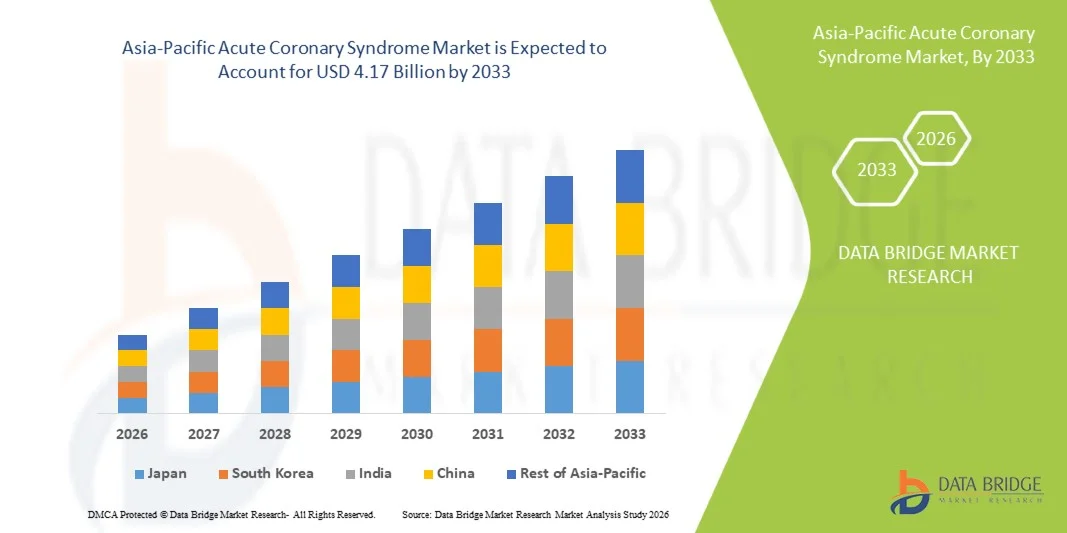
"According to the latest report published by Data Bridge Market Research, the Asia-Pacific Acute Coronary Syndrome Market The Asia-Pacific Acute Coronary Syndrome Market size was valued at USD 2.60 billion in 2025 and is expected to reach USD 4.17 billion by 2033, at a CAGR of 6.10% during the forecast period Winning Asia-Pacific Acute Coronary Syndrome...
Every business today needs a strong digital presence, and that begins with professional SEO services. Search engine optimisation helps companies rank higher on Google, attract targeted audiences, and build lasting credibility. From small businesses to global enterprises, SEO is one of the most effective strategies for sustainable online growth. Why Invest in SEO Services? Unlike paid...