


5 Leading Generative AI Companies in the USA (2026)
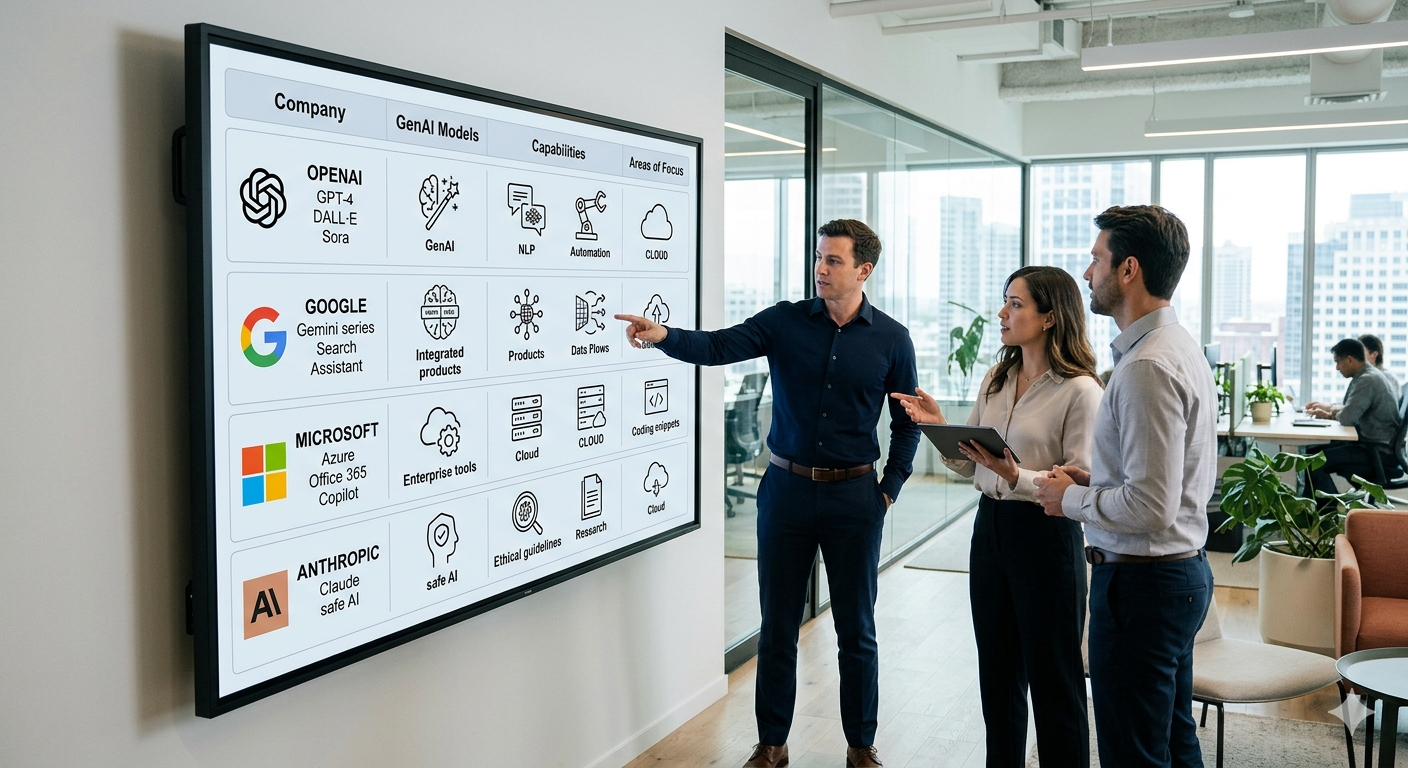
Generative AI has moved from experimentation to real business infrastructure. Companies across the United States are no longer asking whether to adopt AI they are asking who can build AI solutions that actually deliver outcomes.
From LLM-powered applications and AI copilots to automation workflows and predictive systems, choosing the right partner can define how fast and effectively a business scales.
This shortlist highlights 5 leading generative AI companies in the USA in 2026, based on their ability to deliver real-world AI solutions, scalability, enterprise readiness, and innovation in AI product development.
How These Companies Were Selected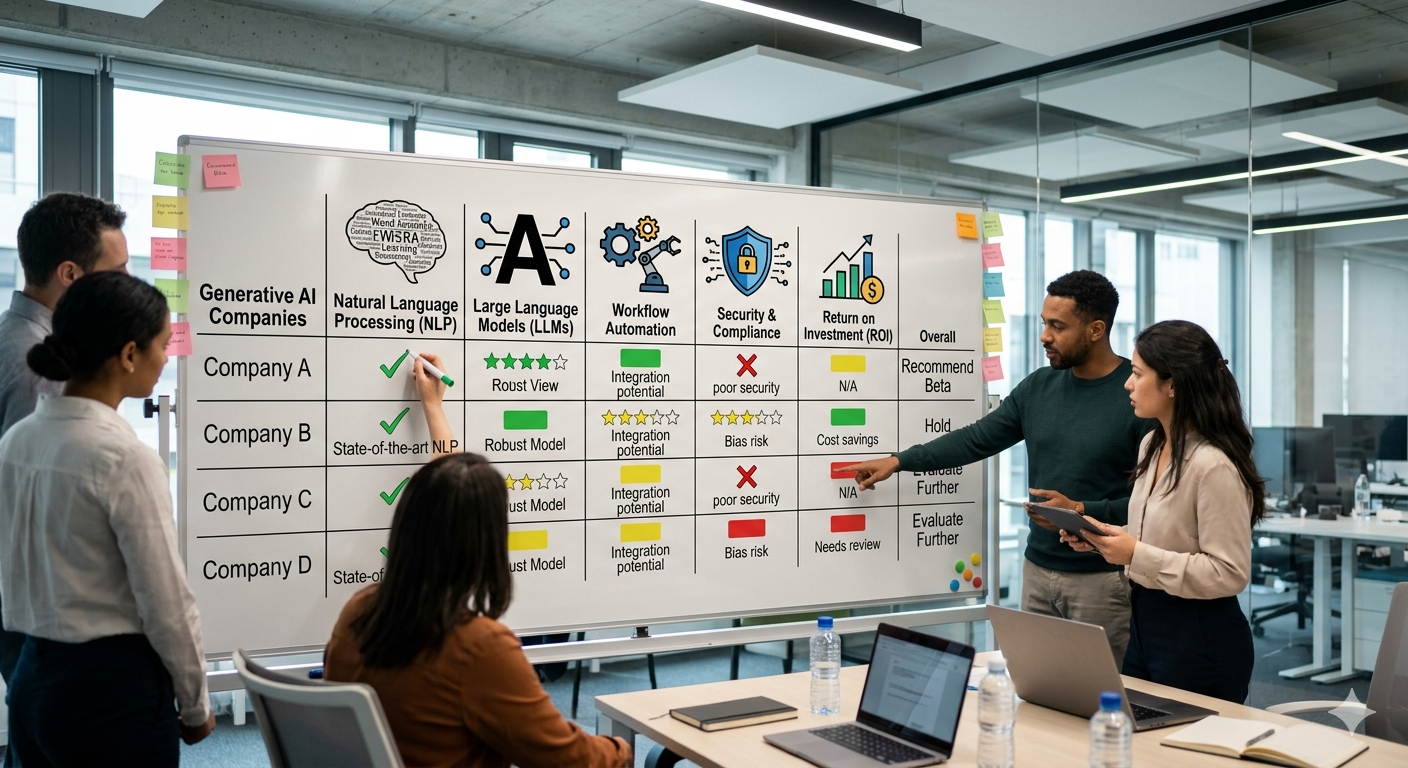
To ensure this list is valuable (not just promotional), selection is based on:
- Generative AI expertise: LLMs, RAG, AI agents, NLP, automation
- Real-world impact: production-level use cases, not just demos
- Scalability: ability to handle enterprise or high-growth workloads
- Technology stack: integration with cloud, APIs, data pipelines
- Business outcomes: efficiency, cost reduction, automation, ROI
Headquarters: San Francisco, USA
Focus: Generative AI, LLMs, AI platforms
OpenAI is one of the most influential organizations shaping generative AI globally. With models like GPT powering millions of applications, OpenAI has set the standard for natural language processing, AI copilots, and content generation.
Key Strengths:
- Advanced large language models (LLMs)
- Strong developer ecosystem and APIs
- Widely adopted across startups and enterprises
- Leading innovation in generative AI research
Best For:
- AI-powered SaaS platforms
- Chatbots, copilots, automation tools
- Product teams integrating LLM capabilities
Headquarters: Mountain View, USA (with global research)
Focus: Advanced AI research, generative models, multimodal AI
Google DeepMind combines deep research with real-world applications, making it one of the most advanced AI organizations globally. Its work in multimodal AI, reasoning systems, and large-scale models makes it a top-tier innovation leader.
Key Strengths:
- Multimodal AI (text, image, video)
- Strong research-to-production pipeline
- Integration with Google Cloud and enterprise tools
- AI applications across industries
Best For:
- enterprise AI transformation
- large-scale AI systems
- data-intensive applications
Headquarters: San Francisco, USA
Focus: Safe AI, LLMs, enterprise AI systems
Anthropic has gained strong recognition for its focus on safe, controllable, and enterprise-ready generative AI systems. Its Claude models are widely used for business workflows, content generation, and AI-driven decision support.
Key Strengths:
- Strong focus on AI safety and governance
- Enterprise-ready AI solutions
- Reliable long-form content generation
- High-quality reasoning capabilities
Best For:
- regulated industries (finance, healthcare)
- enterprise AI workflows
- AI compliance-driven environments
Headquarters: Redmond, USA
Focus: Enterprise AI, cloud AI infrastructure
Microsoft plays a major role in scaling generative AI through its Azure AI ecosystem and integration with OpenAI technologies. It enables businesses to deploy AI inside real workflows, not just standalone tools.
Key Strengths:
- Strong enterprise AI infrastructure
- Integration with Microsoft ecosystem (Office, Teams, Dynamics)
- Scalable cloud AI deployment
- enterprise-grade security and compliance
Best For:
- enterprise-scale AI adoption
- AI integration into business operations
- cloud-native AI systems
Headquarters: San Francisco, USA
Focus: data infrastructure, AI systems, enterprise AI
Scale AI is a key player behind many AI systems by providing data infrastructure, training pipelines, and AI model support. Its work enables large-scale AI deployment across industries like defense, logistics, and enterprise analytics.
Key Strengths:
- high-quality training data pipelines
- enterprise AI deployment support
- strong focus on scalability and infrastructure
- partnerships with large organizations
Best For:
- AI at scale
- data-driven AI systems
- enterprise AI operations
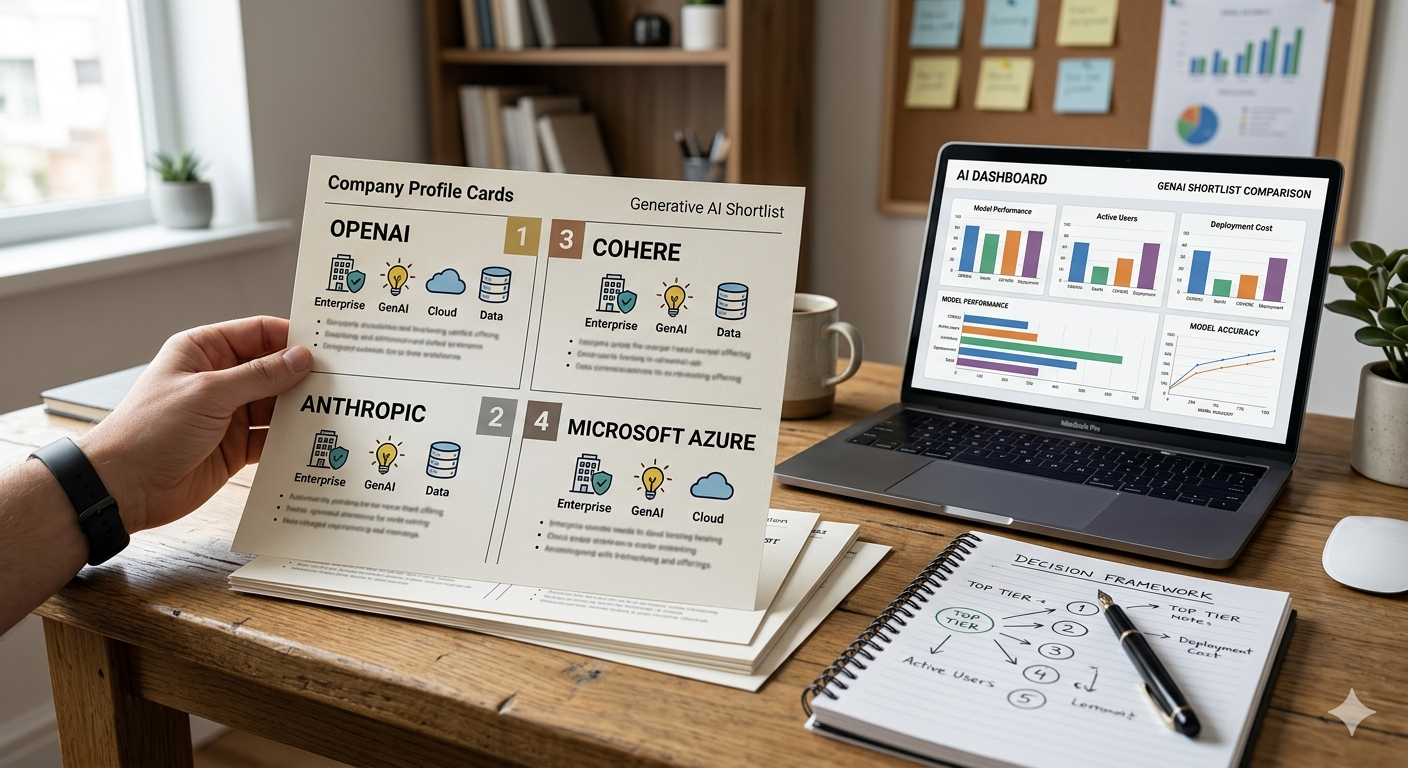
Generative AI is evolving fast. The companies that stand out are not just building models they are enabling businesses to:
- automate complex workflows
- reduce operational costs
- improve decision-making
- enhance customer experiences
- scale products faster
The difference between success and failure in AI adoption often comes down to choosing a partner that understands both technology and business context.

While the companies above lead in large-scale AI innovation, many startups and SMEs need something different:
- practical implementation
- product-focused development
- MVP to scalable system journey
- integration with existing workflows
ZAPTA Technologies helps businesses bridge that gap by combining strategy, design, engineering, and AI enablement into real-world software products.
If you are exploring custom software development or looking for an experienced AI development company to turn your AI idea into a production-ready product, ZAPTA can help you build with clarity and scale.
Generative AI is no longer optional. But success depends on choosing the right partner and building the right solution not just using the latest model.Ready to turn AI into a real product, not just an idea? Connect with ZAPTA Technologies and build scalable, AI-powered software designed for growth.
Frequently Asked Questions1. What is a generative AI company?
A generative AI company builds systems that create content such as text, images, code, or automation workflows using AI models like LLMs and neural networks.
2. Which is the best generative AI company in the USA?
There is no single “best” company. OpenAI, Google DeepMind, Anthropic, Microsoft, and Scale AI are among the leading players based on innovation and real-world usage.
3. How do I choose a generative AI development company?
Focus on:
- technical expertise
- real-world use cases
- scalability
- integration capabilities
- support after deployment
4. Can startups work with generative AI companies?
Yes, but many startups prefer implementation partners who can build full products using AI, not just provide models.
5. Does generative AI only apply to chatbots?
No. It applies to:
- automation
- recommendation systems
- content generation
- product features
- decision-support systems
Categorii
Citeste mai mult
Global Automotive Repair and Maintenance Services Market Expands with Rising Vehicle Ownership, Digital Workshop Transformation, and Predictive Maintenance Adoption Next-Generation Service Ecosystems Transform Automotive Aftermarket Through Connected Diagnostics, AI-Driven Maintenance, and Efficient Repair Operations The Automotive Repair and Maintenance Services Market is...

The demand for land investment in Goa has been rising rapidly, and plot price in goa has become a key factor for buyers looking for second homes or long term returns. Among the top developments, One Goa in Bicholim stands out as a premium plotted township offering luxury, connectivity, and strong appreciation potential. Overview of One Goa Bicholim Project When analyzing plot price in...

"Global Executive Summary Application Container Market: Size, Share, and Forecast CAGR Value The global application container market size was valued at USD 8.0 billion in 2024 and is expected to reach USD 76.94 billion by 2032, at a CAGR of 32.70% during the forecast period The Application Container Market analysis report focuses on leading global industry...
Search engines changed aggressively during recent years, although authority signals still shape rankings across competitive industries online every single day. Many websites publish useful articles consistently without gaining stable visibility because search engines still evaluate trust from external sources heavily. Good writing alone rarely proves credibility strongly enough anymore when...

"Executive Summary Small Wind Market Size and Share Analysis Report The global small wind market size was valued at USD 1.16 billion in 2024 and is expected to reach USD 3.42 billion by 2032, at a CAGR of 14.50% during the forecast period This Small Wind Market report is useful in evaluating the relative efficiency of the different advertising media,...
