


Cost Effective CPVC Ball Valve for Industrial Piping Systems
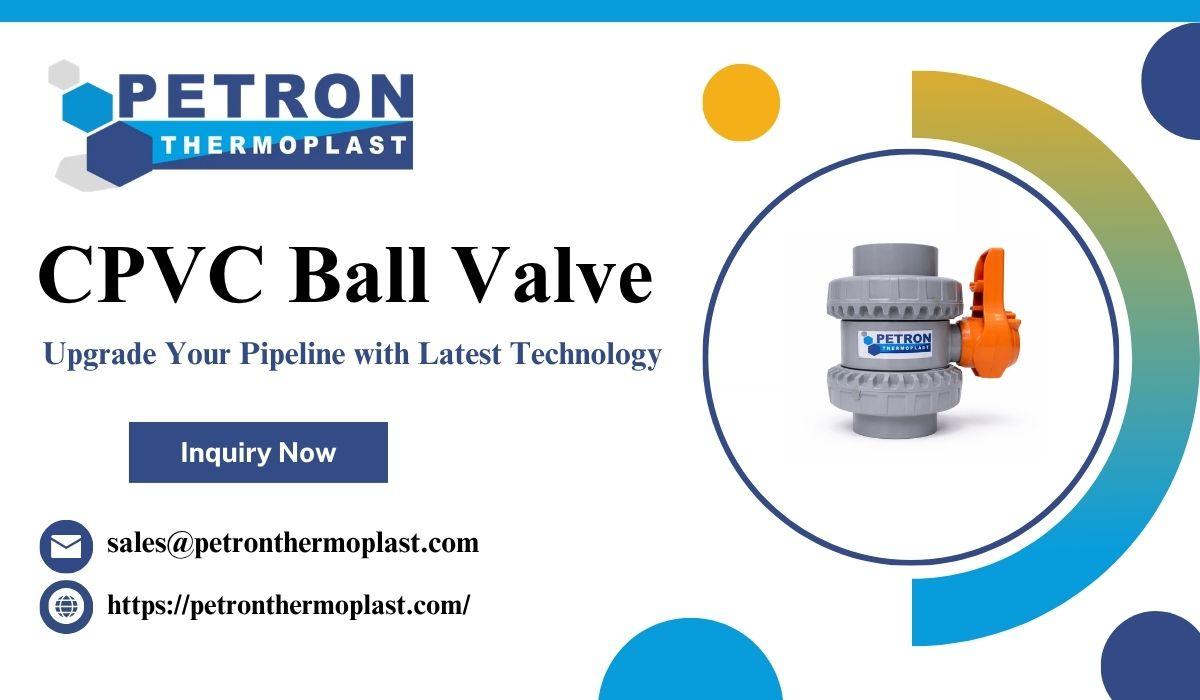
Industrial piping systems require reliable flow control components capable of handling corrosive chemicals, pressure variations, and continuous operational demands. In industries such as chemical processing, water treatment, pharmaceuticals, electroplating, and industrial manufacturing, valves play a critical role in maintaining process safety and operational efficiency.
Among various industrial valve solutions, CPVC ball valves are widely preferred because of their excellent chemical resistance, leak-proof performance, lightweight construction, and cost-effective operation. These valves provide reliable shut-off control for industrial fluid systems while reducing maintenance and operational expenses.
A cost effective CPVC ball valve offers industries long-term value by combining durability, corrosion resistance, and low maintenance requirements. This makes CPVC ball valves highly suitable for modern industrial piping systems.
Understanding CPVC Ball Valves
CPVC stands for Chlorinated Polyvinyl Chloride, a thermoplastic material designed for industrial piping systems operating under corrosive and elevated temperature conditions.
A CPVC ball valve is a quarter-turn valve used to:
- Control fluid flow
- Start or stop pipeline operation
- Isolate process sections
- Regulate industrial fluid transfer
The valve operates using a rotating ball with a bore through the center. When aligned with the pipeline, fluid flows freely. Rotating the handle closes the valve and stops flow.
CPVC ball valves are commonly used in:
- Chemical plants
- Water treatment facilities
- Industrial utility systems
- Pharmaceutical industries
- Process engineering applications
Their simple design and efficient operation make them suitable for multiple industrial environments.
Why Industries Prefer CPVC Ball Valves?
Industrial systems require valves capable of maintaining reliable performance while minimizing operational costs.
CPVC ball valves provide several important advantages.
Excellent Chemical Resistance
One of the major benefits of CPVC material is its strong resistance against corrosive industrial chemicals.
CPVC ball valves can safely handle:
- Acids
- Alkalis
- Industrial chemicals
- Salt solutions
- Water treatment chemicals
This improves process safety and reduces corrosion-related failures.
Cost Effective Operation
CPVC ball valves offer long-term economic advantages because of:
- Lower maintenance costs
- Reduced replacement frequency
- Corrosion-free operation
- Long operational lifespan
Their cost efficiency makes them highly suitable for industrial projects requiring reliable performance within budget.
Lightweight Construction
Compared to metal valves, CPVC valves are lightweight and easier to install.
This reduces:
- Transportation expenses
- Installation effort
- Labor costs
- Maintenance complexity
Leak-Proof Performance
Reliable sealing is essential for industrial fluid control systems.
CPVC ball valves provide:
- Tight shut-off performance
- Stable operation
- Safe chemical handling
- Reduced leakage risk
Long Operational Life
Industrial CPVC ball valves are designed to perform reliably under continuous industrial operation and corrosive conditions.
Key Features of Industrial CPVC Ball Valves
Modern industrial CPVC ball valves are engineered for dependable and efficient industrial performance.
Corrosion-Free Construction
Unlike metal valves, CPVC does not rust or corrode under chemical exposure.
This helps improve:
- Reliability
- Operational stability
- Service life
- Maintenance efficiency
Smooth Flow Characteristics
Smooth internal surfaces improve:
- Fluid movement
- Pressure consistency
- Process efficiency
- Flow stability
Strong Mechanical Durability
Industrial CPVC valves are designed to withstand:
- Pressure fluctuations
- Mechanical stress
- Industrial vibration
- Continuous operation
Easy Valve Operation
Quarter-turn operation allows fast and simple valve control.
This improves:
- Process management
- Operational convenience
- Maintenance efficiency
Low Maintenance Requirements
Corrosion-resistant thermoplastic construction reduces maintenance requirements significantly.
Applications of CPVC Ball Valves
Industrial CPVC ball valves are widely used across multiple industries requiring reliable fluid control systems.
Chemical Processing Industries
Chemical plants use CPVC valves for:
- Acid transfer systems
- Chemical dosing lines
- Corrosive fluid handling
- Process pipelines
Water Treatment Plants
CPVC ball valves are commonly used in:
- Water distribution systems
- Filtration systems
- Chemical treatment lines
- Utility piping networks
Pharmaceutical Industries
Pharmaceutical facilities require clean and reliable process systems.
CPVC valves support:
- Process water systems
- Chemical transfer
- Utility fluid control
Electroplating Industries
Electroplating operations involve aggressive chemical solutions requiring corrosion-resistant valve systems.
Industrial Utility Systems
CPVC ball valves are used in:
- Cooling water systems
- Industrial drainage systems
- Process utility pipelines
- Fluid management networks
Advantages of CPVC Ball Valves Over Metal Valves
Industries increasingly replace metal valves with CPVC systems because of their operational and economic benefits.
|
Feature |
CPVC Ball Valve |
Metal Valve |
|
Corrosion Resistance |
Excellent |
Limited |
|
Weight |
Lightweight |
Heavy |
|
Maintenance |
Low |
High |
|
Chemical Resistance |
Excellent |
Moderate |
|
Installation Cost |
Lower |
Higher |
|
Operational Life |
Long |
Moderate |
|
Leakage Risk |
Low |
Moderate |
Factors to Consider Before Selecting a CPVC Ball Valve
Choosing the correct valve is important for maintaining reliable industrial operation.
Chemical Compatibility
Ensure compatibility between the valve material and process fluid.
Pressure Rating
Industrial systems require valves capable of handling operating pressure safely.
Temperature Conditions
CPVC valves should match the required operating temperature range.
Valve Size
Selecting the proper valve size improves:
- Flow efficiency
- Pressure stability
- System performance
Product Quality
High manufacturing quality improves:
- Reliability
- Leak protection
- Operational safety
- Long-term durability
Installation Benefits of CPVC Ball Valves
Industrial CPVC valves simplify installation and system integration.
Easy Handling
Lightweight construction reduces installation effort and labor requirements.
Fast Installation
Simple joining methods improve project efficiency and reduce installation time.
Flexible System Integration
CPVC valves can be integrated into various industrial piping configurations.
Maintenance Benefits of CPVC Ball Valves
Low maintenance is one of the biggest advantages of CPVC valve systems.
Corrosion-Free Performance
CPVC valves do not require anti-corrosion coatings or special protective treatment.
Reduced Repair Costs
Durable construction minimizes unexpected breakdowns and maintenance expenses.
Long-Term Operational Stability
Reliable valve performance supports uninterrupted industrial operation.
Lower Lifecycle Costs
Reduced maintenance and replacement requirements improve long-term project economics.
Environmental and Economic Advantages
Modern industries increasingly focus on sustainable and cost-efficient infrastructure solutions.
CPVC valve systems support these goals through:
- Long service life
- Reduced maintenance waste
- Lower replacement frequency
- Efficient fluid management
- Cost-effective operation
Their durable thermoplastic construction also helps improve overall industrial efficiency.
Importance of Choosing the Right Manufacturer
The quality of industrial valves depends heavily on manufacturing standards and engineering expertise.
A trusted manufacturer provides:
- Precision engineering
- Quality-tested products
- Reliable technical support
- Consistent manufacturing standards
- Industrial-grade performance
High-quality manufacturing improves process safety and operational reliability.
Why CPVC Ball Valves Are a Smart Industrial Investment?
Industrial facilities require reliable flow control systems capable of operating efficiently under corrosive and demanding conditions.
CPVC ball valves provide:
- Excellent chemical resistance
- Leak-proof operation
- Long operational life
- Low maintenance requirements
- Cost-effective performance
- Reliable process control
These advantages make them highly suitable for modern industrial piping infrastructure.
Future Demand for Industrial CPVC Ball Valves
The demand for thermoplastic valve systems continues to increase as industries invest in:
- Corrosion-resistant infrastructure
- Low maintenance process systems
- Cost-efficient piping solutions
- Long-lasting industrial equipment
CPVC ball valves remain one of the most trusted choices for industrial fluid control applications.
Conclusion
Cost effective CPVC ball valves provide reliable, corrosion-resistant, and low maintenance solutions for modern industrial piping systems. Their excellent chemical resistance, lightweight construction, leak-proof performance, and long operational life make them highly suitable for chemical processing plants, water treatment facilities, pharmaceutical industries, and industrial utility systems.
Industrial CPVC ball valves help improve process safety, reduce operational costs, and maintain efficient fluid control across demanding industrial environments. Their durable thermoplastic construction supports reliable long-term industrial performance while minimizing maintenance requirements and infrastructure expenses.
Choosing high-quality CPVC ball valves from a trusted manufacturer helps industries maintain efficient process operations, safe chemical handling, and dependable industrial piping performance.
Categorias
Leia mais
In today’s fast-evolving fashion world, comfort and style go hand in hand—and no brand captures this balance better than Hellstar. Known for its bold designs and premium-quality apparel, Hellstar has quickly become a favorite among streetwear enthusiasts. Among its standout pieces, Hellstar Shorts have gained massive popularity for their lightweight comfort, edgy aesthetics, and...
Défis et Récompenses FUT Pour relever le défi DCE Lois Openda, il faut constituer une équipe en mode FUT de FC 25. L'objectif est de débloquer la carte TOTS mention honorable de Lois Openda en terminant ce challenge. Ce challenge débute le samedi 10 mai à 19h et s'étend sur deux semaines, se concluant le samedi 24 mai à 19h. En...

The Global Home Healthcare Devices Market Report presents an in-depth analysis, merging qualitative and quantitative insights to provide a holistic understanding of the market's dynamics. The report evaluates growth drivers, challenges, and constraints while forecasting revenue trends across key segments. It offers both historical and projected data, giving stakeholders a clear view of market...

India has long been recognized as the spiritual birthplace of yoga, attracting seekers from every corner of the world. For aspiring yoga teachers and dedicated practitioners who want to deepen their knowledge, enrolling in a 300 hour yoga training in India can be a life-changing experience. This advanced-level certification not only enhances teaching skills but also provides a profound...

Online betting has become one of the most popular forms of digital entertainment around the world. Players today want a platform that is secure, easy to use, fast, and enjoyable. MB66 successfully meets these expectations by offering a modern online betting experience with a large collection of games, reliable services, and strong customer support. MB66 is recognized as a trusted...