5 Powerful SEM Hacks to Reduce Ad Spend

Search Engine Marketing is one of the fastest ways to generate targeted traffic, leads, and online sales. Platforms like Google Ads allow businesses to reach customers exactly when they are searching for products or services online. However, many businesses struggle with rising advertising costs and poor return on investment because their campaigns are not optimized properly.
Reducing ad spend does not mean reducing results. Successful digital marketing strategies focus on improving efficiency, audience targeting, SEO integration, and content marketing to achieve better performance with lower costs. Smart marketers use data-driven optimization techniques to maximize conversions while minimizing wasted advertising budgets.
If you want stronger campaign performance, lower advertising costs, and sustainable online growth, this guide will show you five powerful SEM hacks to reduce ad spend effectively.
Why Do Businesses Overspend on SEM Campaigns?
Many businesses launch campaigns without proper optimization or performance analysis. This often leads to wasted clicks, low-quality traffic, and poor conversion rates.
Common reasons businesses overspend include:
-
Broad keyword targeting
-
Weak audience segmentation
-
Poor landing page experiences
-
Low-quality ad copy
-
Lack of conversion tracking
Successful digital marketing campaigns focus on efficiency and continuous optimization instead of simply increasing budgets.
Hack #1: Use Long-Tail Keywords Instead of Broad Keywords
One of the most effective ways to reduce SEM costs is by targeting long-tail keywords. Broad keywords often have higher competition and more expensive cost-per-click rates.
Benefits of long-tail keywords include:
-
Lower advertising costs
-
Better audience targeting
-
Higher conversion potential
-
Reduced competition
-
Improved search intent matching
For example, instead of targeting “SEO,” businesses may target “SEO services for small businesses” to attract more relevant traffic.
Combining SEO research with SEM keyword strategies helps businesses identify cost-effective opportunities while improving campaign performance.
Hack #2: Improve Landing Page Quality
Landing pages play a major role in ad performance and quality scores. Even the best ads can waste money if users have poor website experiences after clicking.
Effective landing page optimization includes:
-
Fast loading speeds
-
Mobile-friendly design
-
Clear headlines and messaging
-
Strong call-to-action buttons
-
SEO-optimized content
Better landing page experiences often improve conversion rates and reduce advertising costs through higher ad quality scores.
Hack #3: Use Audience Segmentation and Remarketing
Audience targeting is one of the biggest advantages of Search Engine Marketing. Businesses that target audiences precisely often reduce wasted clicks and improve lead quality.
Effective targeting strategies include:
-
Geographic targeting
-
Demographic segmentation
-
Interest-based audiences
-
Device-based targeting
-
Remarketing campaigns
Remarketing is especially powerful because it targets users who already interacted with your website or content, making them more likely to convert.
Hack #4: Optimize Ad Copy for Higher Click-Through Rates
Ad copy directly affects campaign performance and advertising efficiency. Poorly written ads often lead to lower click-through rates and higher costs.
High-performing ad copy strategies include:
-
Using targeted keywords naturally
-
Highlighting clear customer benefits
-
Creating strong call-to-action phrases
-
Adding emotional appeal
-
Matching user search intent
Businesses that continuously test ad headlines and descriptions often improve engagement while reducing wasted spend.
Hack #5: Combine SEO and Content Marketing with SEM
Many businesses rely only on paid advertising without building organic traffic strategies. Combining SEO and content marketing with SEM helps reduce dependency on expensive ad campaigns.
Benefits of integrating SEO and content marketing include:
-
Increased organic website traffic
-
Better website authority
-
Improved audience trust
-
Higher engagement rates
-
Lower long-term advertising costs
Content marketing also supports SEM by improving landing page quality and providing valuable information for users.
How Does Conversion Tracking Reduce Ad Waste?
Conversion tracking helps businesses understand which campaigns, keywords, and audiences generate results. Without proper tracking, businesses often continue spending money on underperforming ads.
Important metrics to monitor include:
-
Conversion rates
-
Cost per conversion
-
Click-through rates
-
Bounce rates
-
Return on investment (ROI)
Data-driven optimization helps marketers allocate budgets more efficiently and improve overall digital marketing performance.
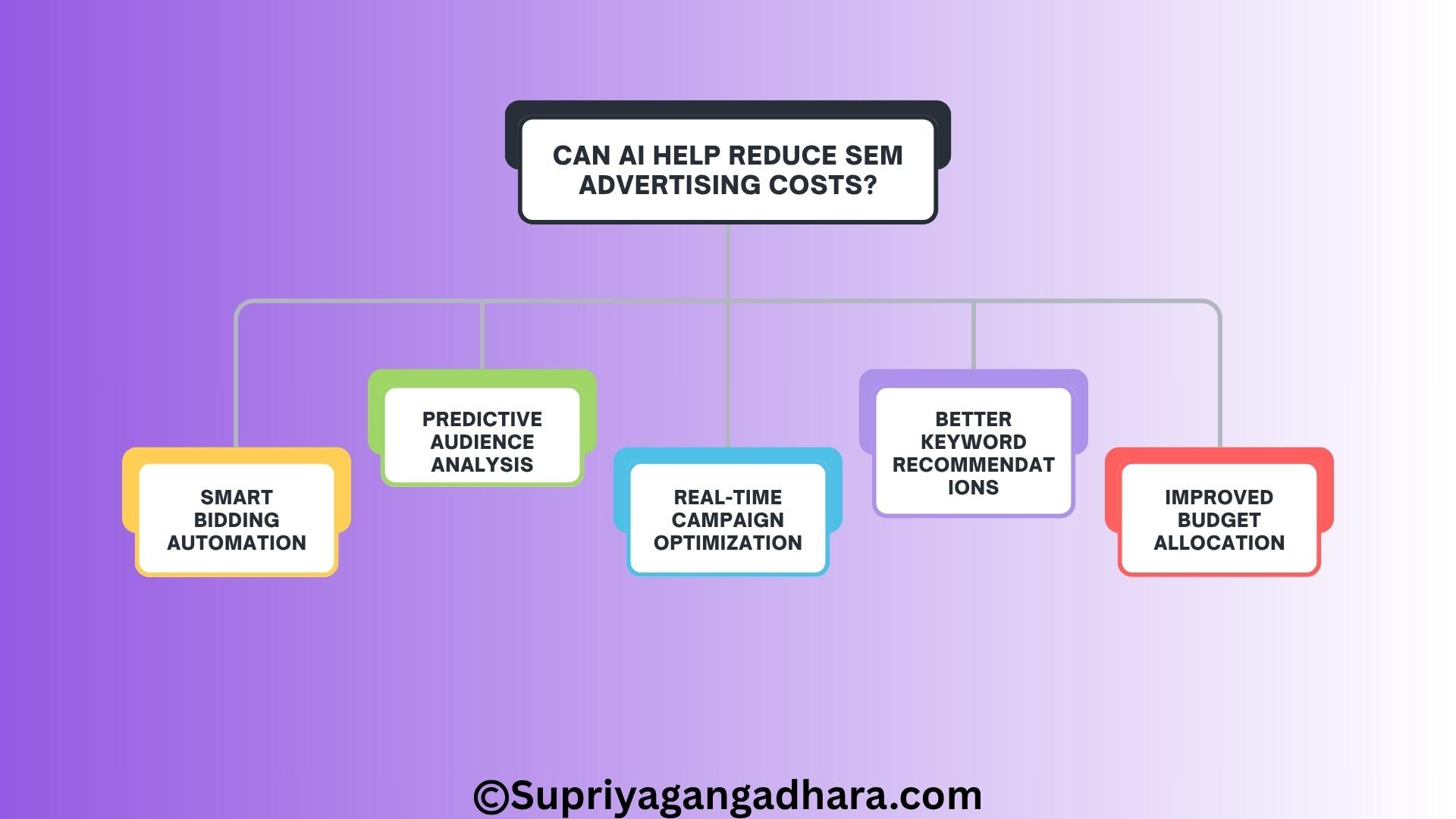
Can AI Help Reduce SEM Advertising Costs?
Artificial Intelligence is transforming digital marketing and Search Engine Marketing optimization. AI-powered tools help businesses automate campaign management and improve efficiency.
AI-powered SEM advantages include:
-
Smart bidding automation
-
Predictive audience analysis
-
Real-time campaign optimization
-
Better keyword recommendations
-
Improved budget allocation
AI helps businesses make smarter decisions while reducing manual campaign management effort.
Why Is Mobile Optimization Important for SEM Performance?
Most online searches now happen on mobile devices. Poor mobile experiences can reduce engagement and increase wasted advertising spend.
Mobile optimization strategies include:
-
Fast-loading mobile pages
-
Responsive website design
-
Easy-to-click buttons
-
Short and readable content
-
Mobile-friendly landing pages
Businesses that optimize for mobile users often achieve stronger conversion rates and better SEM performance.
How Can Businesses Scale Campaigns While Controlling Costs?
Scaling SEM campaigns successfully requires strategic optimization instead of aggressive spending increases.
Effective scaling strategies include:
-
Gradually increasing budgets
-
Testing multiple ad variations
-
Monitoring audience performance
-
Improving landing page experiences
-
Pausing underperforming campaigns
Businesses that focus on efficiency and data-driven decisions often achieve sustainable long-term growth.
Conclusion
Search Engine Marketing is one of the most effective digital marketing strategies for driving targeted traffic and generating online growth. However, businesses that fail to optimize campaigns often waste significant advertising budgets.
By using long-tail keywords, improving landing pages, targeting audiences effectively, optimizing ad copy, and combining SEO with content marketing, businesses can reduce ad spend while improving campaign performance. AI-powered tools and data-driven optimization further help marketers create more efficient and scalable SEM strategies.
Categorii
Citeste mai mult
"According to the latest report published by Data Bridge Market Research, the Density Meter Market The global density meter market size was valued at USD 1.12 billion in 2024 and is expected to reach USD 1.57 billion by 2032, at a CAGR of 4.26% during the forecast period This Density Meter Market research report is one of the unmatched and comprehensive...

Chrome Web Store Plagued by AI-Themed Spyware Extensions Security researchers have identified a concerning trend of malicious browser add-ons masquerading as artificial intelligence tools on Google's extension marketplace. Over 30 deceptive extensions have been found targeting more than 260,000 users, all designed to steal sensitive information from Gmail accounts and track browsing...
Introduction to Legacy Eric Carter Black Leather Jacket The Legacy Eric Carter Black Leather Jacket is more than just a piece of clothing; it represents confidence, bold personality, and timeless fashion appeal. Designed for individuals who appreciate strong style statements, this jacket has become a modern favorite in casual and semi-formal fashion. The legacy Eric Carter Black Leather...

According to the latest report published by Data Bridge Market Research, the Transmission Mounting Bracket Market CAGR Value For structuring the finest market research report like this Transmission Mounting Bracket Market, a devoted team of experienced forecasters, well-versed analysts and knowledgeable researchers work painstakingly. The report not only offers insights into...

A Guide to Modern Weight Loss Solutions Maintaining a healthy weight is an important part of overall wellness. While balanced nutrition and regular physical activity remain the foundation of weight management, some individuals may explore medical treatments under the supervision of qualified healthcare professionals. People searching for "weight loss shots in texas USA" are often interested in...