


Why Do Georgia Business Owners Keep Switching to Online Bookkeeping Services?

Georgia is not a small market. According to the U.S. Small Business Administration's 2025 State Profile, the state is home to 1.4 million small businesses, making up 99.7% of all businesses in Georgia and employing 1.8 million people. That is a massive chunk of the economy, and most of those business owners did not start their companies because they love spreadsheets.
They started because they had a great product, a skill, or a vision. The bookkeeping part? That usually comes as an unwelcome surprise.
If you are a small business owner, freelancer, or startup founder in Georgia and you are tired of chasing receipts or panicking every April, this guide is for you. We are going to walk through what makes a bookkeeping service worth your money, what to look for in Georgia specifically, and which online services are actually doing the job well.
What Does an Online Bookkeeping Service Actually Do?
Before you spend a dollar, it helps to understand what you are buying.
A bookkeeping service handles the daily financial record-keeping of your business. That includes tracking income and expenses, reconciling your bank accounts, preparing financial reports like profit-and-loss statements, balance sheets, and cash flow summaries, and keeping your records tax-ready throughout the year.
The difference between a bookkeeper and an accountant is worth noting here. A bookkeeper records and organizes your financial data. An accountant analyzes and interprets that data, and in most cases, a CPA oversees the bookkeeper's work. Many online services offer both under one roof, which is convenient if you want a one-stop solution.
Online bookkeeping services take all of this work and move it into the cloud. Your dedicated bookkeeper works remotely, uses software like QuickBooks Online or Xero, and sends you regular reports without needing a physical office visit. For most small businesses in Georgia, this setup is not just convenient, it is significantly more affordable than hiring in-house.
How Much Does Online Bookkeeping Cost in Georgia?
Let's talk numbers, because this is usually the first question.
For most small businesses in Georgia, basic bookkeeping services start around $95 to $110 per month for a single account and scale up to $1,000 per month or more for high-volume or complex operations, according to pricing data from providers like Remote Books Online and GoGirlFinance.
Compare that to hiring someone in-house. According to industry data cited by Bob's Bookkeepers, an in-house bookkeeper in the U.S. typically costs between $50,000 and $70,000 per year, plus benefits. Outsourcing the same work online generally costs between $3,000 and $6,000 per year, a difference that is hard to ignore.
Most online providers offer tiered pricing based on the number of bank accounts, transaction volume, or services included. Some offer flat-rate monthly plans with everything bundled in. Others charge à la carte for extras like payroll processing or custom financial reports. Know what your business actually needs before you compare prices, otherwise you are comparing apples to grapefruits.
What Makes a Bookkeeping Service Worth It in Georgia Specifically?
Georgia has its own tax structure that any good bookkeeper should understand. The state imposes a 5.75% personal income tax, a similar corporate tax rate for C corporations, and a 4% state sales tax, with local sales taxes that vary by county. If you have remote employees working in different counties or across state lines, the compliance picture gets more complex.
Beyond taxes, Georgia's business environment is uniquely active. Between March 2023 and March 2024 alone, over 41,000 Georgia business establishments opened, according to the U.S. Bureau of Labor Statistics data compiled in the SBA's 2025 State Profile. That level of new business activity means bookkeeping demand is high, and so is competition among providers to serve it.
When evaluating any bookkeeping service for your Georgia business, here are the things that genuinely matter:
Georgia tax and payroll knowledge. Not every national service understands state-specific rules. Look for providers who specifically mention Georgia compliance and who handle quarterly estimated tax payments and year-end reporting correctly.
Software compatibility. Most quality services work with QuickBooks Online or Xero. If you already use one of these platforms, find a provider certified in it. Certified QuickBooks ProAdvisors and Xero-Certified Advisors know the software well enough to catch errors that a general bookkeeper might miss.
Dedicated bookkeeper vs. rotating team. Some services assign you a dedicated person. Others route your work through a team. Neither is inherently wrong, but dedicated bookkeepers tend to understand your business better over time.
Turnaround and communication. If you have a question on a Tuesday afternoon, how quickly does someone respond? Same-day responses are a reasonable expectation from a quality provider.
Scalability. Your business today is not your business in three years. Make sure the service can grow with you, or at least make it easy to exit if you outgrow their model.
Which Online Bookkeeping Services Are Serving Georgia Businesses?
Several established providers actively serve Georgia small businesses, each with a different approach.
Bench Accounting is one of the more well-known names in online bookkeeping. Their model pairs intuitive software with human bookkeepers who understand Georgia-specific tax obligations. They handle state sales tax, income tax, and startup-specific tax credits. Bench integrates with tools like Stripe, Shopify, Square, and Gusto, which is a real advantage for e-commerce or payroll-heavy businesses. Their platform centralizes financial data in one dashboard, so you are not chasing reports across multiple tools. According to their website, they serve over 35,000 U.S. business owners.
Remote Books Online offers bookkeeping starting at $95 per month for a single checking account, with services provided by Certified QuickBooks ProAdvisors and Xero-Certified Advisors. They include accounting software in their pricing, automate monthly bank statement downloads, and assign a dedicated lead accountant with a minimum four-year accounting degree. They also offer a free first-month reconciliation, which is a reasonable way to test the quality of their work before committing.
Sync-Up Bookkeeping takes a locally-rooted approach, serving businesses across the Atlanta metro area and across Georgia more broadly. Their team, which has experience ranging across healthcare, aerospace, and finance industries, focuses on real-time financial insights and personalized reporting. They emphasize being a financial advocate rather than just a record-keeper.
Numerawise Solutions LLC operates as a fully remote, cloud-based service catering to small and medium businesses in Atlanta and nationally. They use flat-rate pricing and cloud-based tools, which suits businesses that want predictable monthly costs and no in-person overhead.
Fricke & Associates, LLC serves businesses in Atlanta, Marietta, and Peachtree Corners. They combine traditional bookkeeping with accounting analysis, CPA oversight, and tax-focused financial reporting, a good fit for businesses that want a more integrated relationship between their bookkeeper and accountant.
For businesses behind on their books, several of these providers offer catch-up bookkeeping, a service that gets your records current quickly, often within a week. This is genuinely useful for businesses that have let things slide or are preparing for a loan application, tax filing, or audit.
Virtual vs. Local: Does the Location of Your Bookkeeper Actually Matter?
This is a fair question, and the honest answer is: less than you might think.
Cloud-based bookkeeping has matured significantly. Your bank statements sync automatically to the bookkeeper's platform. Financial reports come to you by email or dashboard. Questions get answered by phone or video. You do not need someone sitting across a desk to get accurate, timely books.
That said, if you prefer the option of meeting in person, especially for initial onboarding or tax strategy conversations, a locally based service like Fricke & Associates or Sync-Up Bookkeeping might be worth the slightly higher price for the relationship it brings.
As Numerawise Solutions put it well: virtual bookkeeping in 2025 is not a trend. It is the standard.
When Is the Right Time to Hire an Online Bookkeeper?
The right time is usually earlier than you think.
Most business owners wait until tax season is looming, the books are a mess, or a bank is asking for financial statements to approve a loan. By that point, you are paying catch-up rates and losing sleep unnecessarily.
A few practical signals that you need a bookkeeper now:
You have not reconciled your accounts in more than two months. Your profit and loss statement does not match what you feel like you are making. You filed a tax extension last year (and maybe the year before). You are spending more than a few hours a month on financial admin that is not strategic.
Bookkeeping is not glamorous. But clean books mean faster tax filings, better loan applications, clearer business decisions, and fewer surprises. For a state with 1.4 million small businesses competing for the same customers and capital, that clarity is a real edge.
A Few Things to Get Right Before You Sign Up
Do not just hand over your financial access to the first provider you find on a Google search. Take a reasonable amount of care here.
Ask about data security. Your bank statements and transaction data are sensitive. A quality service should use encrypted connections and follow current data protection standards.
Understand the contract terms. Some services lock you into annual plans. Others are month-to-month. Know what happens if you want to leave, and make sure you can export your data cleanly.
Confirm what software they use and whether you retain access to it. If you ever switch providers, you want your financial history to come with you.
And finally, start with a trial or a single month of catch-up work if the provider offers it. Seeing the quality of their output before committing to a year is just good sense.
The Bottom Line
Finding the best online bookkeeping services in Georgia comes down to matching your business size, transaction volume, software preferences, and budget to a provider who understands Georgia tax rules and communicates clearly.
The good news is there are solid options at every price point, from $95-a-month solo-account services to full-service firms that pair you with a dedicated CPA-supervised bookkeeper. The market has matured, and you do not need to overpay for quality anymore.
What you do need to do is stop putting it off. Every month without organized books is a month of financial fog, and fog is no way to run a business.
Finely Balanced Financial Solutions
Categorie
Leggi tutto
In the UK, patients are increasingly exploring legal medical cannabis access as an alternative or supplementary treatment for chronic conditions. Cannabis-based therapy is strictly regulated, and patients can only access it through licensed healthcare professionals. Evergreen Terpene offers a comprehensive Medical cannabis access service designed to make the process simple, safe, and fully...

Gutter Services in Weatherford, TX play a crucial role in protecting homes from water damage. Properly installed and maintained gutters direct rainwater away from your roof, walls, and foundation, preventing leaks, erosion, and structural damage. Regular cleaning, repair, and replacement help maintain their efficiency and prevent clogs that can cause overflowing water. Professional gutter...

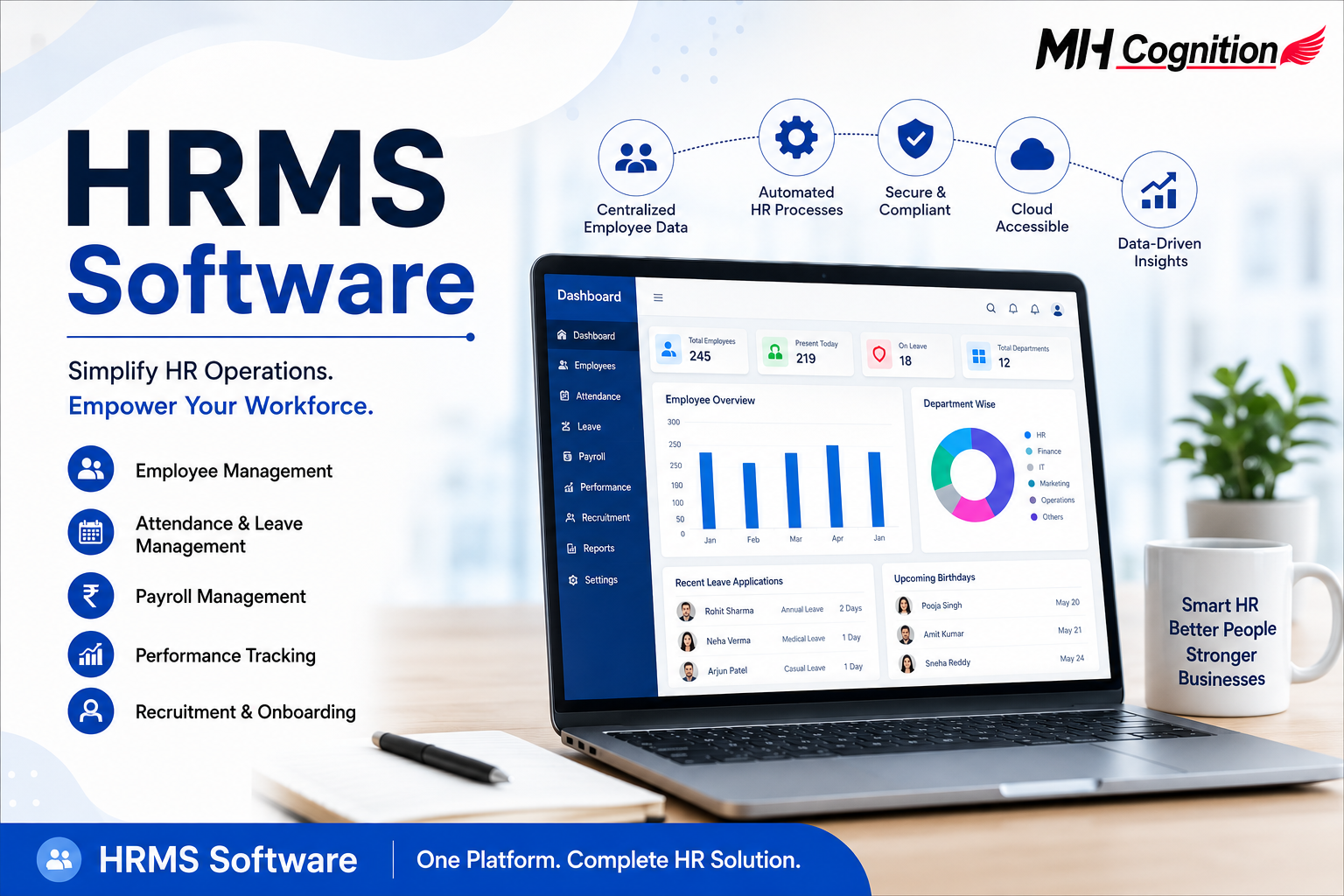
Walk into any growing company today, and one thing becomes clear very quickly - managing people is no longer a simple task. Employees work remotely. Teams operate across cities. Attendance is tracked digitally. Payroll needs to be accurate to the last rupee. Recruitment happens faster than ever. And employees expect smooth, technology-driven experiences at work. This is exactly why HRMS...
Healthcare Predictive Analytics Market Summary “The global Healthcare Predictive Analytics Market is expected to reach to USD 22.5 billion by 2032, growing at a CAGR of 5.6% during 2025 to 2032” The TrendBridge Insights Research report, “Global Healthcare Predictive Analytics Market Report 2025 – Future Opportunities, Latest Trends, In-depth Analysis, and Forecast...

ABC Tent & Caterer impossible to overestimate the importance of outstanding catering when it comes to throwing memorable events. ABC Tent & Caterer distinguishes itself as a top option for Food catering services near me in your area by fusing superb cuisine with flawless service to make every event unforgettable. ABC Tent & Caterer provides customized solutions that meet your unique...