


The Technological Backbone: A Deep Dive into the Mission Critical Communication Market Platform
The underlying technology that powers instant and reliable communication in high-stakes environments can be understood as the Mission Critical Communication Market Platform, which has evolved significantly over time. This platform is not a single entity but rather a complex architecture of network infrastructure, communication protocols, and end-user devices. For decades, the dominant platform has been Land Mobile Radio (LMR). This platform is built on purpose-built, privately-owned networks designed for one primary function: providing exceptional Push-to-Talk (PTT) voice services. LMR platforms operate on dedicated radio spectrum and are engineered for high availability and wide-area coverage, often with redundant backhaul and backup power at tower sites. The key standards defining this platform are TETRA, which is widely used in Europe, Asia, and other regions, and P25, the standard for public safety in North America. These platforms are characterized by their sub-second call setup times, one-to-many group calling capabilities, and ruggedized radio devices, forming a highly reliable but fundamentally voice-centric foundation for first responders.
The most transformative shift in the industry is the emergence of the Mission Critical Broadband platform, built upon 4G/LTE and, increasingly, 5G technology. This platform leverages the standardized, global ecosystem of cellular technology to deliver not only voice but also high-speed data and high-definition video. The 3GPP (3rd Generation Partnership Project), the international body that standardizes cellular technology, has developed a specific suite of "Mission Critical X" (MCX) standards to bring public safety-grade features to LTE. This includes Mission Critical Push-to-Talk (MCPTT), which replicates the essential group calling functionality of LMR but over an IP-based network. It also includes Mission Critical Data (MCData) for secure messaging and file sharing, and Mission Critical Video (MCVideo) for real-time video streaming. This platform can be deployed in several ways: as a dedicated, private LTE network owned by the user organization; as a service on a commercial mobile network with quality of service, priority, and preemption (QPP) features; or as a hybrid of the two.
Recognizing that the transition from deeply entrenched LMR systems to new broadband platforms will take many years, the "Hybrid Platform" has become the most critical and pragmatic model in the market today. This approach acknowledges that public safety agencies and other critical users cannot simply switch off their ultra-reliable LMR networks overnight. A hybrid platform, therefore, is an integrated architecture where the legacy LMR system and the new broadband network coexist and interoperate seamlessly. This is achieved through interoperability gateways and unified communication solutions. This platform allows a user with a new LTE-based mission critical device to communicate in a PTT group call with users who are still carrying traditional LMR radios. It enables a phased migration, allowing agencies to continue relying on their LMR network for mission-critical voice while gradually introducing new data and video capabilities over the LTE network. This hybrid model provides a practical and low-risk pathway to modernization, bridging the gap between the proven reliability of the past and the powerful capabilities of the future.
The end-user device platform is the final, tangible piece of the architecture that puts these capabilities into the hands of frontline personnel. This is also a scene of significant innovation. The traditional platform consisted solely of rugged, single-purpose LMR radios (handheld, vehicle-mounted, and fixed). The modern device platform is far more diverse. It includes "converged" or hybrid devices that combine an LMR radio and an LTE modem in a single handset, allowing seamless operation on both networks. It also includes a new generation of ruggedized smartphones and tablets specifically designed for public safety use, featuring hardened casings, long-life batteries, extra-loud speakers, and dedicated PTT buttons. Furthermore, the platform is expanding to include a wide array of connected accessories and wearables, such as remote speaker microphones with integrated LTE, body-worn cameras that stream video directly over the network, and biometric sensors that can monitor a first responder's vital signs, creating a rich and interconnected device ecosystem.
Categorii
Citeste mai mult
Arrêter de fumer est un défi pour de nombreuses personnes, mais c’est aussi l’une des meilleures décisions que vous puissiez prendre pour votre santé et votre bien-être. Le tabac ne se limite pas à affecter vos poumons : il impacte votre cœur, votre énergie, votre peau et même votre humeur. Chaque cigarette consommée...

Football fans today want more than just headlines. They want instant updates, accurate information, and a smooth experience where everything is available in one place. This is exactly where Nowgoal stands out. It is not just a simple football news website—it is a complete sports information center designed to meet the needs of every football enthusiast. Whether you are checking live...

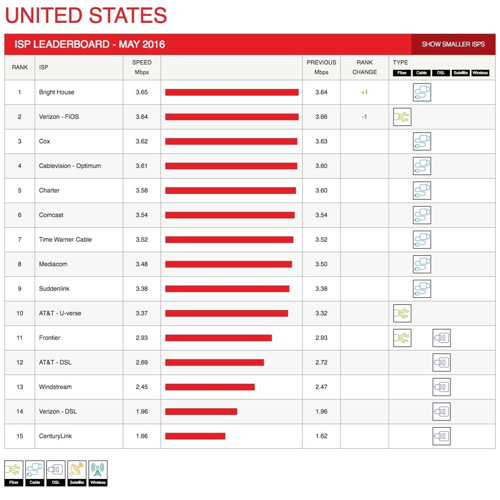
The latest insights from the May edition of the Netflix ISP Speed Index reveal evolving trends in streaming quality across various regions. This index tracks which internet providers deliver the smoothest Netflix experience during peak hours, highlighting performance differences worldwide. In the United States, the top-tier ISPs have shown remarkable consistency, with the leading four...
United States of America – The Insight Partners is delighted to present its latest market report, "Shea Butter Market: In-Depth Analysis of Growth Trends, Drivers, and Future Opportunities". The report presents an extensive analysis of the global Shea Butter market, providing insights into the prevailing industry situation as well as future forecasts and opportunities. Overview The...

The Soil Moisture Sensors Market is gaining significant momentum as agriculture and environmental management increasingly rely on data-driven technologies. Soil moisture sensors are devices used to measure the water content in soil, enabling efficient irrigation, improved crop yield, and optimized water usage. These sensors play a critical role in precision agriculture, smart irrigation...