Google Ads Campaign Optimization Tips
Google Ads Campaign Optimization Tips
Google Ads has become one of the most powerful digital marketing platforms for businesses looking to generate leads, increase website traffic, and improve online sales. With millions of searches happening every day, Google Ads allows businesses to reach customers exactly when they are searching for products or services online. However, simply running ads is not enough to achieve consistent results.
Many businesses waste advertising budgets because their campaigns are not optimized properly. Successful Google Ads campaigns require smart audience targeting, SEO insights, content marketing strategies, data analysis, and continuous optimization. Businesses that focus on campaign performance improvements often achieve better conversions while reducing unnecessary ad spend.
Why Is Google Ads Optimization Important?
Google Ads optimization helps businesses improve campaign performance while reducing wasted advertising costs. Without optimization, campaigns often generate low-quality traffic and poor conversion rates.
Key benefits of optimization include:
-
Lower advertising costs
-
Higher conversion rates
-
Better audience targeting
-
Improved ad relevance
-
Stronger return on investment
Businesses that continuously optimize campaigns often achieve more sustainable long-term growth.
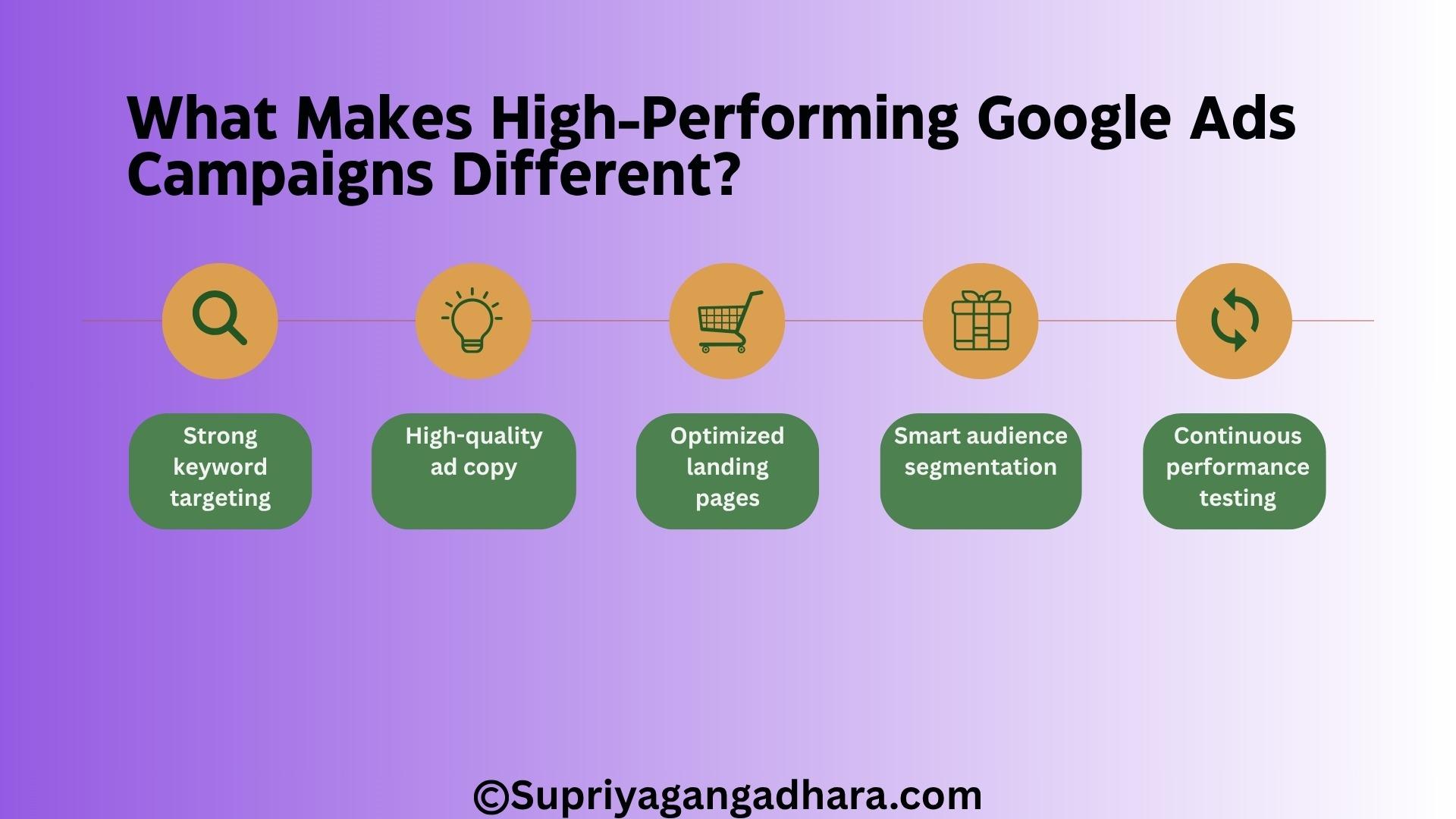
What Makes High-Performing Google Ads Campaigns Different?
Successful campaigns focus on data-driven improvements instead of simply increasing budgets.
Major characteristics of optimized campaigns include:
-
Strong keyword targeting
-
High-quality ad copy
-
Optimized landing pages
-
Smart audience segmentation
-
Continuous performance testing
Effective digital marketing strategies focus on improving both traffic quality and customer experience.
How Does Keyword Research Improve Campaign Performance?
Keyword research is one of the most important parts of Google Ads optimization. Businesses that target the right keywords attract more relevant traffic and improve conversions.
Benefits of keyword optimization include:
-
Better search visibility
-
Improved click-through rates
-
Reduced cost per click
-
Higher conversion potential
-
Better audience intent matching
Combining SEO insights with Google Ads keyword strategies helps businesses improve campaign accuracy and performance.
Why Are Negative Keywords Important?
Negative keywords prevent ads from appearing for irrelevant searches. This helps businesses avoid wasting money on low-quality traffic.
Benefits of negative keywords include:
-
Reduced unnecessary ad spend
-
Better audience targeting
-
Higher click quality
-
Improved conversion rates
-
Increased campaign efficiency
Regularly reviewing search term reports helps identify irrelevant keywords that should be excluded.
How Can Ad Copy Improve Google Ads Results?
Ad copy directly affects engagement and click-through rates. Weak messaging often reduces campaign performance even if targeting is accurate.
High-performing ad copy strategies include:
-
Using targeted keywords naturally
-
Highlighting customer benefits clearly
-
Creating strong call-to-action phrases
-
Matching user search intent
-
Using emotional and value-driven messaging
Testing multiple headlines and descriptions helps businesses identify the best-performing ads.
Why Is Landing Page Optimization Essential?
A strong landing page experience improves conversions and increases Google Ads quality scores. Even excellent ads can fail if landing pages provide poor user experiences.
Important landing page optimization factors include:
-
Fast loading speed
-
Mobile-friendly design
-
Clear messaging and structure
-
SEO-optimized content
-
Strong call-to-action buttons
Businesses with optimized landing pages often achieve better conversion rates and lower advertising costs.
How Does Audience Targeting Improve Campaign Efficiency?
Google Ads allows businesses to target users based on demographics, interests, behavior, and location. Proper audience targeting improves lead quality and reduces wasted spend.
Effective targeting strategies include:
-
Geographic targeting
-
Demographic segmentation
-
Interest-based audiences
-
Device-specific targeting
-
Remarketing campaigns
Remarketing is especially powerful because it targets users who previously interacted with your website or content.
How Can SEO Support Google Ads Optimization?
SEO and Google Ads work together to improve overall digital marketing performance. Businesses that combine both strategies often achieve stronger online visibility and traffic growth.
SEO advantages for Google Ads include:
-
Better keyword insights
-
Improved landing page quality
-
Higher website authority
-
Better user experience
-
Increased organic traffic support
SEO-focused content marketing also strengthens campaign performance by building audience trust.
Why Is A/B Testing Important for Optimization?
Testing helps businesses understand what works best before scaling campaigns.
Important elements to test include:
-
Headlines and ad descriptions
-
Visual creatives
-
Landing page layouts
-
Audience segments
-
Call-to-action buttons
A/B testing improves campaign efficiency while reducing unnecessary advertising costs.
Can AI Improve Google Ads Optimization?
Artificial Intelligence is transforming digital marketing and Google Ads management. AI-powered tools help businesses optimize campaigns automatically using real-time data.
AI-powered optimization benefits include:
-
Smart bidding automation
-
Predictive performance analysis
-
Automated audience targeting
-
Real-time campaign adjustments
-
Better budget allocation
AI allows marketers to improve efficiency while scaling campaigns more effectively.
Why Is Mobile Optimization Important for Google Ads?
Most online searches now happen on smartphones and tablets. Poor mobile experiences can reduce engagement and waste advertising budgets.
Mobile optimization strategies include:
-
Responsive website design
-
Fast-loading mobile pages
-
Mobile-friendly forms and buttons
-
Easy navigation and readability
-
Simplified landing page layouts
Businesses optimized for mobile users often achieve stronger conversion performance.
How Can Businesses Monitor Campaign Performance Effectively?
Performance tracking helps businesses understand which campaigns generate the best results.
Important Google Ads metrics include:
-
Click-through rate (CTR)
-
Conversion rate
-
Cost per click (CPC)
-
Return on investment (ROI)
-
Quality score
Data-driven optimization helps marketers improve campaign performance while controlling advertising costs.
Conclusion
Google Ads remains one of the most effective digital marketing platforms for generating targeted traffic, increasing conversions, and growing businesses online. However, successful campaigns require more than launching ads; they require continuous optimization, SEO integration, audience targeting, and content marketing support.
Businesses that focus on keyword optimization, landing page performance, audience segmentation, and AI-powered automation can improve campaign efficiency while reducing wasted spend. By combining data-driven strategies with valuable customer experiences, Google Ads becomes more than an advertising platform it becomes a scalable engine for sustainable business growth.
Categorias
Leia mais
「エグゼクティブサマリータバコフィルター市場調査:シェアと規模の情報 CAGR値 世界のタバコフィルター市場は 2024年に408.6億米ドルと評価され 、 2032年までに702億米ドルに達すると予想されています。2025年から2032年の予測期間中、市場は 主に健康意識の高まりによって7.00%のCAGRで成長すると予想されます。 この成長は、害の少ないフィルターの需要や消費者啓発キャンペーンなどの要因によって推進されている。...

A tidy and well-maintained car interior makes every drive more comfortable and enjoyable. Over time, daily use exposes your vehicle’s floors to dirt, mud, dust, spills, and moisture, which can quickly build up and cause stains, unpleasant odours, and long-term damage. Without proper protection, flooring can wear out faster, reducing both comfort and your car’s overall value....

Finding the right team for your space can feel like a big step. However, the right choice can shape your ideas into a place that feels just right. Many people search for an interior design company in Kuala Lumpur to guide this journey. A trusted name like ACP Design helps turn plans into real spaces with care or skill. So, when you choose wisely, you gain a space that works well, feels...

A Wohnungsauflösung Berlin (apartment clearance in Berlin) is a service that helps people fully empty and clean out a flat or house. This can include removing furniture, old items, electronics, waste, and sometimes even deep cleaning the property afterward. In a busy city like Berlin, these services are very helpful for tenants, landlords, and property owners who need fast and organized...

Warts are common skin growths that can appear on different parts of the body, including the hands, feet, face, and neck. Although they are usually harmless, many people choose to remove them for cosmetic reasons or personal comfort. In recent years, Laser wart removal in Dubai have gained popularity due to their advanced technology, professional care, and reliable treatment methods. Dubai...