


Ecommerce Website Development & Landing Page Design Tips
Building an online store or a high-converting landing page is not just a technical exercise — it is a strategic business decision that determines how many visitors become customers, how many customers return, and how much revenue your digital presence generates month after month. Ecommerce website development services and landing page design are two of the most impactful investments a growing business can make in 2026 — and when executed with the right strategy, they become the engine that powers sustainable, scalable online revenue.
Most businesses underestimate what separates a functional ecommerce site from a high-performing one. The difference is rarely the product — it is the platform architecture, the user experience, the page speed, and the conversion-focused design decisions made at every step of the build. That same principle applies to landing page design — where a single, well-optimised page can outperform an entire website in generating qualified leads and direct sales.
What Are Ecommerce Website Development Services?
Ecommerce website development services cover the full process of building, optimising, and scaling an online store — from platform selection and technical architecture to UX design, payment integration, SEO setup, and post-launch performance management.
This is not simply about putting products on a page and adding a checkout button. Professional ecommerce website development services take a holistic view of your business model, your target customer, your competitive landscape, and your growth ambitions — then build a digital store that serves all of those objectives simultaneously.
A comprehensive ecommerce development engagement typically covers:
- Platform selection and setup — Shopify, WooCommerce, Magento, BigCommerce, or custom-built solutions selected based on your specific business needs, budget, and scalability requirements
- UX and conversion design — product page layouts, category architecture, and checkout flow design optimised to minimise drop-off at every stage of the buying journey
- Technical SEO foundation — URL structure, canonical tags, site speed, schema markup, and mobile-first development built into the store from day one
- Payment gateway integration — Stripe, PayPal, Apple Pay, Google Pay, and buy-now-pay-later options configured for maximum checkout completion rates
- Inventory and order management — integration with your existing inventory systems, fulfilment platforms, and warehouse management tools
- CRM and email marketing integration — connecting your store to your customer relationship management and automated email flows from the moment of launch
- Analytics and tracking setup — GA4 configuration, conversion tracking, heat mapping, and custom reporting dashboards that give you full visibility over every metric that drives revenue decisions
Why Platform Choice Matters More Than Most Businesses Realise
The platform your ecommerce store is built on determines not just how it looks today — but how easily it scales tomorrow. Choosing the wrong platform at the start creates technical debt that becomes increasingly expensive to resolve as your business grows.
Platform Comparison at a Glance
- Shopify — best for direct-to-consumer brands that want fast setup, reliable hosting, and a vast app ecosystem without heavy technical overhead
- WooCommerce — ideal for businesses already on WordPress that need deep customisation and content-commerce integration
- Magento — enterprise-level platform for complex catalogues, multiple storefronts, and businesses with dedicated development resources
- BigCommerce — strong choice for B2B ecommerce and businesses that need robust native features without extensive plugin dependency
- Custom build — the right choice when your business model has unique requirements that no off-the-shelf platform can accommodate efficiently
Professional ecommerce website development services begin with a platform recommendation based on your specific situation — not on what the agency builds most often.
Landing Page Design: The Highest-Converting Page You Will Ever Build
A landing page is a single, focused web page designed to achieve one specific conversion objective — whether that is capturing an email address, selling a product, booking a consultation, or registering for an event. Unlike a full website where visitors can navigate freely, a well-designed landing page controls the entire user experience and directs every visitor toward a single action.
Landing page design is where psychology, copywriting, visual design, and technical performance converge. A landing page that loads in under two seconds, presents a compelling headline, communicates clear value, and removes every possible friction point from the conversion process will consistently outperform a page that gets any one of those elements wrong.
The Anatomy of a High-Converting Landing Page
Above the fold section:
- A headline that immediately communicates the core value proposition in plain language
- A supporting subheadline that adds context or addresses the primary objection
- A single, clear call-to-action button that tells the visitor exactly what happens next
- A hero image or video that reinforces the offer visually
Body section:
- Social proof — testimonials, case studies, client logos, star ratings, and review counts that build trust rapidly
- Benefit-focused copy that addresses the visitor's specific pain points and desired outcomes
- Feature breakdown that explains what the product or service delivers in concrete, specific terms
- Trust signals — security badges, guarantees, accreditations, and media mentions that reduce purchase anxiety
Conversion section:
- A repeated call-to-action that appears at logical decision points throughout the page
- A simple, minimal form that asks only for information genuinely needed at this stage
- A final objection-handling section that addresses the most common reasons people hesitate
How Ecommerce Development and Landing Page Design Work Together
For ecommerce businesses, landing page design is not separate from ecommerce website development services — it is a critical component of the overall conversion architecture. Product launch pages, seasonal campaign pages, paid advertising landing pages, and lead generation pages all sit alongside your main store and feed traffic into your primary conversion funnel.
The Integrated Approach
Step 1 — Conversion Audit and Strategy Before building anything, audit your existing traffic sources, conversion data, and customer journey to identify where visitors are dropping off and what pages have the highest potential for improvement.
Step 2 — Ecommerce Store Architecture Build or optimise your store's technical foundation — platform setup, URL structure, page speed, mobile responsiveness, and checkout flow — to ensure the store converts the traffic your landing pages will send to it.
Step 3 — Landing Page Design and Copywriting Develop dedicated landing pages for your highest-priority campaigns — paid search, social media advertising, email marketing, and influencer partnerships — each designed around a single conversion objective aligned with the traffic source.
Step 4 — A/B Testing and Optimisation Run structured A/B tests on headlines, calls-to-action, hero images, and form lengths to identify the highest-converting variations and implement them across your page portfolio.
Step 5 — Analytics Integration and Reporting Connect every landing page to your GA4 setup with proper conversion tracking, UTM parameters, and attribution modelling so you know exactly which pages, traffic sources, and design elements are driving revenue.
Step 6 — Iterate and Scale Use performance data to continuously improve existing pages and replicate winning design patterns across new campaigns — building a library of proven landing page frameworks that your team can deploy rapidly.
Actionable Tips to Maximise Your Ecommerce and Landing Page Performance
- Page speed is non-negotiable — every additional second of load time reduces conversions by an average of 7%. Optimise images, minimise scripts, and use a content delivery network from day one
- Mobile-first is not optional — over 60% of ecommerce traffic comes from mobile devices; design for the smallest screen first and scale up, never the reverse
- One page, one goal — every landing page should have exactly one conversion objective. Multiple calls-to-action on a single page consistently reduce conversion rates
- Social proof above the fold — do not hide your testimonials and reviews at the bottom of the page. Place your strongest social proof signal within the first screen of content every visitor sees
- Simplify your checkout — every additional field in your checkout form reduces completion rates. Ask only for what is absolutely necessary to complete the transaction
Conclusion: Build Smarter, Convert Better, Grow Faster
In 2026, the gap between businesses with professionally built digital infrastructure and those without is wider than it has ever been. Ecommerce website development services give your business the technical foundation, strategic architecture, and conversion-focused design needed to turn website visitors into paying customers at scale. And landing page design gives you the precision tool to maximise the return on every marketing campaign, every paid ad, and every traffic source you invest in.
The businesses generating the most consistent online revenue are not the ones with the most traffic — they are the ones with the best-converting ecommerce website development and the most strategically designed landing pages working together as a unified growth system.
الأقسام
إقرأ المزيد
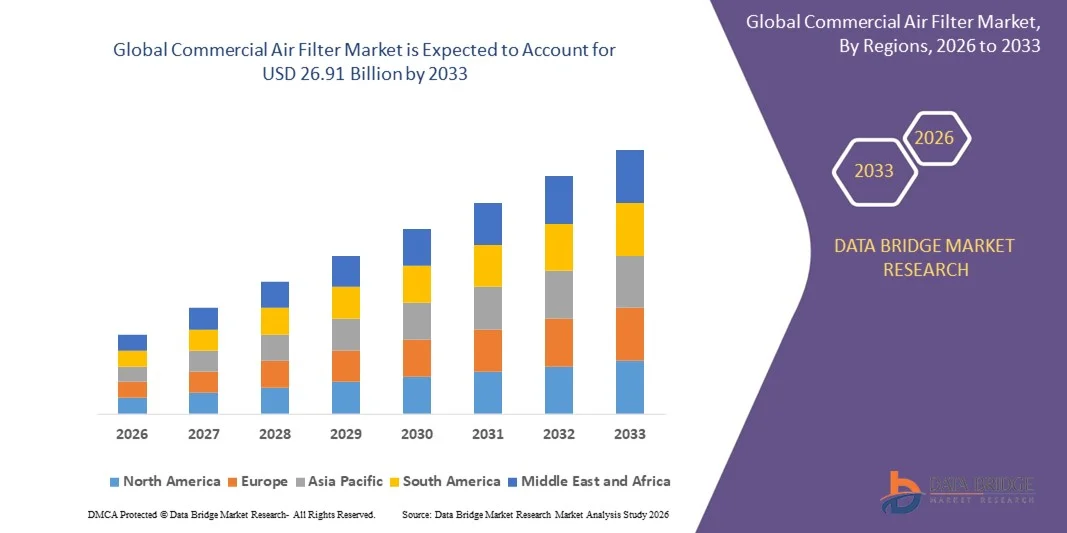
According to the latest report published by Data Bridge Market Research, the Commercial Air Filter Market The global Commercial Air Filter Market was valued at USD 17.08 billion in 2025 and is projected to reach USD 26.91 billion by 2033, registering a strong CAGR of 5.85% throughout the forecast period. Getting thoughtful about competitive landscape is...
Enterprise Governance, Risk and Compliance (eGRC) solutions have become an essential component of modern enterprise management as organizations face increasingly complex regulatory environments and evolving operational risks. Businesses today must manage governance frameworks while maintaining compliance with multiple international, regional, and industry-specific regulations. Traditional...

Right now, getting Telehealth therapy online makes life easier for plenty of people who need help with their mind and emotions. Instead of traveling somewhere, folks talk to trained experts through screens at home. Because of that, it skips common problems like long drives or tight schedules. Even so, the talking part feels just as real as sitting across from someone in an office. All along,...

Jivial Industries IPO GMP is attracting investor attention ahead of its opening on 23 June 2026. The IPO is a fixed price issue worth ₹31.99 crore, comprising a fresh issue and an offer for sale (OFS). Investors looking for SME IPO opportunities are closely tracking the Jivial Industries IPO GMP, subscription status, financials, and listing expectations. In this article by Finowings, we cover...

A defined figure is often associated with health, vitality, and confidence. However, loose abdominal skin, weakened muscles, and stubborn fat can obscure your natural shape and make you feel less confident. A tummy tuck in Dubai offers a solution for achieving a more defined figure by removing excess skin and fat and tightening the underlying muscles. This guide explores how a tummy tuck can...
