How Is AI Changing Staffing & Talent Acquisition Right Now?

Gone is the era of one hiring manager sifting through a torrent of digital applications for a single vacant position. In the digital landscape of 2026, the challenge is no longer finding people; it’s finding the right people before a competitor gets a hold of them.
Companies are pushed to employ sophisticated technology to do the heavy lifting of sorting, ranking, and communicating with candidates in real-time.
This evolution has moved beyond simple keyword matching and into the territory of predictive machine learning within the core of staffing and talent acquisition.
Key Takeaways
● Automated Culling: How algorithms handle the initial 90% of resume screening.
● Predictive Matching: Using data to find candidates who actually fit the company culture.
● Bias Neutralization: The role of "blind" screening tools in modern hiring.
How Is AI Automating Staffing & Talent Acquisition In 2026?
● End Of An Era: No More Manual Resume Grind
The most tedious part of a recruiter’s day is evaluating and dropping hundreds of resumes that don’t even meet the basic requirements. Modern AI-enabled platforms can do this in seconds, dissecting work history and skill sets with a level of precision that humans just can’t sustain over an exhausting eight-hour shift.
This is not just about sifting for specific words, but the software understands the context of a candidate’s career trajectory.
Automating this phase allows professionals involved in staffing and talent acquisition to concentrate fully on the final shortlist of high-value candidates, rather than becoming overwhelmed by a large number of irrelevant files.
● Predictive Success & Long-Term Retention
Hiring someone who appears to be a good fit on paper but resigns after three months is a significant drain on company resources. AI tools compare a candidate’s profile to a company’s data on its top performers to estimate a candidate’s chances of long-term success.
They look for patterns in education and experience that correlate with longevity and high productivity, and incorporating these data-based insights into staffing and talent acquisition leads to the turnover rate tanking.
Organizations are no longer relying on just intuition when hiring but are making data-driven, fact-based decisions about who is statistically more likely to flourish in their unique work environment.
● Removing Human Bias From The Initial Funnel
Every human has subconscious biases that can cloud their judgment during a resume review. AI can be programmed to ignore names, zip codes, and graduation years, focusing instead only on the raw data that matters: skills and experience.
This “targeted” screening ensures the candidate pool is reviewed on merit alone. When staffing and talent acquisition processes are free of these human errors, the result is a more diverse and competent workforce.
That makes it a level playing field, so that the most qualified person gets the interview, regardless of any personal factors that are irrelevant.
Conclusion
The transition to an AI-driven recruitment model is no longer optional for businesses that want to grow. By removing the administrative friction, recruiters can return to the human side of the job, negotiating, coaching, and building long-term teams.
Success now depends on a company’s ability to reach the right people at the right time through a polished digital presence. Often, this requires the specialized help of a renowned social media optimization company in Dallas to ensure the employer brand is actually reaching the targeted talent pool on their preferred platforms.
When the technology is right and the outreach is targeted, the hiring process stops being a hurdle and becomes a competitive edge.
Categorias
Leia mais
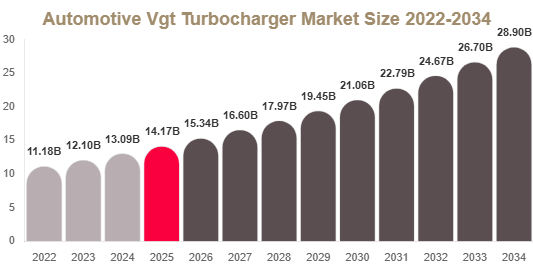
Automotive VGT Turbocharger Market The Automotive VGT Turbocharger Market is experiencing substantial growth due to increasing demand for fuel-efficient vehicles, stringent emission regulations, and rising adoption of advanced engine technologies. Variable Geometry Turbocharger (VGT) systems are widely used in modern vehicles to improve engine performance, optimize fuel consumption, and reduce...
In the fast-paced world we live in today, maintaining a healthy lifestyle has become both a necessity and a challenge. Women, who often juggle careers, family, and personal well-being, are increasingly turning to technology for support. Among the most effective tools are fitness watches for women, providing valuable insights into activity levels, calorie consumption, and sleep quality. These...

Ore Processing Machinery is vital for transforming raw ore into valuable minerals. The demand for advanced ore processing solutions is growing as mining companies seek to improve recovery rates and reduce waste. Innovations in machinery, such as flotation cells and magnetic separators, are enhancing processing efficiency. The focus on sustainable practices is also influencing the development of...

ISO 45001 Certification in A Guide to Occupational Health and Safety Compliance ISO 45001 is an internationally recognized standard for occupational health and safety management systems (OHSMS). It helps organizations improve workplace safety, reduce risks, and enhance overall employee well-being. In Nigeria, where workplace safety remains a critical concern, obtaining ISO 45001 certification...
Green Vein Kratom Shot A green vein kratom shot offers a balanced liquid extract option for experienced kratom users. Green vein varieties are commonly chosen for their well-rounded profile, and the liquid shot format adds convenience and portability. At King B Distribution, we feature high-quality green vein kratom shot products sourced from trusted brands that prioritize consistency and...