For many people, coffee is non-negotiable. It helps with early mornings, demanding schedules, and low-energy days. But when menstrual cramps hit, some people start wondering whether their daily latte is quietly making things worse. Questions around caffeine period cramps continue to grow because many people notice changes in bloating, tension, or discomfort during their cycle after consuming caffeine.
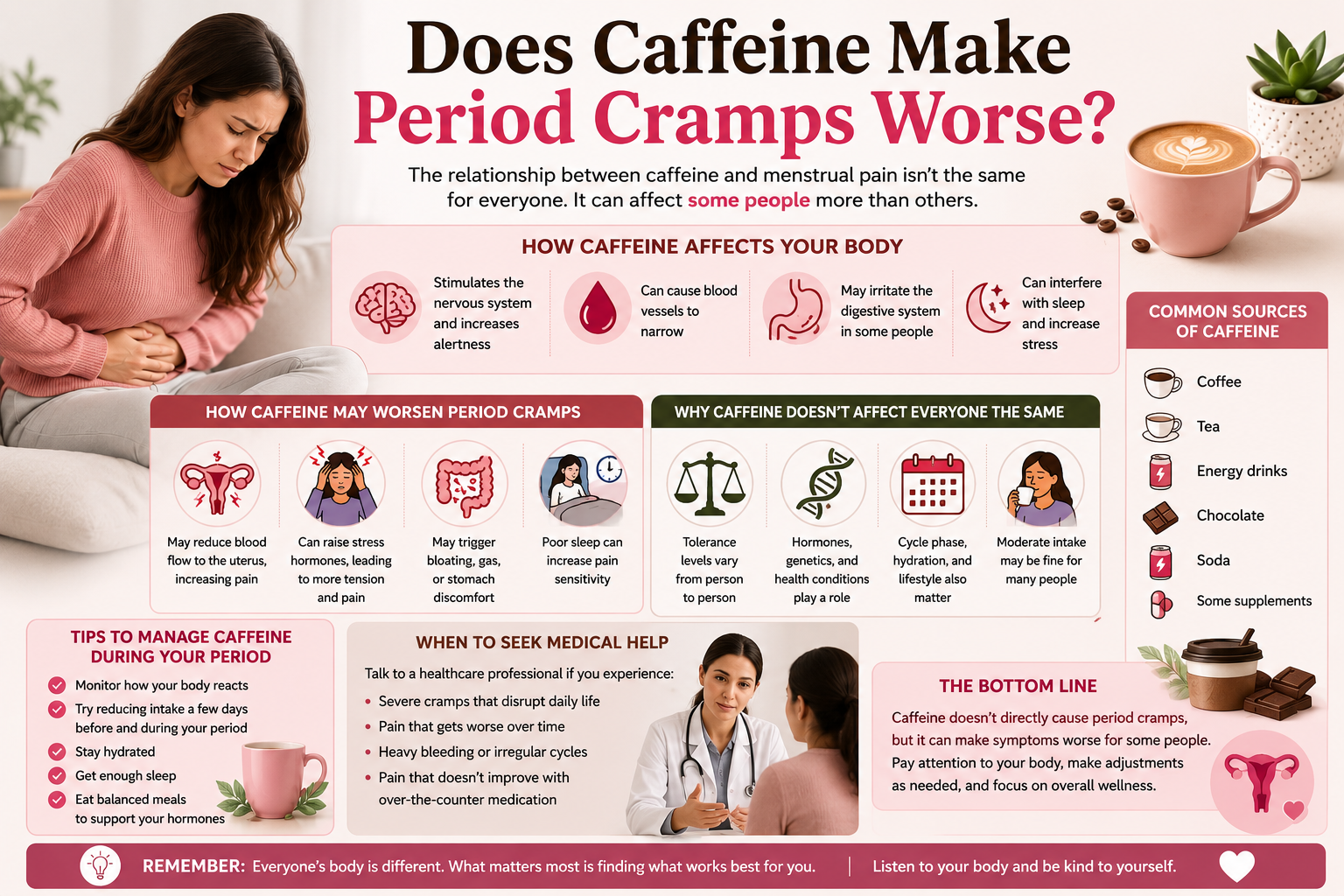
The relationship between caffeine and menstrual pain is more complicated than simple “good” or “bad” advice. In practice what often happens is that caffeine affects people differently depending on hormone sensitivity, hydration, stress levels, sleep quality, and underlying menstrual conditions. Discussions around [caffeine period cramps](No product link — informational only) often focus on whether caffeine directly causes pain, but the answer is more nuanced than that.
Some people report feeling more cramping, anxiety, or bloating after high caffeine intake, while others notice very little difference. It is worth noting that lifestyle factors such as stress, inflammation, poor sleep, and diet often overlap with menstrual symptoms. Many readers exploring menstrual health patterns also look into broader discussions around missed work and severe cramps, including topics like whether period pain can seriously disrupt daily life.
What Happens in the Body During Period Cramps?
Menstrual cramps happen largely because the uterus contracts to help shed its lining.
These contractions are influenced by hormone-like chemicals called prostaglandins.
Higher prostaglandin levels are often associated with:
- Stronger cramps
- Inflammation
- Nausea
- Digestive discomfort
- Headaches
Based on how this typically works, people with more severe cramps may produce higher levels of inflammatory compounds during menstruation.
What Does Caffeine Actually Do?
Caffeine is a stimulant that affects the central nervous system.
It may temporarily increase alertness, energy, heart rate, and blood pressure.
Common caffeine sources include:
- Coffee
- Tea
- Energy drinks
- Chocolate
- Soda
- Some pre-workout supplements
In practice what often happens is that caffeine also influences stress hormones, hydration, sleep patterns, and blood vessel behavior — all of which may indirectly affect menstrual symptoms.
Can Caffeine Make Cramps Worse?
For some people, yes.
For others, not necessarily.
Research on caffeine and menstrual pain shows mixed findings. Some studies suggest higher caffeine intake may be associated with worse menstrual symptoms, while others find little or no direct connection.
It is worth noting that individual sensitivity appears to play a major role.
Why Some People Feel Worse After Caffeine
There are several possible explanations for why caffeine may intensify discomfort during menstruation.
1. Blood Vessel Constriction
Caffeine can temporarily narrow blood vessels.
Some experts believe this may reduce blood flow slightly, potentially increasing muscle tension or discomfort in sensitive individuals.
Based on how this typically works, people already prone to severe cramps may notice heightened pain after large amounts of caffeine.
2. Increased Anxiety and Stress Response
Caffeine stimulates the nervous system.
For people already feeling fatigued, anxious, or emotionally overwhelmed during their cycle, excessive caffeine may amplify:
- Jitters
- Restlessness
- Tension
- Sleep disruption
A common mistake people make is overlooking how strongly stress and nervous system activation can influence pain perception.
3. Sleep Disruption
Poor sleep is closely linked to increased pain sensitivity.
If caffeine interferes with sleep before or during menstruation, cramps may feel more intense simply because the body is less rested.
In practice what often happens is that people rely on extra caffeine because they feel tired during their period, which can sometimes create a cycle of poor sleep and worsening fatigue.
4. Digestive Sensitivity
Caffeine can stimulate the digestive tract.
During menstruation, many people already experience digestive changes due to hormone fluctuations.
This means caffeine may worsen symptoms like:
- Bloating
- Loose stools
- Stomach discomfort
- Acid reflux
It is worth noting that gastrointestinal symptoms can sometimes make overall menstrual discomfort feel more severe.
Why Some People Notice No Difference
Not everyone reacts negatively to caffeine during menstruation.
Some people tolerate moderate caffeine intake without any meaningful increase in cramps.
Factors that may influence tolerance include:
- Genetics
- Hormone sensitivity
- Habitual caffeine intake
- Stress levels
- Overall health
- Sleep quality
Based on how this typically works, moderate consumption may be manageable for many individuals, especially if hydration and nutrition are balanced.
Does Coffee Cause Hormonal Imbalance?
Coffee itself does not automatically “cause” hormonal imbalance.
However, caffeine may temporarily affect cortisol, adrenaline, and nervous system activity.
This does not necessarily mean it damages reproductive hormones directly.
A common mistake people make is assuming every hormonal symptom can be traced back to one food or beverage.
Hormones are influenced by a wide combination of factors including stress, nutrition, sleep, medical conditions, medications, and genetics.
How Much Caffeine Is Too Much?
Tolerance varies significantly.
Some people feel symptoms after one strong coffee, while others tolerate several cups daily without obvious issues.
In practice what often happens is that symptoms become more noticeable with excessive caffeine intake rather than moderate consumption.
Pay attention to patterns such as:
- Increased cramps after energy drinks
- Worse anxiety during periods
- More bloating after coffee
- Trouble sleeping near menstruation
Tracking these responses may help identify personal triggers.
Energy Drinks vs Coffee
Not all caffeine sources affect the body equally.
Energy drinks may contain:
- Higher caffeine levels
- Large amounts of sugar
- Artificial additives
- Additional stimulants
These combinations may worsen dehydration, anxiety, or inflammation in some people.
It is worth noting that sweetened caffeinated beverages can sometimes contribute to bloating and energy crashes as well.
Can Tea Be a Better Option?
Some people find tea gentler than coffee during menstruation.
Herbal teas such as ginger or peppermint are naturally caffeine-free and may feel soothing.
Green tea and black tea still contain caffeine, but often in lower amounts than coffee.
Based on how this typically works, reducing caffeine gradually rather than eliminating it abruptly may feel more manageable for regular caffeine users.
The Role of Hydration
Hydration plays a surprisingly important role in menstrual comfort.
Caffeine itself is not as dehydrating as many people assume, especially in moderate amounts, but relying heavily on caffeinated drinks while neglecting water intake may worsen fatigue and bloating.
In practice what often happens is that dehydration contributes to headaches, low energy, and muscle tension during periods.
Should You Quit Caffeine Completely During Your Period?
Not necessarily.
There is no universal rule requiring everyone to eliminate caffeine during menstruation.
A more realistic approach may involve:
- Reducing excessive intake
- Avoiding caffeine late in the day
- Staying hydrated
- Monitoring personal symptom patterns
A common mistake people make is adopting overly restrictive health advice without considering their own body’s response.
Tracking Your Symptoms Can Help
Menstrual symptoms are highly individual.
Keeping track of:
- Caffeine intake
- Cramp severity
- Mood changes
- Sleep quality
- Digestive symptoms
may help reveal whether caffeine worsens your symptoms personally.
Based on how this typically works, patterns become clearer over several menstrual cycles rather than after a single month.
Other Factors That May Affect Period Pain More Than Caffeine
While caffeine may contribute for some people, other factors often have a stronger influence on menstrual discomfort.
These may include:
- Chronic stress
- Poor sleep
- High inflammation
- Sedentary lifestyle
- Endometriosis
- Nutritional deficiencies
- Heavy bleeding conditions
It is worth noting that severe pain should not automatically be blamed on caffeine alone.
When to Talk to a Healthcare Professional
Occasional cramps are common, but severe or worsening pain deserves medical attention.
You should consider professional evaluation if:
- Pain regularly disrupts daily life
- Over-the-counter medications stop helping
- Bleeding becomes extremely heavy
- Symptoms worsen suddenly
- You experience pelvic pain outside menstruation
In practice what often happens is that underlying conditions such as endometriosis remain undiagnosed for years because symptoms are normalized.
Practical Ways to Reduce Caffeine-Related Discomfort
If you suspect caffeine worsens your cramps, small adjustments may help.
Consider:
- Switching one coffee to herbal tea
- Reducing energy drink intake
- Eating before consuming caffeine
- Prioritizing hydration
- Improving sleep consistency
A gradual approach is often easier than abruptly stopping caffeine altogether.
Conclusion
So, does caffeine make period cramps worse? The answer depends largely on the individual. Some people notice increased cramping, bloating, anxiety, or digestive discomfort with high caffeine intake, while others experience little difference.
In practice what often happens is that caffeine interacts with other lifestyle factors such as stress, sleep, hydration, and hormone sensitivity rather than acting as the sole cause of menstrual pain. Moderate intake may be perfectly manageable for some individuals, while others benefit from reducing caffeine around their cycle.
The most useful approach is paying attention to your own patterns instead of following extreme advice. Understanding how your body responds — and recognizing when pain may signal something more serious — can help you make informed decisions that support both menstrual health and overall well-being.