When the Quick Ratio Lies: Spotting Hidden Liquidity Traps in Retail Lending

In the world of credit underwriting, traditional liquidity metrics are treated with near-religious reverence. When analyzing a corporate borrower, every credit analyst has the classic formulas permanently burned into their brain. Among these, the Quick Ratio (or Acid-Test Ratio) is widely considered the gold standard for assessing short-term survival capacity. By stripping out slow-moving inventory, it is designed to measure a company's ability to meet its immediate current liabilities using only its most liquid assets.
But here is an uncomfortable truth that senior risk officers know all too well: in the retail sector, standard liquidity ratios lie. A retailer can sport a seemingly immaculate, conservative Quick Ratio on paper while actively sliding into a structural insolvency trap. If you underwrite a retail loan using the same static, textbook formulas you apply to a manufacturing plant or a B2B distribution business, you are setting your portfolio up for a blindside.
As we navigate the retail landscape of 2026—characterized by hyper-fragmented e-commerce marketplaces, fluctuating consumer sentiment, and complex vendor rebate programs—forensic liquidity analysis has never been more critical. Let’s unmask the structural illusions of the Quick Ratio in retail lending and explore how to spot the hidden traps.
The Core Formula and the Retail Anomaly
To understand why the Quick Ratio breaks down in the retail sandbox, we must first look at its mathematical architecture:
In a standard B2B industry, a business sells goods on credit terms (e.g., Net 30 or Net 60 days), creating a massive pool of Accounts Receivable (AR). If a crisis hits, those invoices represent legally binding obligations from corporate clients that will convert into cash relatively quickly.
Retail, however, is a fundamentally B2C environment. When a consumer buys a pair of shoes, a smartphone, or a grocery haul, they pay immediately via cash, debit, or credit card. Therefore, a healthy, traditional retailer should possess virtually zero operational Accounts Receivable. Their liquidity lifecycle jumps straight from inventory to cash.
Consequently, a standard retailer's Quick Ratio is naturally very low—often hovering between $0.2x$ and $0.5x$. If a rookie analyst sees a retailer with a Quick Ratio suddenly spiking to $1.5x$, their immediate textbook reaction might be to celebrate the company's robust liquidity cushion. But in retail, an elevated Quick Ratio is almost always a flashing red distress signal.
The Three Toxic Illusions of Retail Receivables
When a retail balance sheet reflects a substantial "Accounts Receivable" line item, it rarely represents clean, impending cash inflow. Instead, it is usually a mirage driven by one of three hidden structural traps.
1. The Marketplace Holdback Trap
Modern omnichannel retailers don't just sell through their own brick-and-mortar storefronts; they sell via giant digital third-party marketplaces like Amazon, Wayfair, or Walmart Marketplace. When a sale occurs on these platforms, the marketplace collects the consumer's cash and books it as a receivable due to the retailer.
The trap lies in platform governance. Digital marketplaces routinely implement Account Reserves or arbitrary payment holdbacks if they detect a minor spike in customer returns, fulfillment delays, or policy disputes. A retailer can show $2 million in "liquid marketplace receivables" that are functionally frozen for 60 to 90 days. If the retailer relies on that cash to clear an upcoming payroll or trade payable, they will default long before the platform releases the funds.
2. The Uncollectible Vendor Rebate Illusion
In big-box and apparel retail, profitability is heavily propped up by trade promotions, volume discounts, and co-op advertising allowances. Under accrual accounting rules, when a retailer meets a specific buying threshold, they record the expected payout from the manufacturer as an asset under Vendor Receivables.
Lenders cannot easily collect or liquidate a vendor rebate. Manufacturers rarely write physical cash checks back to retailers. Instead, these receivables are settled via credit memos applied to future inventory purchases. If the retailer falls into operational distress and stops ordering new stock, that receivable evaporates into thin air, leaving the bank holding an empty bag.
3. The Private-Label Credit and BNPL Mirage
Many large retailers run internal private-label credit cards or partner with Buy Now, Pay Later (BNPL) providers where they retain a portion of the credit risk. If consumer default rates spike across the wider economy, those retail receivables quickly turn into toxic, uncollectible consumer debt.
Retail Asset Valuation: Ledger Value vs. Lender Reality
To protect institutional capital, a risk professional must look past generic balance sheet classifications and evaluate the true liquidation reality of the underlying line items.
| Balance Sheet Line Item | Accounting Classification (GAAP) | The Underwriter's Forensic Discount | Real-World Liquidity Reality |
| Cash on Hand | Unrestricted Cash Asset | $0\%$ Haircut | Uncorrupted liquidity available for immediate debt service. |
| Marketplace AR | Liquid Current Asset | $25\% - 40\%$ Haircut | Highly vulnerable to platform freeholds, chargebacks, and structural rolling reserves. |
| Vendor Rebates Due | Liquid Current Asset | $75\% - 100\%$ Haircut | Non-cash assets settled via future purchase offsets; completely illiquid in a default scenario. |
| Gift Card Liabilities | Deferred Revenue (Non-Financial) | Evaluate Cash Velocity | Distorts current liabilities because settlement requires inventory delivery, not cash outlays. |
Recalibrating the Metrics: The Defensive Toolkit
If the standard Quick Ratio cannot be trusted, how does a credit analyst accurately stress-test a retailer's short-term survival runway? The answer requires shifting away from static balance sheet ratios toward dynamic Cash Conversion Cycle (CCC) analysis.
The Forensic Focus: Instead of asking what assets exist today, ask how fast those assets actively spin through the operational ecosystem.
Analysts must closely track:
-
The Real-World Cash Burn Rate: How many weeks of baseline operational overhead can the company's unencumbered cash cash reserves cover if credit card processing flows encounter a temporary shock?
-
The True Cash-to-Cash Cycle: Calculating the exact number of days it takes for a dollar spent on inventory to travel through the warehouse, across the point-of-sale terminal, and land securely in the bank account.
Upgrading Your Credit Intelligence
Mastering the unique, industry-specific nuances of corporate underwriting—and learning how to dismantle deceptive accounting metrics before a credit committee meeting—requires a level of analytical precision that standard accounting degrees simply fail to provide.
For professionals who want to fast-track their careers into commercial banking, corporate underwriting, or private credit syndication, developing this forensic risk instinct is non-negotiable. If you are serious about building these technical capabilities, enrolling in a comprehensive credit analyst course can provide a defining competitive edge.
A high-quality, practical curriculum strips away generic textbook assumptions, training you how to analyze real-world retail case studies, stress-test cash flows against modern economic volatilities, unpack complex vendor agreements, and structure the precise legal covenants needed to shield bank capital from hidden corporate liquidity traps.
Conclusion: Look Beyond the Spreadsheet
In retail lending, the numbers on a balance sheet are merely the opening sentence of a much larger, more complex story. A pristine, textbook-perfect Quick Ratio can easily function as a financial smoke screen hiding severe structural vulnerabilities.
By refusing to settle for lazy, automated ratio calculations, aggressively auditing the true composition of accounts receivable, and evaluating assets through the unforgiving lens of immediate liquidation value, you transform yourself into an invaluable defender of institutional capital. In the high-stakes world of corporate credit, the best underwriters are always those who possess the discipline to look past the superficial safety of the spreadsheet to uncover the hard, operational truths beneath.
الأقسام
إقرأ المزيد
The Radial Arm Saw Market was valued at USD 0.5 billion in 2024 and is projected to reach USD 0.8 billion by 2034, registering a CAGR of 5.0%. The latest report, titled ‘Global Radial Arm Saw Market,’ comprises a profound analysis of the fundamental parameters contributing to the global Radial Arm Saw market scenario. The research report provides the reader with an in-depth...

Mixed Emotion: Streetwear That Speaks Your Mood Mixed Emotion is a contemporary label built around creativity and self-expression. The brand blends fashion with emotion, using bold graphics, meaningful text, and artistic designs to reflect real-life feelings. Instead of following trends, Mixed Emotion focuses on individuality, giving wearers a way to express their personality through...

Aerocity was developed as a planned urban district with the aid of Delhi international Airport confined (DIAL). The concept was to create a global-elegance hospitality and business hub that aligns with global airport towns inclusive of the ones in Dubai, Singapore, and Amsterdam. The improvement emphasizes organized infrastructure, protection, walkability, and sustainable city design.Book...

In New World, skinning is one of the most rewarding gathering skills, especially for players looking to craft leather armor, weapons, or simply gather raw materials for trade. Increasing your skinning yield can significantly boost your income, crafting potential, and overall gameplay efficiency. While there are multiple ways to New World Gold coins increase your yield, combining different...

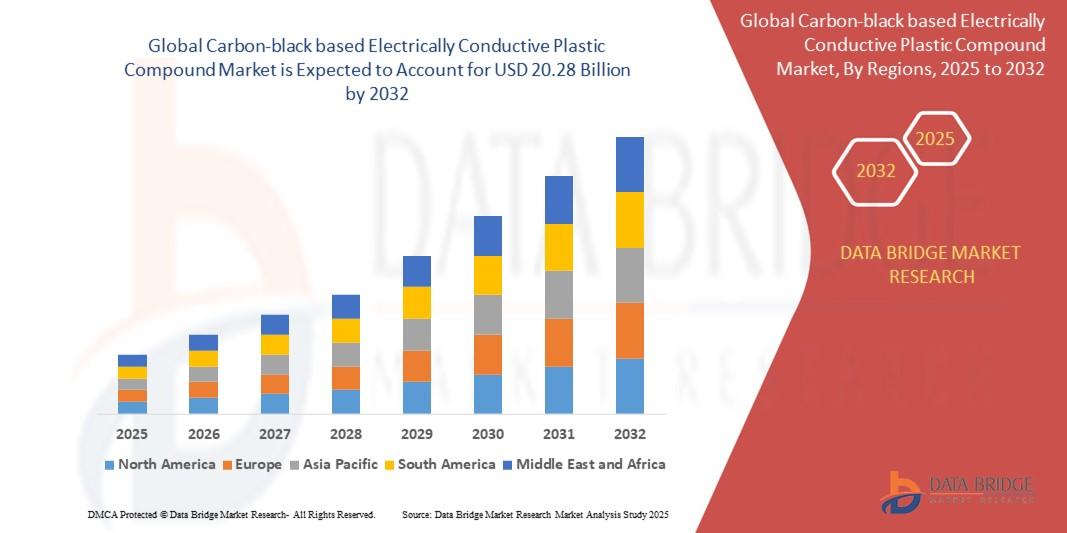
"Regional Overview of Executive Summary Carbon-black based Electrically Conductive Plastic Compound Market by Size and Share The global carbon-black based electrically conductive plastic compound market was valued at USD 9.88 million in 2024 and is expected to reach USD 20.28 billion by 2032 During the forecast period of 2025 to 2032 the market is likely to grow at...