Unlocking Future Growth: Identity Threat Detection And Response Market Opportunities

While the ITDR market is already experiencing rapid growth, a vast landscape of untapped and emerging opportunities promises to fuel its expansion for years to come. A forward-looking analysis of the Identity Threat Detection And Response Market Opportunities reveals several key frontiers for innovation and market penetration. Perhaps the most significant of these is the small and medium-sized business (SMB) sector. Historically, advanced security solutions like ITDR have been the domain of large enterprises with deep pockets and dedicated security teams. However, cybercriminals are increasingly targeting SMBs, viewing them as softer targets that often lack robust defenses. This creates an enormous, underserved market. The opportunity for vendors is to develop and market ITDR solutions that are specifically designed for the SMB context: affordable, easy to deploy and manage, and highly automated. A cloud-native, subscription-based model, possibly delivered as a managed service, would be particularly well-suited to this segment, allowing SMBs to access enterprise-grade protection without the associated complexity and overhead, thereby unlocking a massive new revenue stream for the industry.
Another major growth opportunity lies in securing the burgeoning world of non-human identities. In any modern IT environment, the number of machine identities—service accounts, API keys, application credentials, and IoT device certificates—is exploding, and already vastly outnumbers human user accounts. These non-human identities are often highly privileged, long-lived, and poorly managed, making them a goldmine for attackers seeking to move laterally and escalate privileges undetected. The opportunity for the ITDR market is to extend its core principles of discovery, monitoring, and behavioral analytics to this non-human realm. This involves creating solutions that can automatically discover all machine identities across a hybrid, multi-cloud environment, baseline their normal behavior (e.g., which services an API key normally communicates with), and detect anomalous activity that could indicate a compromise. As organizations increasingly rely on automation, microservices, and IoT, the need to secure these machine-to-machine interactions will become paramount, positioning non-human identity security as a major pillar of future ITDR market growth.
The convergence of Information Technology (IT) and Operational Technology (OT) presents a complex but highly strategic opportunity for the ITDR market. Historically, OT environments—which control physical processes in factories, power plants, and critical infrastructure—have been air-gapped and isolated from IT networks. However, for reasons of efficiency and data analysis, these networks are increasingly being connected, creating new attack pathways. An attacker who compromises a plant engineer's credentials on the IT network could potentially use those credentials to pivot into the OT environment and manipulate physical control systems, with potentially catastrophic consequences. The opportunity lies in developing ITDR solutions that can bridge the IT/OT divide, providing visibility into identity and access within these sensitive environments. This requires a deep understanding of OT protocols and systems and a focus on passive monitoring to avoid disrupting critical processes. Securing identities in these converged environments is a high-stakes challenge that represents a significant, high-value opportunity for specialized ITDR vendors.
Finally, the evolution of service delivery models offers a profound market opportunity through the rise of Managed ITDR (MITDR). Many organizations, particularly in the mid-market, simply do not have the in-house staff or the specialized expertise required to operate a 24/7 security operations center and effectively manage an ITDR platform. They want the security outcome without the operational burden. This creates a huge demand for managed security service providers (MSSPs) who can offer ITDR as a fully managed service. This includes the initial deployment and tuning of the technology, continuous monitoring of identity threat alerts by expert analysts, proactive threat hunting, and guided response and remediation when an incident occurs. For ITDR vendors, building strong channel programs and partnerships with these MSSPs is a critical go-to-market strategy. For MSSPs, adding MITDR to their portfolio allows them to offer a highly valuable service that directly addresses one of their clients' biggest and most pressing security risks, creating a powerful symbiotic relationship that will drive a significant portion of future market growth.
Top Trending Reports:
Categorias
Leia Mais
Finding a vape store near me now in the UAE should feel simple and reliable. Many users want quick access to authentic products without delays. That’s where Puffdxb steps in. It offers a trusted solution for anyone searching for a vape store near me, whether you prefer disposables, pods, or premium vape kits. Today’s vape users expect convenience, safety, and quality. Puffdxb...

NK88 is one of the leading online gaming and betting platforms in Asia. The platform is becoming increasingly popular because it offers a complete entertainment experience for players who enjoy exciting games, live sports betting, online casino activities, slot games, lottery options, and live cockfighting entertainment. With modern technology, fast performance, and user-friendly features,...

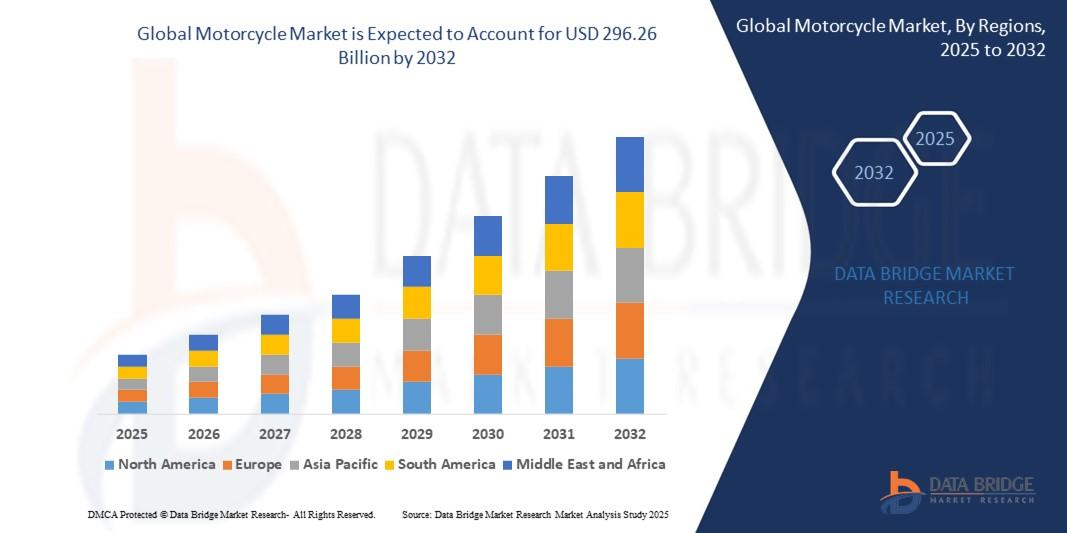
Introduction The motorcycle market is one of the most dynamic segments in the global automotive industry. Motorcycles are two-wheeled vehicles designed for both daily commuting and recreational purposes. Their popularity stems from affordability, fuel efficiency, and ease of navigation through congested urban traffic. In developing nations, motorcycles often serve as the primary mode...
Polaris Market Research recently introduced the latest update on Global Digital Printing Market size and share is currently valued at USD 40.09 billion in 2024 and is anticipated to generate an estimated revenue of USD 69.27 billion by 2034, according to the latest study by Polaris Market Research. Besides, the report notes that the market exhibits a robust 5.6% Compound Annual Growth Rate...
Ezzocard: A Reliable Method to Take Charge of Your Online Payments Introduction As online activity grows, so does the number of payments we make every day. From buying products to paying for services and subscriptions, transactions happen quickly and often without much thought. While this makes life easier, it can also lead to one major issue—losing control over how money is being spent....