How Data Fabric Architecture Is Transforming Enterprise Data Management
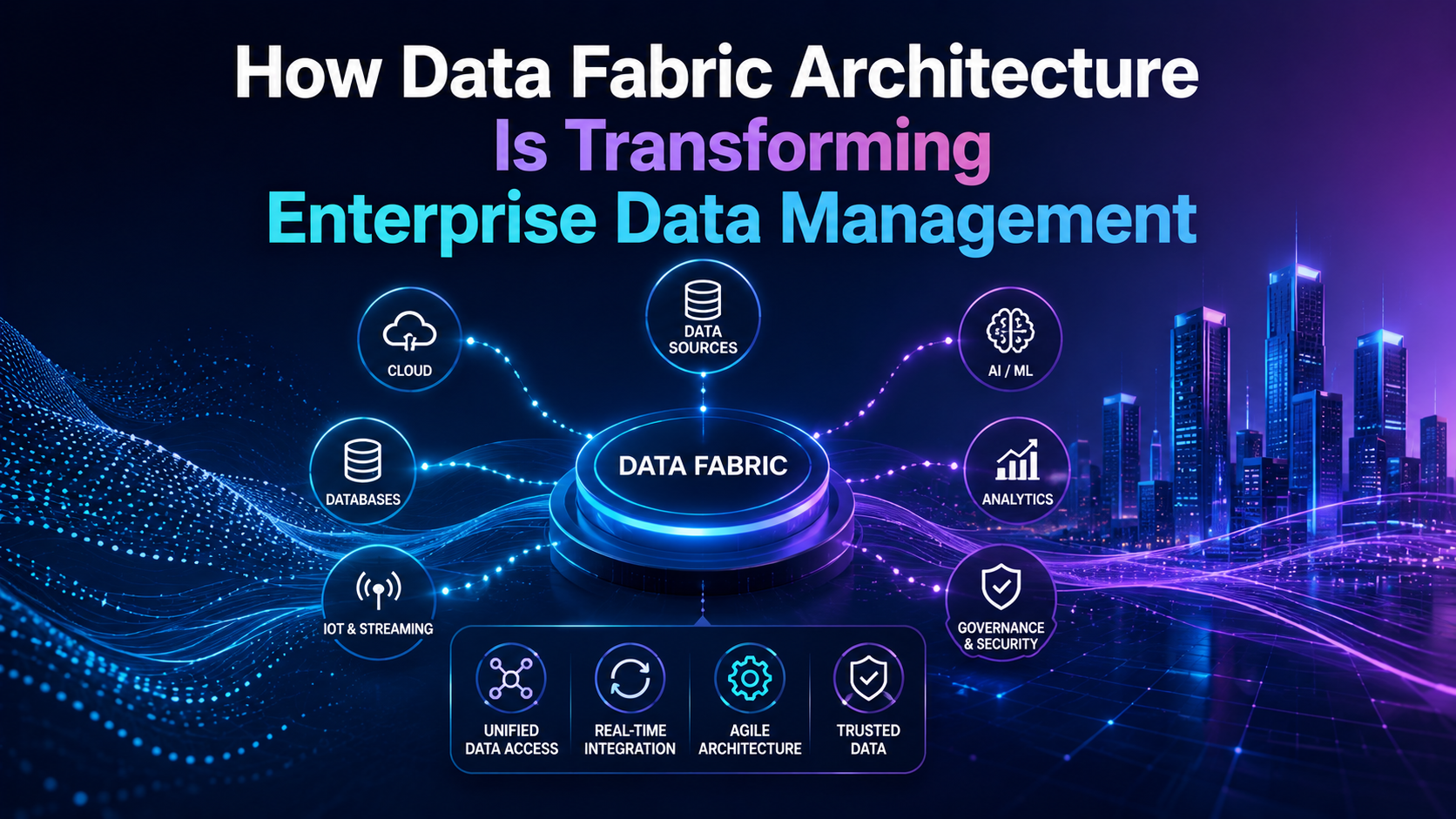
Organizations across industries are dealing with rapidly expanding volumes of structured and unstructured data generated through cloud platforms, IoT devices, customer applications, and enterprise systems. Traditional data management models often struggle to provide real-time accessibility, governance, and interoperability across distributed environments. As a result, enterprises are increasingly adopting data fabric architecture to create a unified and intelligent data ecosystem.
Data fabric combines data integration, metadata management, automation, and artificial intelligence to simplify access to data regardless of where it resides. The approach helps organizations improve operational efficiency, accelerate analytics, and support informed decision-making. According to a recent global data fabric industry analysis, the sector is projected to expand significantly during the forecast period, supported by growing enterprise demand for scalable and agile data management frameworks.
Growing Complexity of Enterprise Data Environments
Modern enterprises operate within highly distributed IT infrastructures where data is stored across hybrid cloud systems, edge devices, on premise databases, and third-party platforms. This fragmented architecture often creates data silos that limit visibility and reduce the effectiveness of analytics initiatives. Data fabric addresses this challenge by creating an integrated layer that enables seamless data discovery, access, and governance across multiple environments.
Businesses are also under increasing pressure to process data in real time for applications such as predictive analytics, customer personalization, and operational monitoring. Data fabric solutions help organizations unify diverse datasets while reducing manual integration efforts. The adoption of intelligent automation within these platforms further improves data accuracy and accessibility.
Artificial Intelligence Enhancing Data Integration
Artificial intelligence and machine learning technologies are becoming essential components of modern data fabric platforms. AI-driven automation enables organizations to classify data, identify relationships between datasets, and optimize data workflows with minimal human intervention. This capability supports faster data preparation and improves enterprise-wide analytics performance.
Large technology providers are increasingly investing in AI-powered data management ecosystems. Google Cloud explains that data fabric frameworks can simplify data integration and governance across complex digital infrastructures by leveraging metadata-driven intelligence. Similarly, organizations are integrating AI models with data orchestration tools to improve scalability and responsiveness in enterprise environments.
Cloud Adoption Driving Demand for Data Fabric Solutions
The expansion of cloud computing has become a major factor influencing the adoption of data fabric technologies. Enterprises are migrating workloads to multi-cloud and hybrid cloud environments to improve flexibility and reduce infrastructure limitations. However, managing data across multiple cloud ecosystems often creates operational complexity and governance concerns.
Data fabric platforms provide centralized visibility and policy management across cloud-based systems, enabling organizations to maintain consistency while supporting secure collaboration. According to IBM, data fabric architecture helps businesses create unified access to distributed data assets while improving compliance and operational efficiency.
Industries such as banking, healthcare, manufacturing, and retail are particularly focused on cloud-enabled data management strategies due to their increasing dependence on real-time analytics and digital services. As organizations continue modernizing their infrastructure, the need for interoperable data ecosystems is expected to increase steadily.
Importance of Data Governance and Security
As enterprises handle larger volumes of sensitive information, regulatory compliance and cybersecurity remain critical concerns. Data fabric solutions in corporate governance frameworks that help organizations monitor data lineage, enforce access controls, and maintain compliance with evolving regulations.
Governments and regulatory agencies are strengthening data privacy requirements globally, encouraging enterprises to adopt more transparent and secure data management practices. The National Institute of Standards and Technology (NIST) emphasizes the importance of reliable data governance models to improve data integrity, accessibility, and security across digital ecosystems.
Data fabric architectures also support automated policy enforcement, reducing the risks associated with manual data handling processes. This becomes increasingly valuable for enterprises operating across multiple jurisdictions with varying compliance standards.
Role of Data Fabric in Advanced Analytics
Organizations are increasingly relying on advanced analytics to gain deeper insights into customer behaviour, operational performance, and market trends. However, fragmented data environments often limit the effectiveness of business intelligence initiatives. Data fabric platforms simplify data accessibility and improve the consistency of analytics workflows.
By integrating data from diverse systems into a unified framework, enterprises can improve reporting accuracy and support real-time decision-making. This capability is particularly important for industries adopting artificial intelligence, automation, and predictive modeling technologies.
In sectors such as healthcare, unified data environments can improve patient management and operational coordination. In manufacturing, data fabric enables better monitoring of supply chain operations and predictive maintenance strategies. Retail organizations are also leveraging integrated data ecosystems to enhance customer engagement and inventory optimization.
Regional Trends Influencing Industry Expansion
North America continues to witness strong adoption of data fabric technologies due to the presence of major cloud service providers, advanced enterprise IT infrastructure, and increasing investments in digital transformation initiatives. Organizations across the region are focusing on improving data accessibility while supporting AI-driven business operations.
Meanwhile, Asia-Pacific is emerging as an important growth region as enterprises accelerate cloud adoption and modernization programs. Countries such as China, India, Japan, and South Korea are witnessing increasing demand for scalable data management solutions across sectors including financial services, e-commerce, and telecommunications.
European enterprises are also prioritizing data governance and interoperability due to evolving regulatory frameworks and digital sovereignty initiatives. These factors are contributing to broader adoption of integrated data management platforms throughout the region.
Future Outlook for Data Fabric Technologies
The growing importance of real-time analytics, cloud interoperability, and AI-driven automation is expected to strengthen the role of data fabric technologies in enterprise digital transformation strategies. Organizations are increasingly seeking scalable platforms that can simplify complex data ecosystems while supporting governance, security, and operational efficiency.
As enterprises continue generating larger and more diverse datasets, unified data management frameworks are likely to become a foundational component of modern business infrastructure. The evolution of intelligent automation, hybrid cloud systems, and advanced analytics is expected to further accelerate adoption across industries seeking more agile and resilient digital operations.
Catégories
Lire la suite
The popularity of online cricket platforms has increased significantly over the past few years. Today, cricket fans can access live scores, match statistics, tournament updates, fantasy cricket features, and a variety of interactive experiences through digital cricket platforms. To enjoy these services, users typically need to create an Online Cricket ID. Whether you are a cricket enthusiast...

1964 County Exempt California License Plate Made from high quality Aluminium and embossed with your custom text, our 1964 County Exempt California License Plate is unmatched in authenticity, customization, and quality from any other manufacturer in the market. This item is a replica of the original craftsmanship of a 1964 County Exempt California License Plate. Dress up your vehicle with a top...

Europe Liposuction Devices Market According to the latest report published by Data Bridge Market Research, the Europe Liposuction Devices Market Europe liposuction devices market size was valued at USD 3.30 billion in 2023 and is projected to reach USD 8.59 billion by 2031, with a CAGR of 12.7% during the forecast period of 2024 to 2031. The Europe Liposuction Devices Marketdocument...
Саудовский инвестор совершает грандиозное приобретение в мире игр. Сумма, превышающая шесть миллиардов долларов, будет уплачена за владение студией Moonton. Продавцом выступает китайская корпорация ByteDance. Окончание сделки ожидает санкции надзорных органов. После их получения контроль над студией перейдёт к покупателю. Основная ценность приобретения — права на легендарную мобильную...
Football authorities have confirmed a strong appointment for the upcoming Conference League Final 2026 European match. Italian official Maurizio Mariani has gained attention across top competitions this season. His experience in high-pressure games has grown steadily. The Conference League Final will now highlight his progress as an elite referee in Europe. His control and judgment have...