Do I Have a Chance of Becoming an Airline Pilot? A Complete Guide for Aspiring Pilots
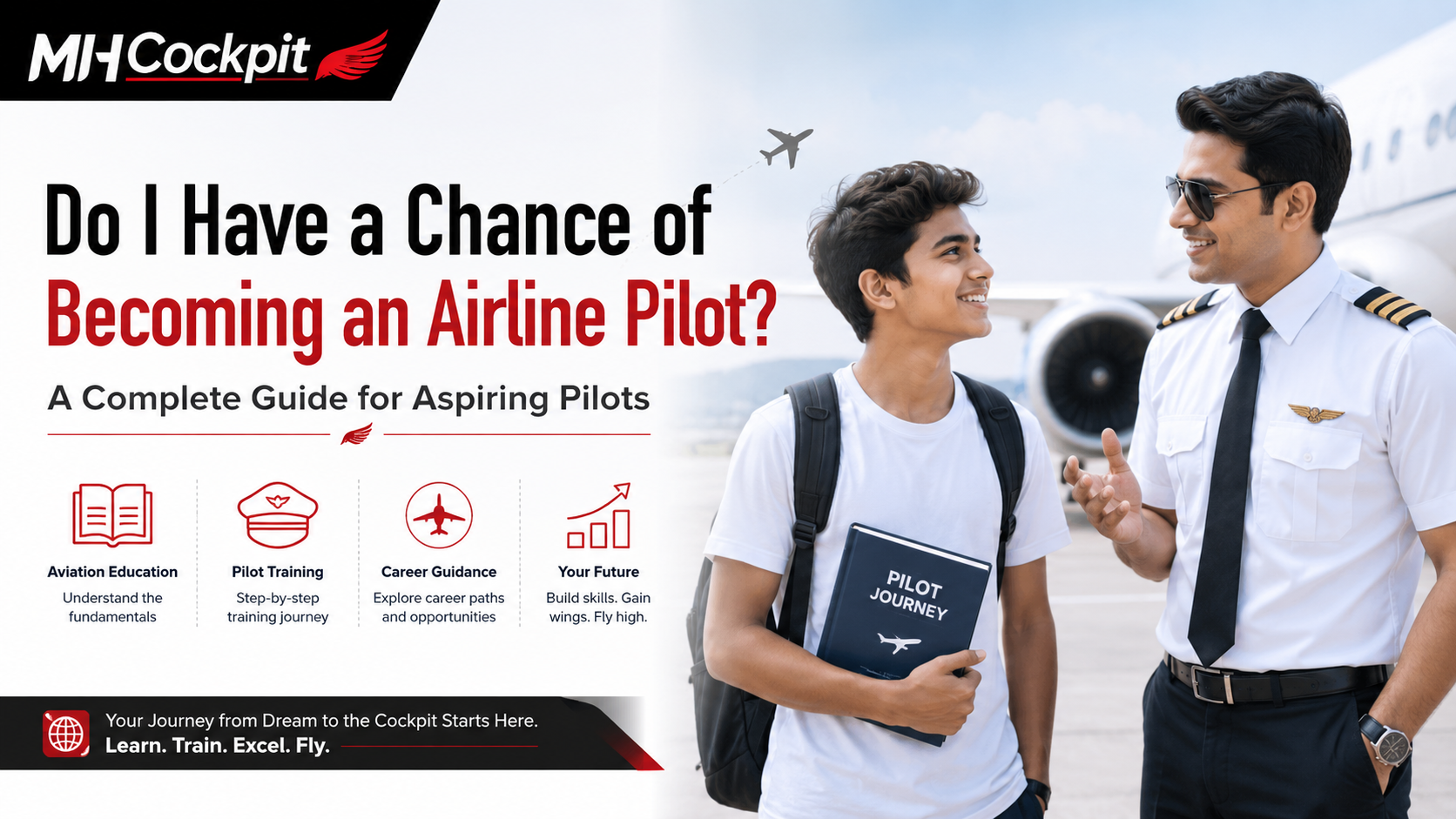
Many aspiring aviators ask themselves the same question: "Do I have a chance of becoming an airline pilot?" The answer is yes, provided you meet the necessary requirements, remain committed to your training, and maintain a clear focus on your goal.
It's natural to feel uncertain when considering a career in aviation. The profession carries a reputation for being highly competitive, technically demanding, and expensive. While these factors are true to some extent, the reality is that thousands of people from different educational and financial backgrounds successfully become airline pilots every year.
Understanding What Airlines Look For
Contrary to popular belief, airlines are not searching for perfect candidates. They are looking for individuals who can demonstrate professionalism, discipline, sound judgment, and the ability to learn.
A successful airline pilot is someone who can:
- Follow procedures accurately
- Remain calm under pressure
- Communicate effectively
- Make responsible decisions
- Continuously learn and improve
- Work well as part of a team
These are skills that can be developed through training and experience. Most pilots were not aviation experts when they began their journey. They started with curiosity, dedication, and a willingness to learn.
Educational Requirements
In India, one of the primary requirements for becoming a commercial pilot is completing 10+2 with Physics and Mathematics.
If you have already completed your schooling without these subjects, you should not be discouraged. DGCA allows students to complete Physics and Mathematics through approved open schooling programs, making them eligible for pilot training.
This means that even if your educational path was not originally focused on aviation, you may still qualify for a professional flying career.
Medical Fitness Matters
One of the first steps aspiring pilots should take is obtaining a DGCA-approved Class 2 Medical Certificate.
Many students spend months researching flight schools without first confirming their medical eligibility. A medical examination helps identify whether you meet the physical standards required for professional flying.
The assessment generally includes checks for:
- Vision
- Hearing
- Cardiovascular health
- General physical fitness
- Medical history
Most common vision issues can often be corrected with glasses or contact lenses, so having less-than-perfect eyesight does not automatically disqualify you.
After obtaining a Class 2 Medical Certificate, aspiring commercial pilots eventually need a Class 1 Medical Certificate before receiving their Commercial Pilot Licence (CPL).
Do You Need to Be Excellent at Mathematics?
This is one of the biggest misconceptions in aviation.
While basic knowledge of Mathematics and Physics is required, you do not need to be a mathematical genius to become a pilot.
Modern pilot training focuses more on understanding concepts, procedures, navigation principles, aircraft systems, and decision-making than solving advanced mathematical equations.
Students who are willing to study consistently often perform well regardless of their school grades.
The Importance of Aptitude and Attitude
Natural aptitude can help, but attitude often determines long-term success.
Good pilots typically demonstrate:
- Discipline
- Patience
- Responsibility
- Attention to detail
- Commitment to safety
- Strong communication skills
Training can teach you how to fly an aircraft, but professionalism and discipline must come from within.
Many average students become excellent pilots because they approach training seriously and remain dedicated throughout the process.
Understanding the Training Journey
The path to becoming an airline pilot follows a structured process.
First, students obtain their medical certificates and enroll in a DGCA-approved flying school.
During training, they study subjects such as:
- Air Navigation
- Meteorology
- Air Regulations
- Technical General
- Technical Specific
Alongside classroom learning, students complete flight training with certified instructors.
As they gain experience, they learn:
- Aircraft handling
- Navigation techniques
- Radio communication
- Emergency procedures
- Instrument flying
- Flight planning
After completing the required flight hours and passing DGCA examinations, students can obtain a Commercial Pilot Licence (CPL).
Additional qualifications such as Instrument Rating, Multi-Engine Rating, and aircraft-specific Type Ratings further prepare pilots for airline careers.
Financial Planning Is Essential
Pilot training represents a significant investment.
The total cost of obtaining a CPL in India often ranges between ₹45 lakh and ₹70 lakh or more depending on:
- Flying school selection
- Aircraft availability
- Training location
- Additional ratings
- Accommodation and living expenses
Before beginning training, aspiring pilots should carefully assess their financial situation and explore education loan options if required.
Having a clear funding plan reduces stress and allows students to focus fully on their training.
How to Know If Aviation Is Right for You
Ask yourself the following questions:
- Do I genuinely enjoy aviation and aircraft?
- Am I willing to study continuously?
- Can I accept responsibility for safety?
- Am I comfortable working irregular schedules?
- Do I enjoy learning technical subjects?
- Am I prepared for a demanding but rewarding career?
If most of your answers are yes, aviation may be an excellent fit for you.
One of the best ways to gain confidence is by speaking with current pilots, visiting flight schools, and taking an introductory flight if possible.
The Growing Demand for Pilots
The aviation industry continues to expand globally and within India. Airlines regularly add new aircraft, increase routes, and recruit trained pilots to support growth.
While hiring cycles may fluctuate, aviation remains a profession with long-term opportunities for qualified candidates who successfully complete their training and maintain professional standards.
Final Thoughts
If you are wondering whether you have a chance of becoming an airline pilot, the answer is likely yes. Success in aviation depends less on natural talent and more on preparation, discipline, medical eligibility, and commitment.
The most successful pilots are not necessarily the smartest people in the room. They are often the individuals who remained focused, completed their training, passed their examinations, and continued improving their skills throughout their careers.
Before making a decision, take time to understand the complete training process, medical requirements, costs, and career opportunities. Many aspiring pilots use MH Cockpit as a reference to explore pilot training pathways, DGCA requirements, aviation colleges, flying schools, and airline career planning before beginning their journey.
If flying has always been your dream, don't let self-doubt stop you. Verify your eligibility, create a plan, and take the first step toward the cockpit. The journey may be challenging, but for many pilots, it becomes one of the most rewarding careers imaginable.
Nach Verein filtern
Read More
The modern mobile card gaming scene offers an incredible mix of traditional fun and cutting-edge software design. Today, players can easily join international communities, testing their card-playing skills in real-time matches. This easy access means players must stay informed about app security and mobile banking features. To get the most out of your card gaming hobby, you need a solid grasp...

A new growth forecast report titled Popcorn Market Share, Size, Trends, Industry Analysis Report By Type (Microwave, Ready to Eat), By Shape, By End-Use, By Region – Market Forecast, 2025–2034 introduced by Polaris Market Research represents conclusive data on the overall market. It majorly targets to provide a detailed analysis of growth factors, challenges, and...

The Space-qualified Rubidium Clock Market is gaining importance with the rapid expansion of satellite navigation, communication, and space exploration programs. Rubidium atomic clocks provide highly precise timekeeping, which is critical for satellite positioning systems and scientific missions. Space-qualified versions are specially designed to withstand harsh conditions such as...
In the rapidly evolving digital marketing landscape, companies and firms are ever seeking smarter methods of increasing their reach. White-label link building remains one of the techniques that is still effective. It provides an elastic method of achieving effective SEO outcomes without managing all the activities within the organization. Through collaboration with established providers,...
Traveling is exciting, but it also comes with uncertainty. No matter how carefully you plan your trip, unexpected events such as illness, accidents, flight delays, or lost luggage can happen at any time. This is why Travel insurance Canada plays a crucial role in protecting travelers from financial loss and medical emergencies. Many people focus only on booking flights, hotels, and activities,...