Why Are Managed SOC Services Essential for SaaS and Enterprise Companies? | CyberInspect
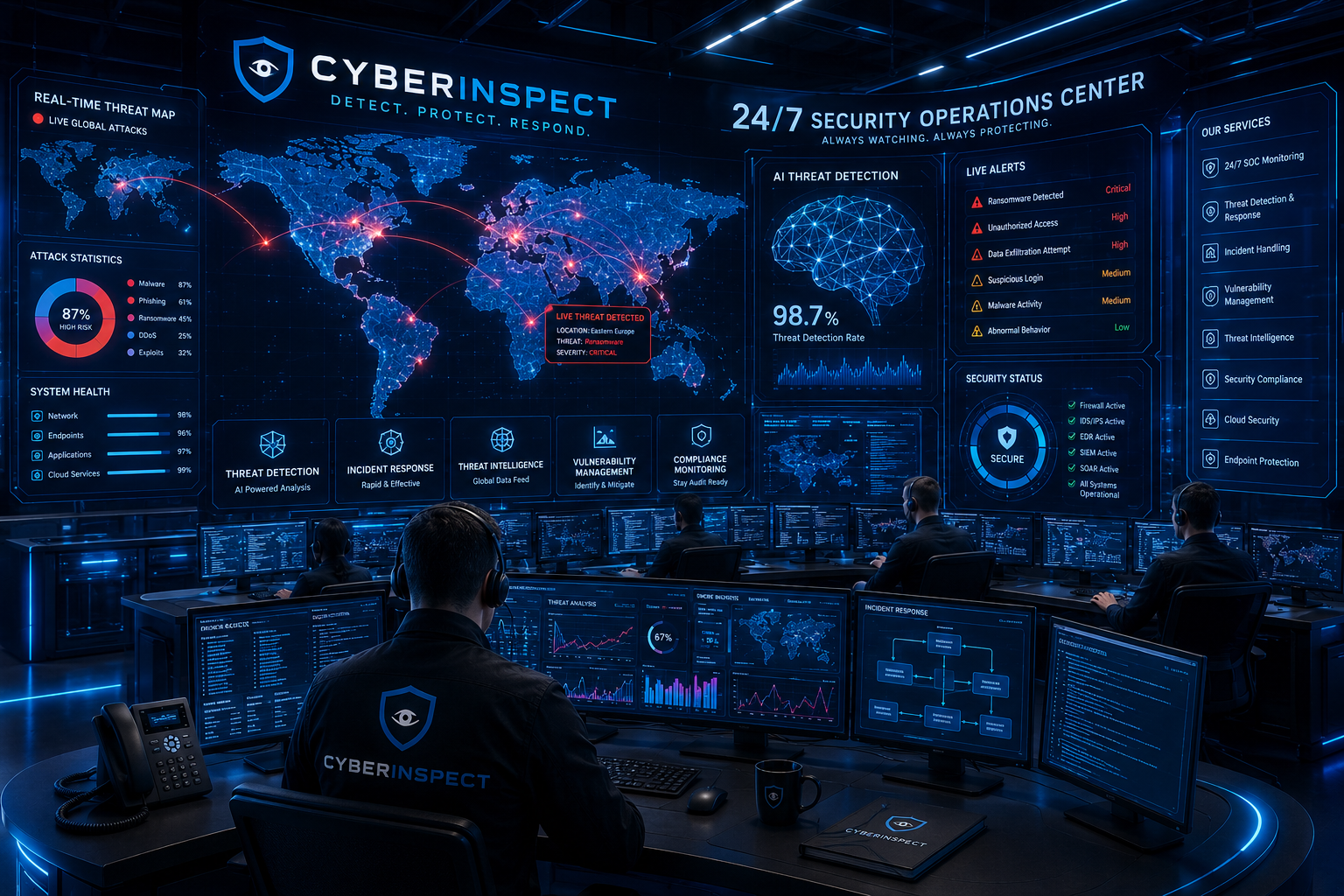
Cybersecurity threats are becoming more advanced, frequent, and damaging for businesses across every industry. As organizations expand their digital infrastructure, cloud systems, SaaS applications, and remote work environments, protecting sensitive data has become more complex than ever.
For years, businesses relied on traditional security monitoring tools such as firewalls, antivirus software, and basic log monitoring. While these solutions still play an important role, they are no longer enough to defend against modern cyberattacks.
Today, many organizations are turning to Managed SOC Services for advanced 24/7 cybersecurity protection. But what exactly is the difference between managed SOC services and traditional security monitoring?
In this article, we’ll break down how both approaches work, compare their capabilities, and explain why businesses increasingly rely on modern Security Operations Centers (SOC) for stronger cyber defense.
What Is Traditional Security Monitoring?
Traditional security monitoring refers to the use of standard cybersecurity tools and manual monitoring processes to identify suspicious activity within an organization’s network or systems.
Traditional monitoring usually includes:
-
Firewalls
-
Antivirus software
-
Intrusion detection systems (IDS)
-
Basic log monitoring
-
Email security tools
-
Endpoint protection software
Most traditional security setups are managed internally by IT teams rather than dedicated cybersecurity analysts.
The primary goal is to block known threats and alert IT staff when suspicious activity occurs.
While traditional monitoring provides a basic level of protection, it often lacks:
-
Continuous monitoring
-
Advanced threat intelligence
-
Proactive threat hunting
-
Rapid incident response
-
AI-driven analytics
-
24/7 cybersecurity coverage
As cyberattacks become more sophisticated, businesses require more advanced security strategies.
What Are Managed SOC Services?
Managed SOC Services provide organizations with outsourced, enterprise-grade cybersecurity monitoring and incident response through a dedicated Security Operations Center.
A SOC combines:
-
Cybersecurity analysts
-
SIEM platforms
-
AI-powered monitoring tools
-
Threat intelligence systems
-
Endpoint detection and response (EDR)
-
Incident response teams
-
Compliance monitoring
Unlike traditional security monitoring, managed SOC services operate continuously, providing 24/7 threat detection and response.
Managed SOC providers like CyberInspect help businesses proactively detect, investigate, and contain cyber threats before they cause major disruption.
Key Differences Between Managed SOC Services and Traditional Security Monitoring
1. 24/7 Monitoring vs Limited Monitoring
Traditional Security Monitoring
Traditional monitoring is often limited to business hours or relies on automated alerts without continuous human oversight.
This creates dangerous security gaps during:
-
Nights
-
Weekends
-
Holidays
-
Staff shortages
Cybercriminals frequently target businesses during these vulnerable periods.
Managed SOC Services
A managed Security Operations Center provides 24/7 security monitoring every day of the year.
SOC analysts continuously monitor:
-
Network traffic
-
User behavior
-
Cloud systems
-
Endpoint devices
-
Authentication activity
-
Firewall logs
This nonstop visibility significantly reduces the time attackers remain undetected.
2. Reactive Security vs Proactive Threat Hunting
Traditional Security Monitoring
Traditional security systems are mostly reactive. They respond only after known threats trigger alerts.
Most tools depend heavily on:
-
Signature-based detection
-
Predefined rules
-
Manual investigation
This approach struggles to detect:
-
Zero-day attacks
-
Fileless malware
-
Insider threats
-
Advanced persistent threats (APTs)
Managed SOC Services
Managed SOC teams use proactive threat hunting techniques to identify suspicious activity before major damage occurs.
SOC analysts actively search for:
-
Hidden malware
-
Unauthorized access attempts
-
Abnormal behavior patterns
-
Credential compromise
-
Lateral movement inside networks
Threat intelligence and behavioral analytics improve detection accuracy for advanced cyberattacks.
3. Basic Alerts vs Advanced Threat Detection
Traditional Security Monitoring
Traditional systems generate large numbers of alerts, many of which are false positives.
Internal IT teams may struggle to:
-
Analyze alerts properly
-
Prioritize threats
-
Investigate incidents quickly
-
Respond effectively
This can lead to alert fatigue and missed attacks.
Managed SOC Services
Managed SOC services use advanced tools such as:
-
SIEM platforms
-
AI-driven analytics
-
Endpoint Detection and Response (EDR)
-
Threat intelligence feeds
-
Security orchestration automation
These technologies help filter false positives and focus on genuine threats.
SOC analysts investigate alerts in real time and take immediate action when needed.
4. Limited Incident Response vs Full Incident Management
Traditional Security Monitoring
Traditional security monitoring often stops at generating alerts.
Internal IT teams may lack:
-
Incident response expertise
-
Cybersecurity training
-
Forensic investigation skills
-
Threat containment procedures
As a result, response times may be slow during active attacks.
Managed SOC Services
Managed SOC providers deliver complete incident response services.
When threats are detected, SOC teams can:
-
Isolate infected systems
-
Block malicious traffic
-
Disable compromised accounts
-
Investigate attack origins
-
Prevent further spread
-
Recover affected systems
Rapid response minimizes downtime and financial damage.
5. Internal IT Management vs Dedicated Cybersecurity Experts
Traditional Security Monitoring
Most traditional monitoring is handled by general IT staff who already manage:
-
Networks
-
Hardware
-
User support
-
Software systems
Cybersecurity may not be their primary specialization.
Managed SOC Services
Managed SOC providers offer access to experienced cybersecurity professionals, including:
-
Threat analysts
-
Incident responders
-
Security engineers
-
Threat intelligence experts
-
Compliance specialists
This specialized expertise improves overall security posture.
6. Limited Visibility vs Centralized Security Intelligence
Traditional Security Monitoring
Traditional security tools often work independently, creating fragmented visibility across systems.
This makes it difficult to identify:
-
Coordinated attacks
-
Cross-platform threats
-
Multi-stage intrusions
Managed SOC Services
A Security Operations Center centralizes security monitoring across:
-
Cloud infrastructure
-
Endpoints
-
Servers
-
Applications
-
Remote devices
-
Email systems
-
Firewalls
Centralized visibility allows analysts to detect complex attack patterns faster.
7. Basic Compliance Support vs Advanced Compliance Management
Traditional Security Monitoring
Basic monitoring tools may provide limited compliance reporting, but organizations often struggle to maintain regulatory readiness.
Managed SOC Services
Managed SOC providers help businesses meet compliance requirements such as:
-
GDPR
-
HIPAA
-
PCI-DSS
-
ISO 27001
-
SOC 2
SOC teams generate detailed security reports, audit logs, and risk assessments to support compliance programs.
Why Businesses Are Moving to Managed SOC Services
Modern businesses face increasingly complex cybersecurity challenges, including:
-
Cloud security risks
-
Remote workforce vulnerabilities
-
Ransomware attacks
-
Third-party supply chain threats
-
SaaS platform security
-
Insider threats
Traditional monitoring tools alone can no longer provide adequate protection.
Businesses are adopting managed SOC services because they offer:
-
24/7 monitoring
-
Faster threat detection
-
Proactive security
-
Expert incident response
-
Scalable cybersecurity protection
-
Reduced operational costs
For many organizations, outsourcing cybersecurity operations is more cost-effective than building an internal SOC from scratch.
Industries That Benefit Most from Managed SOC Services
Managed SOC services are especially valuable for:
-
SaaS companies
-
Enterprise businesses
-
Healthcare organizations
-
Financial institutions
-
eCommerce platforms
-
Government agencies
-
Manufacturing companies
-
Technology firms
-
Education providers
Organizations handling sensitive customer data face the highest cyber risk exposure.
Why Choose CyberInspect for Managed SOC Services?
CyberInspect provides advanced cybersecurity monitoring solutions designed for modern businesses and enterprise environments.
Their services include:
-
24/7 SOC monitoring
-
Threat detection and response
-
Cloud security monitoring
-
Incident response
-
Threat intelligence
-
SOC setup and implementation
-
Managed cybersecurity services
CyberInspect helps organizations strengthen security, reduce cyber risk, and improve operational resilience.
Final Thoughts
Traditional security monitoring still plays an important role in cybersecurity, but it is no longer enough to defend against today’s sophisticated cyber threats.
Managed SOC services provide a far more advanced approach by combining continuous monitoring, proactive threat hunting, expert analysis, and rapid incident response.
For businesses operating in today’s digital environment, a modern Security Operations Center offers stronger visibility, faster protection, and greater cybersecurity resilience.
As cyberattacks continue evolving, partnering with CyberInspect for managed SOC services can help organizations stay protected 24/7 while focusing on business growth and innovation.
Категории
Больше
Meilleur casino en ligne France - Si comme des milliers de Français vous êtes gagné par la fièvre des jeux d’argent en ligne, vous ne pouviez pas mieux tomber. Notre article est là pour vous fournir toutes les informations incontournables concernant le marché du casino en ligne France. Grâce à lui, vous pourrez débuter...

In today’s competitive food and beverage industry, brands are under increasing pressure to deliver high-quality, sustainable, and ethically sourced products. Chocolate, in particular, has evolved from a simple indulgence to a premium experience where consumers value origin, purity, and environmental responsibility. One of the smartest ways for businesses to meet these expectations is by...

INTRODUCTION When your TV suddenly stops working, it can be frustrating, especially if it’s a Sansui TV. If your screen has gone blank, you might be wondering whether it’s a minor issue you can fix at home or a serious problem requiring professional help. Visiting a Sansui TV Service Center can often be the quickest and safest way to restore your TV’s functionality. In...

Embrace Fun Filters Have you ever noticed those quirky filter effects in your photo editing tools? They often get a bad rap for being too flashy or obvious. But today, let's drop the judgment and embrace the fun they bring! After all, this column kicks off each week with a black-and-white headline photo, so why not mix things up? This week’s snapshot comes from deekay, capturing a...

The way people discover information online has fundamentally changed. Traditional search engines are no longer the only gateway to answers—AI-powered platforms like ChatGPT, Google AI Overviews, Perplexity, and Gemini now synthesize responses directly, often without requiring users to click through to websites. This shift has introduced a new discipline: Generative Engine Optimization...