PVDF Pipe and Fittings for Aggressive Chemical Environments
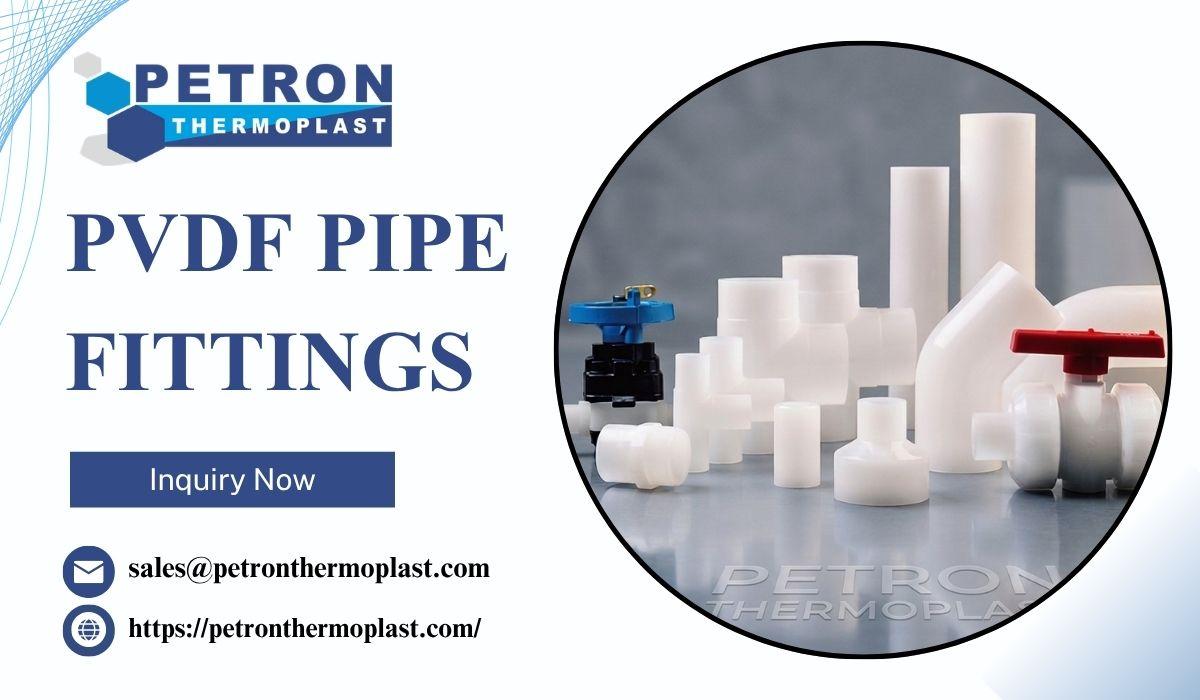
Industrial facilities operating in aggressive chemical environments require highly durable and corrosion-resistant piping systems capable of maintaining safe and reliable fluid transfer under demanding conditions. Industries such as chemical processing, pharmaceuticals, semiconductors, electroplating, water treatment, biotechnology, and specialty manufacturing depend heavily on advanced piping infrastructure for efficient chemical handling and process stability.
Among high-performance thermoplastic solutions, PVDF pipe and fittings are widely preferred for their exceptional chemical resistance, superior thermal stability, high purity performance, and long operational life. These systems are specifically engineered to handle aggressive chemicals and corrosive fluids while maintaining process reliability and operational safety.
PVDF pipe and fittings provide dependable solutions for industries requiring advanced fluid management systems capable of performing efficiently in harsh industrial environments.
Understanding PVDF Pipe and Fittings
PVDF stands for Polyvinylidene Fluoride, a premium thermoplastic material designed for critical industrial applications requiring superior chemical resistance and structural reliability.
PVDF pipe and fittings are used for:
- Corrosive chemical transfer
- High purity fluid handling
- Industrial process pipelines
- Hazardous fluid management
- Advanced chemical engineering systems
The fittings include:
- Elbows
- Tees
- Reducers
- Couplers
- Flanges
- Valves
- Connectors
These components work together to create reliable and leak-proof industrial piping networks.
Importance of Corrosion Resistant Piping Systems
Aggressive chemicals can severely damage ordinary piping systems, leading to:
- Corrosion
- Leakage
- Structural failure
- Product contamination
- Production downtime
- Safety hazards
Industrial facilities require advanced piping infrastructure capable of handling:
- Strong acids
- Alkalis
- Solvents
- Oxidizing chemicals
- High purity process fluids
PVDF piping systems help industries maintain safe and uninterrupted operations while minimizing maintenance risks.
Why PVDF Is Preferred for Aggressive Chemical Environments?
Modern industries increasingly prefer PVDF because of its advanced engineering properties.
Exceptional Chemical Resistance
PVDF provides superior resistance against:
- Hydrochloric acid
- Sulfuric acid
- Nitric acid
- Chlorine compounds
- Industrial solvents
- Corrosive process chemicals
This ensures long-term operational reliability in harsh chemical environments.
High Temperature Resistance
PVDF performs effectively under elevated operating temperatures while maintaining structural integrity.
This makes it suitable for:
- Heated chemical systems
- High-temperature process lines
- Industrial utility networks
High Purity Performance
PVDF offers:
- Low contamination risk
- Minimal extractables
- Clean fluid transfer performance
These properties are especially important for critical process industries.
Corrosion-Free Operation
Unlike metal systems, PVDF does not:
- Rust
- Corrode
- Scale
- Oxidize
This significantly improves operational stability and service life.
Long Operational Life
PVDF systems are engineered for dependable long-term industrial performance.
Key Features of PVDF Pipe and Fittings
Modern PVDF piping systems are designed with advanced engineering features for critical industrial applications.
Leak-Proof Construction
Precision-manufactured fittings improve:
- Fluid containment
- Process safety
- Pressure stability
Smooth Internal Surface
Smooth pipe interiors support:
- Efficient fluid flow
- Reduced pressure loss
- Low particle accumulation
- Easy cleaning performance
Strong Mechanical Durability
PVDF systems are designed to withstand:
- Pressure fluctuations
- Mechanical stress
- Industrial vibration
- Continuous process operation
UV and Weather Resistance
PVDF piping performs reliably under outdoor industrial conditions and environmental exposure.
Low Permeability
Low permeability improves:
- Chemical containment
- Operational safety
- Environmental protection
Applications of PVDF Pipe and Fittings
PVDF piping systems are widely used across multiple advanced industrial sectors.
Chemical Processing Industries
Chemical plants use PVDF systems for:
- Acid transfer pipelines
- Corrosive chemical handling
- Process utility systems
- Hazardous fluid management
Pharmaceutical Industries
Pharmaceutical facilities require contamination-resistant piping systems for:
- Purified water systems
- Chemical processing
- Sensitive fluid transfer
Semiconductor Industries
Semiconductor manufacturing requires ultra-clean piping systems for:
- High purity chemical transfer
- Ultra-pure water systems
- Precision process operations
Electroplating Industries
Electroplating systems involve aggressive chemicals requiring highly corrosion-resistant piping infrastructure.
Biotechnology Industries
Biotechnology facilities use PVDF systems for:
- High purity fluid handling
- Sensitive process operations
- Contamination-controlled environments
Water Treatment Plants
Water treatment systems use PVDF piping for:
- Chemical dosing systems
- Utility process pipelines
- Corrosive fluid transfer
Advantages of PVDF Pipe and Fittings Over Conventional Systems
Industries increasingly replace conventional metal and low-grade plastic systems with PVDF because of several operational advantages.
|
Feature |
PVDF Pipe and Fittings |
Conventional Piping |
|
Chemical Resistance |
Excellent |
Moderate |
|
Corrosion Resistance |
Excellent |
Limited |
|
Purity Performance |
Excellent |
Moderate |
|
Temperature Resistance |
High |
Moderate |
|
Maintenance |
Low |
High |
|
Operational Life |
Long |
Moderate |
Importance of High Purity Fluid Handling
Many industries require contamination-free fluid transfer systems for maintaining:
- Product quality
- Process consistency
- Equipment reliability
- Industrial safety
Contamination can result in:
- Product rejection
- Process instability
- Equipment damage
- Production losses
PVDF pipe and fittings help maintain:
- Clean fluid transfer
- Stable chemical composition
- Reliable operational performance
Their advanced material properties make them highly suitable for sensitive industrial processes.
Factors to Consider Before Selecting PVDF Pipe and Fittings
Proper product selection is essential for achieving reliable long-term industrial performance.
Chemical Compatibility
Ensure the piping material is compatible with the process chemicals.
Operating Temperature
Select piping systems capable of handling required thermal conditions safely.
Pressure Rating
Industrial systems require pipes and fittings capable of handling operational pressure reliably.
Purity Requirements
Critical applications require contamination-resistant piping systems.
Product Quality
High-quality manufacturing improves:
- Structural integrity
- Leak-proof performance
- Long-term durability
- Process safety
Importance of Choosing a Trusted PVDF Pipe Manufacturer
The quality of industrial piping systems directly affects operational reliability and maintenance costs.
A trusted manufacturer provides:
- Precision manufacturing
- Technical expertise
- High-quality materials
- Customized piping solutions
- Reliable industrial support
Working with an experienced supplier improves system safety and operational efficiency.
Maintenance Benefits of PVDF Pipe and Fittings
Low maintenance is one of the biggest operational advantages of PVDF systems.
Corrosion-Free Surface
PVDF does not require anti-corrosion coatings or protective treatments.
Easy Cleaning
Smooth internal surfaces reduce contamination buildup and simplify maintenance.
Reduced Downtime
Reliable piping systems minimize unexpected operational interruptions.
Lower Lifecycle Costs
Extended service life improves long-term project economics.
Environmental and Economic Advantages
Modern industries increasingly focus on sustainable and cost-efficient infrastructure solutions.
PVDF piping systems support these goals through:
- Long operational life
- Reduced maintenance waste
- Improved chemical containment
- Lower replacement frequency
- Efficient process operation
Their durable construction supports environmentally responsible industrial operations.
Why PVDF Pipe and Fittings Are Essential for Modern Industries?
Industrial facilities operating in aggressive chemical environments require piping systems capable of delivering:
- Reliable chemical resistance
- Stable process performance
- High purity fluid handling
- Long-term operational durability
PVDF pipe and fittings provide:
- Superior corrosion resistance
- Leak-proof fluid transfer
- Excellent thermal stability
- Low maintenance operation
- Reliable industrial performance
These advantages make PVDF one of the most advanced piping materials for modern industrial infrastructure.
Future Demand for PVDF Pipe and Fittings
The demand for advanced PVDF piping systems continues to increase as industries invest in:
- Semiconductor manufacturing
- Pharmaceutical infrastructure
- Specialty chemical processing
- Biotechnology expansion
- High purity industrial systems
PVDF technology remains essential for industries requiring dependable and corrosion-resistant piping solutions.
Conclusion
PVDF pipe and fittings provide reliable, high-performance, and corrosion-resistant solutions for aggressive chemical environments. Their superior chemical resistance, excellent thermal stability, high purity performance, smooth internal surfaces, and long operational life make them highly suitable for chemical processing plants, pharmaceutical facilities, semiconductor industries, electroplating systems, biotechnology operations, and advanced industrial applications.
By choosing high-quality PVDF pipe and fittings from trusted manufacturer like Petron Thermoplast, industries can improve operational reliability, maintain safe chemical handling, reduce maintenance costs, and achieve dependable long-term process performance in demanding industrial environments.
Nach Verein filtern
Read More
A Long-Tail Keyword Strategy Service helps businesses identify highly specific search queries that attract targeted audiences with strong purchase intent. Unlike broad keywords, long-tail keywords typically have lower competition and higher conversion potential because they closely match what users are actively searching for. By combining an Intent-Driven Keyword Report with Local AI Search...

According to the latest report published by Data Bridge Market Research, the Microplate Washers Market CAGR Value The global microplate washers market size was valued at USD 570.28 million in 2024 and is projected to reach USD 721.85 million by 2032, with a CAGR of 2.99% during the forecast period of 2025 to 2032. Microplate Washers Market survey report is intended to...

The next wave of EA football games already has players talking, and not just because of ratings debates or cover-athlete guesses. Madden 27 and College Football 27 both sound like they're leaning harder into control, team identity, and the little details that decide close games. If you're the type who builds Ultimate Team early, planning around Madden 27 coins makes sense, but the bigger story...
"Batter and Breader Premixes Market Summary: According to the latest report published by Data Bridge Market Research, the Batter and Breader Premixes Market Data Bridge Market Research analyses that the global batter and breader premixes market will project a CAGR of 6.20% for the forecast period of 2022-2029. Winning Batter and Breader Premixes Marketresearch report deeply analyses...
Education is the foundation of a successful future, and choosing the right school is one of the most important decisions for every parent. A good school not only focuses on academic excellence but also helps students develop confidence, discipline, communication skills, creativity, and leadership qualities. In today’s competitive world, students need a balanced learning...