NetSuite ERP Partner in Ajman: How to Choose Right
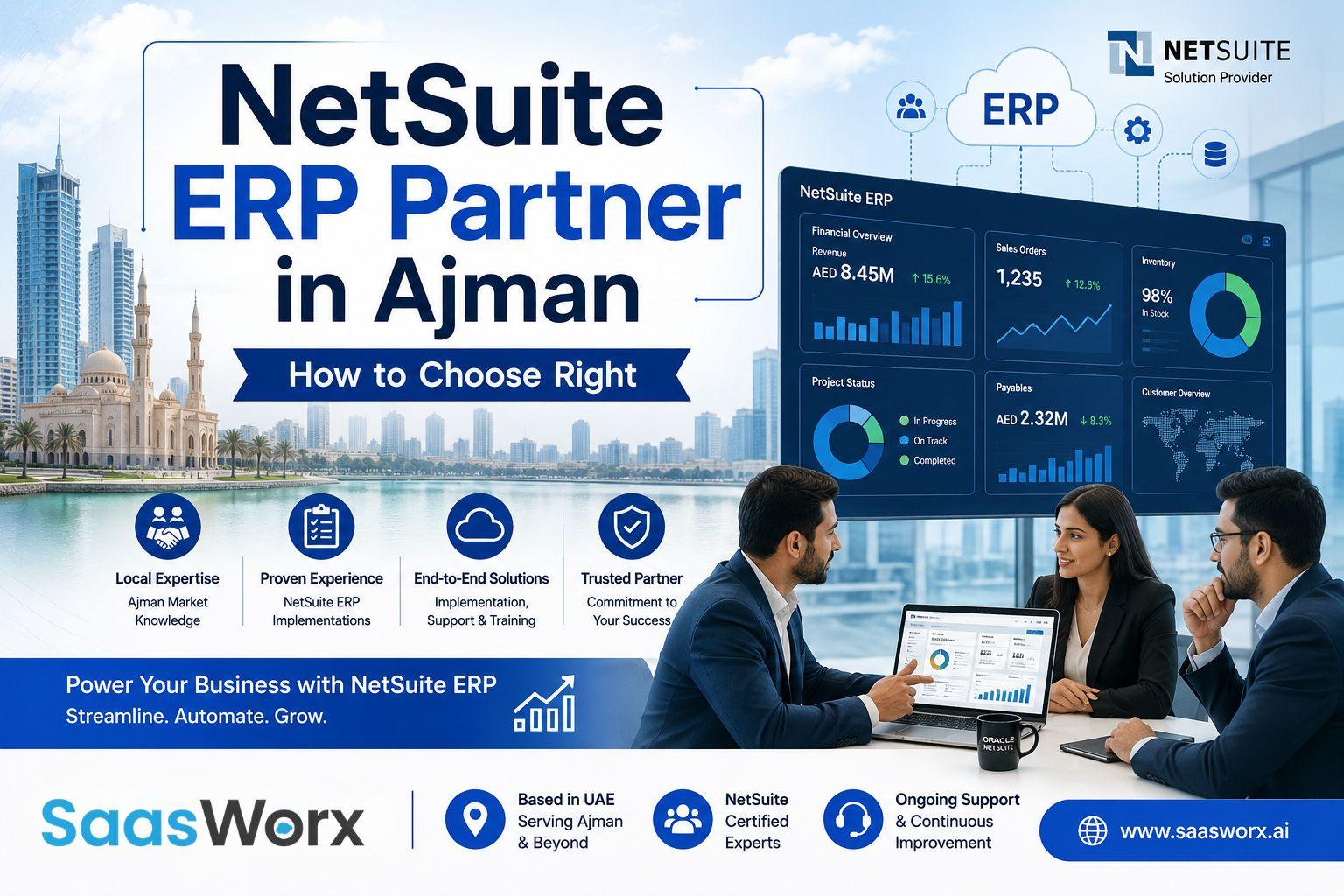
Over 40% of mid-sized businesses in the UAE that implement ERP without a certified partner face project delays of six months or more. A NetSuite ERP partner in Ajman helps businesses implement, customise, and manage Oracle NetSuite across finance, inventory, and operations. They reduce deployment risk and ensure local compliance from day one.
Ajman's economy has diversified fast. The emirate hosts over 9,000 active businesses across its free zones and mainland. As these businesses scale, they need ERP systems that handle multi-currency transactions, UAE VAT reporting, and cross-department workflows without breaking down.
This post explains what a NetSuite ERP partner actually does, how to evaluate one, and what questions to ask before signing any contract.
What Does a NetSuite ERP Partner in Ajman Do?
A NetSuite ERP partner in Ajman manages the full implementation lifecycle from scoping your business requirements to configuring modules, migrating data, training your team, and providing post-go-live support. They hold Oracle certifications that authorise them to sell, deploy, and customise NetSuite for clients.
The scope of work typically falls into three areas:
Implementation and Configuration
Partners map your existing workflows to NetSuite modules financials, procurement, inventory, CRM, or manufacturing. They configure dashboards, approval chains, and reporting templates specific to your industry. Many use Oracle's SuiteSuccess methodology, which provides pre-built KPIs and workflows for sectors like wholesale distribution, professional services, and retail.
UAE Compliance and Localisation
VAT compliance is non-negotiable in the UAE. A qualified partner configures NetSuite's tax engine to produce UAE FTA-compliant VAT returns. They also handle multi-currency settings for businesses transacting in AED, USD, or EUR and set up intercompany transactions for groups with entities in multiple emirates or GCC countries.
Ongoing Support and Optimisation
After go-live, businesses need continued help. A local partner provides support in your time zone, handles system upgrades, and builds custom scripts or workflows as your operations change. This is where a local Ajman-based or UAE-based partner outperforms offshore options response times matter when a month-end close is delayed.
How Do I Choose the Right NetSuite Partner in UAE?
Choose a NetSuite partner in the UAE by checking their Oracle certification tier, their experience in your industry, the size of their certified team, and the quality of their post-implementation support. References from similar businesses in the UAE carry more weight than general case studies.
Check Oracle Certification Status
Oracle assigns NetSuite partners to tiers: Alliance, Partner, and Premier. Higher tiers indicate more certified consultants, more deployments, and a closer relationship with Oracle's product team. Ask any potential partner to show their current certificate and confirm it covers your region.
Assess Industry Experience
NetSuite works differently for a trading company in Ajman Free Zone than for a professional services firm in Ajman Industrial Area. A partner experienced in your vertical already knows the common pain points revenue recognition rules, landed cost tracking, or project billing and won't spend your budget learning them.
Evaluate the Support Model
Support quality varies sharply between partners. Before committing, ask about response SLAs, whether support is handled locally or offshore, and what happens during Oracle's twice-yearly platform updates. For a detailed breakdown of what a strong implementation partner delivers in the UAE context, this guide on NetSuite ERP implementation in Ajman covers the key service pillars businesses should expect.
Is NetSuite Suitable for Small Businesses in Ajman?
Yes, NetSuite is suitable for growing small and mid-sized businesses in Ajman, particularly those with multi-entity structures, inventory management needs, or ambitions to expand across the GCC. NetSuite's SuiteSuccess editions offer pre-configured deployments that reduce implementation time and cost for smaller organisations.
When NetSuite Makes Sense for an SME
If your business manages inventory across multiple locations, processes more than 500 transactions per month, or operates across two or more legal entities, NetSuite starts to deliver clear ROI over standalone accounting tools. Businesses in Ajman's free zones that handle import-export trade find NetSuite's multi-currency and landed cost features particularly useful.
When to Wait Before Implementing
A business with fewer than 10 employees, a single product line, and simple invoicing needs may not recover the implementation cost quickly. NetSuite's annual subscription starts at approximately $999 USD per month for base modules (Source: Oracle NetSuite, 2024), with additional costs for advanced modules and user licences. A partner can model total cost of ownership before you commit.
How Long Does NetSuite Implementation Take in UAE?
A standard NetSuite implementation in the UAE takes between 3 and 6 months, depending on the number of modules, the complexity of data migration, and how ready the client is to make decisions. Implementations using SuiteSuccess methodology for single-entity businesses can go live in 8 to 12 weeks.
Key Phases and Timelines
• Discovery and scoping: 2 to 3 weeks
• Configuration and build: 4 to 8 weeks
• Data migration and testing: 3 to 5 weeks
• Training and go-live: 1 to 2 weeks
• Hypercare support: 4 weeks post go-live
What Slows Down Implementation
The most common delays come from incomplete data, unclear ownership of business decisions, and scope changes mid-project. Partners who run a formal business requirements document (BRD) process before configuration begins reduce these delays significantly. Ask any potential partner how they handle change requests and whether they use a fixed or time-and-materials pricing model.
Conclusion
Choosing the right NetSuite ERP partner in Ajman determines whether your implementation delivers value in year one or drains budget fixing problems in year two. Certification, industry experience, and a clear support model are the three filters that matter most. As more Ajman businesses bring operations onto a single cloud platform, the quality of the partner relationship will separate companies that scale cleanly from those that spend years managing workarounds.
الأقسام
إقرأ المزيد
Finding a platform that feels simple, responsive, and easy to navigate can make a big difference in the overall user experience. Fairdeal brings together several practical features designed to make account access, navigation, payments, and customer assistance more convenient. Whether you are exploring Fairdeal for the first time or already have an account, understanding its key features can...

Polaris Market Research has published a brand-new report titled Animal Vaccines Market Size, Share, Trends, Industry Analysis Report: By Type (Livestock and Companion), Product, Disease, Route of Administration, Distribution Channel, and Region (North America, Europe, Asia Pacific, Latin America, and Middle East & Africa) – Market Forecast, 2025–2034 that includes...

在纽约布鲁克林,企业每天都面临各种潜在风险,如财产损失、员工意外事故、客户索赔以及自然灾害。对于企业主来说,选择合适的布鲁克林商业保险至关重要。商业保险不仅能够保护企业资产,还能降低法律责任风险,为企业稳定发展提供坚实保障。无论是零售店、餐饮企业、服务型公司还是制造企业,商业保险都是确保企业安全运营的重要工具。 什么是商业保险? 商业保险是专门为企业量身设计的保险产品,用于覆盖企业在运营过程中可能面临的各种风险。通过商业保险,企业可以在遭遇火灾、盗窃、自然灾害或法律诉讼时获得经济赔偿,减少损失并保持业务持续运作。企业可以根据行业特点和风险状况选择合适的保险类型,例如商业财产保险、商业责任保险、工伤保险以及商业车辆保险等。 布鲁克林商业保险的重要性 1. 保护企业资产...

" According to the latest report published by Data Bridge Market Research, the Menkes Syndrome Market The global Menkes syndrome market size was valued at USD 5.44 million in 2024 and is expected to reach USD 10.44 million by 2032, at a CAGR of 8.5% during the forecast period. The comprehensive Menkes Syndrome Market report offers a thorough overview of product specification,...

Ready to start selling online with Shopify? Work N Solution offers professional Shopify development services for startups, growing brands, and established businesses. We create custom Shopify stores, redesign existing websites, optimize store performance, integrate essential apps, configure secure payment gateways, and deliver mobile-friendly shopping experiences. Whether you're launching a new...