


The Definitive Guide to Emerging Technology Degrees: Navigating the Next Wave of Tech Careers
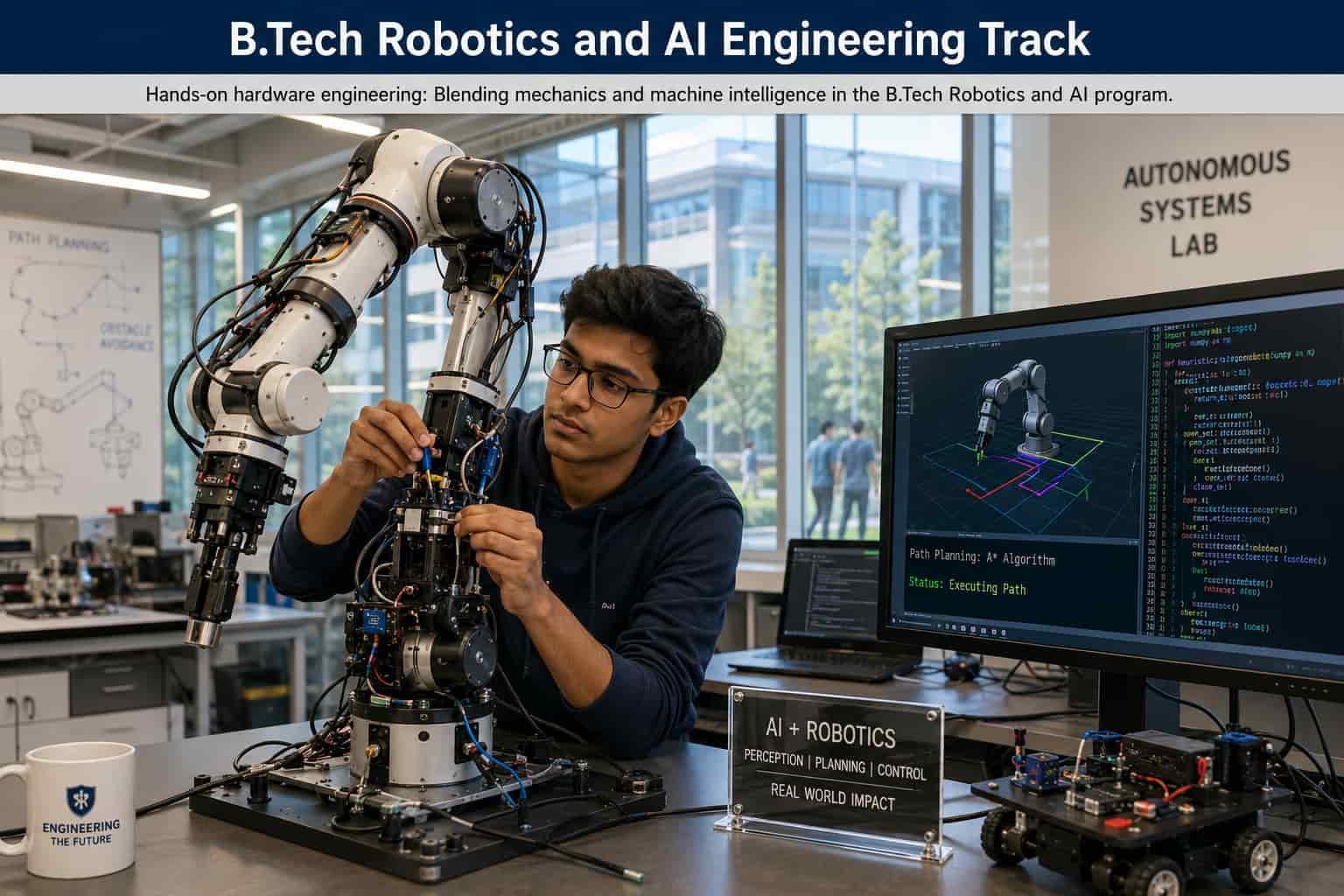
The global technology landscape is undergoing a massive structural transformation. Traditional, generalised engineering and computer science programs no longer fully meet the immediate, highly specialised demands of modern industry. Across production lines, data centres, and corporate software architectures, automation and intelligence have shifted from long-term experiments to foundational requirements.
For students and professionals planning their academic paths, selecting a degree track that focuses on specialised, deep-tech domains is the most strategic way to build a future-proof career.
The Shift from General IT to Deep-Tech Specialisation
For over two decades, a standard degree in Computer Science or Information Technology was the default entry point into the tech sector. However, enterprise systems have grown highly complex, handling massive, distributed datasets and real-time autonomous physical systems.
Today's computing landscape is defined by a tiered architecture where cloud data infrastructure serves as the central backend, while intelligent nodes process information directly at the edge where actions occur. Because of this integration, industries now recruit engineers who possess deep, domain-specific technical skills right from day one of graduation.
The Core Domains of Modern Tech Education
When evaluating next-generation academic tracks, four distinct deep-tech domains are driving corporate investment and hiring trends worldwide.
1. Artificial Intelligence and Machine Learning
Artificial Intelligence (AI) and Machine Learning (ML) involve building computational systems that can process massive data streams, extract hidden patterns, and make automated, predictive execution decisions without explicit human programming.
-
Core Focus Areas: Deep learning architectures, Natural Language Processing (NLP), neural network training, and statistical predictive modelling.
-
The Academic Pathway: Pursuing a specialised curriculum like a B.Sc. Computer Science in AI and ML gives students a strong foundation in computational mathematics, algorithm tuning, and real-world predictive analysis modelling.
2. Enterprise Cloud Computing
Cloud computing forms the scalable backbone of modern business. It allows enterprises to move away from expensive, localised hardware and utilise globally distributed, elastic computing power that scales up or down based on real-time operational traffic.
-
Core Focus Areas: Virtualisation protocols, microservices architecture, serverless infrastructure deployment, and cloud security frameworks.
-
The Academic Pathway: Students looking to master scalable network architectures can explore an industry-aligned BCA in Cloud Computing to learn deployment pipelines, container orchestration, and multi-tenant cloud systems management.
3. Data Science and Analytics
Data is the world's most valuable raw material, but it is fundamentally useless without processing pipelines. Data Science bridges the gap between raw, unstructured database logs and actionable corporate strategy by applying advanced mathematical and visual analysis tools.
-
Core Focus Areas: Predictive data modelling, big data management infrastructure, database querying, and business intelligence dashboard design.
-
The Academic Tracks: For individuals targeting careers as data architects, analytics managers, or business analysts, two solid specialised pathways include a comprehensive B.Sc. Computer Science in AI and Data Science or a professionally focused BCA in AI and Data Science.
4. Intelligent Robotics and Cyber-Physical Systems
Modern robotics bridges the digital and physical worlds. True robotics engineering goes far beyond basic mechanical assembly; it requires building machines that can autonomously perceive their physical surroundings, run real-time onboard calculations, and execute complex mechanical tasks safely.
-
Core Focus Areas: Kinematics, embedded microcontrollers, sensor integration (such as LiDAR and computer vision cameras), and real-time hardware execution via the Robot Operating System (ROS).
-
The Academic Pathway: If you want a hands-on career building physical automation systems, an elite choice is a dedicated B.Tech in Robotics and AI program.
Core Skillsets High-Growth Industries Demand
Succeeding in an emerging technology degree program requires a strong commitment to practical, hands-on portfolio building. Top-tier technology employers evaluate candidates based on clear, demonstrable technical capabilities:
-
Advanced Software Engineering: Mastery of low-latency programming languages like C++ for hardware control, alongside highly adaptable languages like Python for machine learning models and data pipelines.
-
Infrastructure Management: Practical familiarity with container environments, database systems, and automated deployment architectures.
-
Mathematical Modelling: A solid grounding in linear algebra, calculus, and probability matrices, which form the mathematical underpinnings of all machine learning algorithms and robotic movement calculations.
Industry Scope and Career Horizons
Graduating with a specialised, niche tech degree allows you to skip entry-level general tech jobs and step directly into high-value specialised roles:
-
Cloud Solution Architects & DevOps Engineers: Designing resilient, secure global networks for banking, healthcare, and enterprise tech platforms.
-
AI Engineers & Data Scientists: Training large-scale language models, deploying computer vision for autonomous manufacturing, and optimising corporate logistics systems.
-
Robotics Specialists: Designing autonomous warehouse fleets, medical devices, precision drones, and smart electric vehicles.
Building Your Future with MH Cognition
Choosing an emerging tech path requires a learning environment built around live project execution, modern developer tools, and structural industry alignment.
As a dedicated academic Knowledge Partner, MH Cognition works directly with leading universities to deliver specialised curricula, active cloud labs, and hands-on guidance. This approach ensures your educational training is perfectly synced with the real-world engineering standards of the global tech sector.
Take control of your academic journey and start mastering the systems that are building tomorrow's world.
Visit: https://mhcognition.com/learning/btech-robotics-and-ai
Categorias
Leia Mais
Redefining Elegance Through Conscious Craftsmanship The idea of luxury has transformed dramatically over the last decade. Today’s consumers are no longer satisfied with beauty alone; they want meaning behind every purchase. From fashion and travel to home décor and fine jewelry, people are embracing products that combine elegance with responsibility. This shift has reshaped the...

According to the latest report published by Data Bridge Market Research, the Pediatric Emergence Medical Kits Market The pediatric emergence medical kits market value is USD 175.4 million in 2022, is expected to reach USD 253.28 million by 2030, at a CAGR of 4.70% during the forecast period 2023 to 2030. In addition to the insights on market scenarios such as market value, growth...

Lottery Defeated is a lottery prediction software designed to help players in the UK select numbers in a more structured and informed way. Instead of depending entirely on luck, it applies data-driven techniques and past draw analysis to generate number combinations, making it a suitable option for those who prefer a smarter approach to playing the lottery. In the UK, many participants...

Learn about CNC tools, types, Indian manufacturers, suppliers, and online buying tips for accurate machining in workshops and industries. What Are CNC Tools? CNC machines are controlled by computers, and they need special cutting and measuring devices to perform different tasks. These devices help machines cut metal, wood, plastic, and other materials with high accuracy. They are used in...

Tendencias en cotillón para 2026: Todo lo que necesitas saber para comprar por mayor Organizar una celebración memorable es un arte que combina creatividad, coordinación y una cuidada selección de detalles. Cuando se trata de bodas, aniversarios, fiestas de quince o eventos corporativos, la atmósfera lo es todo. Existe un elemento indispensable que transforma...
