


SEM Campaign Mistakes You Must Avoid
SEM Campaign Mistakes You Must Avoid

Search Engine Marketing has become one of the most effective digital marketing strategies for businesses looking to increase online visibility, generate targeted traffic, and boost conversions quickly. Platforms like Google Ads and Bing Ads allow businesses to reach customers exactly when they are searching for products or services online. However, many businesses fail to achieve strong results because their campaigns are not optimized properly.
Even small mistakes in SEM campaigns can lead to wasted advertising budgets, poor audience targeting, and lower conversion rates. Successful businesses combine SEO, content marketing, audience analysis, and data-driven optimization to create campaigns that deliver sustainable growth and better return on investment.
Why Do Many SEM Campaigns Fail?
Many businesses launch SEM campaigns without proper planning or optimization. As a result, they attract irrelevant traffic and spend money without generating quality leads.
Common reasons campaigns fail include:
-
Poor keyword targeting
-
Weak audience segmentation
-
Low-quality landing pages
-
Ineffective ad copy
-
Lack of conversion tracking
Successful digital marketing strategies require continuous optimization and performance monitoring.
Mistake #1: Ignoring Keyword Research
Keyword research is the foundation of successful Search Engine Marketing campaigns. Businesses that target the wrong keywords often attract irrelevant traffic and waste advertising budgets.
Problems caused by poor keyword research include:
-
High cost per click
-
Low conversion rates
-
Irrelevant search traffic
-
Reduced ad relevance
-
Poor campaign profitability
Combining SEO insights with SEM keyword strategies helps businesses target high-intent users more effectively.
Mistake #2: Using Broad Match Keywords Only
Many beginners rely heavily on broad match keywords, which can trigger ads for unrelated searches.
Risks of overusing broad match keywords include:
-
Wasted advertising spend
-
Poor audience targeting
-
Lower click-through rates
-
Reduced conversion quality
-
Higher campaign costs
Using phrase match, exact match, and negative keywords improves targeting accuracy and campaign efficiency.
Mistake #3: Writing Weak Ad Copy
Ad copy plays a major role in campaign performance. Weak messaging often fails to attract clicks or communicate value effectively.
Common ad copy mistakes include:
-
Generic headlines
-
Weak call-to-action phrases
-
Overcomplicated messaging
-
Lack of emotional appeal
-
Ignoring customer pain points
High-performing digital marketing campaigns use clear, value-driven messaging that matches user intent.
Mistake #4: Ignoring Landing Page Optimization
Even the best ads cannot perform well if users land on poor-quality pages after clicking.
Landing page mistakes include:
-
Slow loading speeds
-
Poor mobile responsiveness
-
Weak call-to-action buttons
-
Confusing layouts
-
Non-SEO-friendly content
Optimized landing pages improve user experience, conversion rates, and ad quality scores.
Mistake #5: Poor Audience Targeting
Search Engine Marketing platforms provide advanced audience targeting features, but many businesses fail to use them effectively.
Common targeting mistakes include:
-
Targeting audiences too broadly
-
Ignoring geographic targeting
-
Failing to use remarketing campaigns
-
Not analyzing audience behavior
-
Using irrelevant audience segments
Proper targeting improves lead quality while reducing wasted ad spend.
Mistake #6: Not Tracking Conversions
Without conversion tracking, businesses cannot understand which campaigns generate results.
Important SEM metrics include:
-
Conversion rates
-
Click-through rates
-
Cost per conversion
-
Return on investment (ROI)
-
Bounce rates
Data-driven optimization helps businesses improve campaign performance and allocate budgets more effectively.
Mistake #7: Ignoring SEO and Content Marketing
Many businesses treat SEO and SEM separately, but combining both strategies creates stronger digital marketing performance.
Benefits of combining SEO and content marketing with SEM include:
-
Better keyword insights
-
Higher-quality landing pages
-
Increased audience trust
-
Improved organic visibility
-
Stronger long-term traffic growth
Content marketing also helps businesses educate users and improve engagement before conversions happen.
Mistake #8: Scaling Campaigns Too Quickly
Many businesses increase budgets aggressively without properly testing campaign performance first.
Risks of scaling too quickly include:
-
Increased wasted spend
-
Reduced campaign efficiency
-
Poor-quality traffic
-
Lower ROI
-
Unstable campaign performance
Successful businesses scale gradually while monitoring performance metrics continuously.
Mistake #9: Ignoring Mobile Optimization
Most online searches now happen on mobile devices. Poor mobile experiences can significantly reduce SEM performance.
Mobile optimization mistakes include:
-
Slow-loading mobile pages
-
Difficult website navigation
-
Poor mobile landing page design
-
Unreadable content formatting
-
Weak mobile call-to-action buttons
Mobile-friendly experiences improve engagement and conversion rates.
Mistake #10: Failing to Test Campaign Elements
Testing is essential for identifying what works best in SEM campaigns.
Important elements to test include:
-
Headlines and descriptions
-
Audience segments
-
Landing page layouts
-
Call-to-action buttons
-
Ad visuals and creatives
Businesses that continuously test campaigns often improve efficiency and reduce advertising costs.
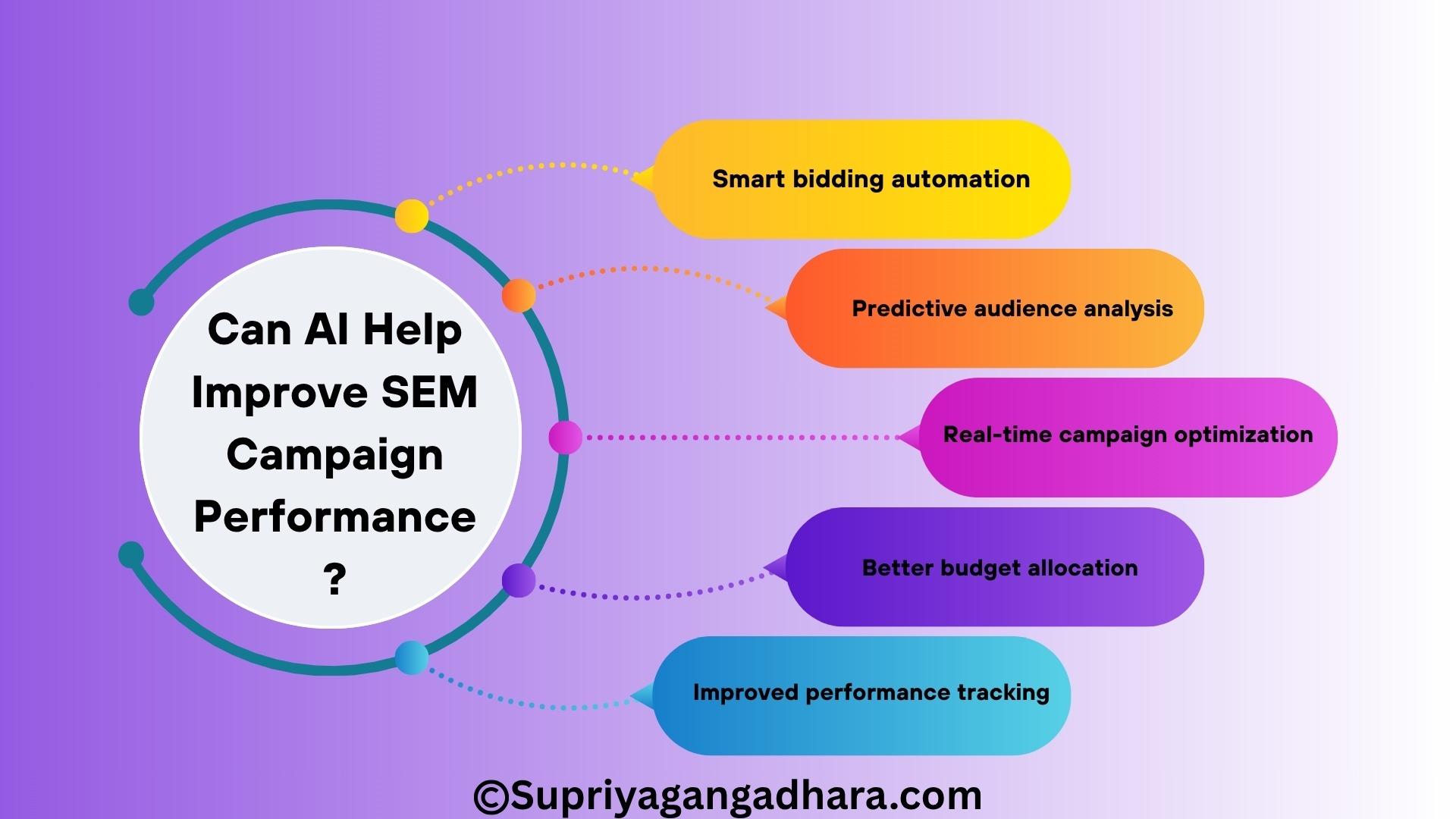
Can AI Help Improve SEM Campaign Performance?
Artificial Intelligence is transforming digital marketing and Search Engine Marketing optimization. AI-powered tools help businesses automate campaign improvements and make smarter decisions.
AI-powered SEM advantages include:
-
Smart bidding automation
-
Predictive audience analysis
-
Real-time campaign optimization
-
Better budget allocation
-
Improved performance tracking
AI helps marketers improve efficiency while scaling campaigns more effectively.
Why Is Continuous Optimization Important?
SEM campaigns require ongoing adjustments because audience behavior, competition, and search trends constantly change.
Benefits of continuous optimization include:
-
Better campaign efficiency
-
Lower advertising costs
-
Higher-quality leads
-
Improved conversion performance
-
Stronger long-term growth
Businesses that monitor and optimize campaigns regularly often achieve more sustainable results.
Conclusion
Search Engine Marketing is one of the most effective digital marketing strategies for driving targeted traffic and generating business growth. However, even small mistakes can reduce campaign performance and waste advertising budgets.
Businesses that avoid common SEM mistakes and focus on SEO integration, content marketing, audience targeting, landing page optimization, and data-driven decision-making can improve conversions and reduce unnecessary spending. By combining strategic optimization with AI-powered tools and customer-focused experiences, SEM becomes more than just paid advertising it becomes a scalable engine for sustainable online growth and long-term business success.
Categories
Read More
The ferrite magnet market has become a critical enabler of component durability, with industrial ferrite magnets offering sintered ferrite magnets, strength, and longevity for automotive and industrial applications. As durability requirements intensify, the role of ferrite magnets has grown significantly. The Ferrite Magnet Market was estimated at USD 9.596 billion in 2024 and is projected to...

"Caramel Chocolate Market Summary: According to the latest report published by Data Bridge Market Research, the Caramel Chocolate Market Data Bridge Market Research analyses that the caramel chocolate market was valued at USD 5.13 billion in 2021 and is expected to reach the value of USD 8.81 billion by 2029, at a CAGR of 7.00% during the forecast period of 2022 to 2029. Caramel...

Sustainable Pharmaceutical Packaging Market: Driving the Future of Eco-Conscious Healthcare As global environmental awareness continues to shape industrial strategies, the pharmaceutical sector is embracing sustainability as a central tenet of its operations. Among the key focus areas is sustainable pharmaceutical packaging, which is transforming how medications are stored, transported,...
According to a new report from Intel Market Research, the global pet care service market was valued at USD 119.7 billion in 2025 and is projected to grow from USD 127.3 billion in 2026 to USD 197.5 billion by 2034, exhibiting a robust CAGR of 5.9% during the forecast period. Market expansion stems from heightened pet humanization where owners prioritize premium care comparable with human...
Introduction Kumaon Bazaar has become a trusted destination for families and individuals seeking genuine Kumaoni brides for marriage and reliable Kumaoni matrimony services. Marriage is one of the most significant milestones in life and finding a compatible partner who shares similar cultural values, traditions and family beliefs is essential for building a happy future. The Kumaoni community...
