The Real Cost of E-Waste in India — and How Recycling Is Changing That
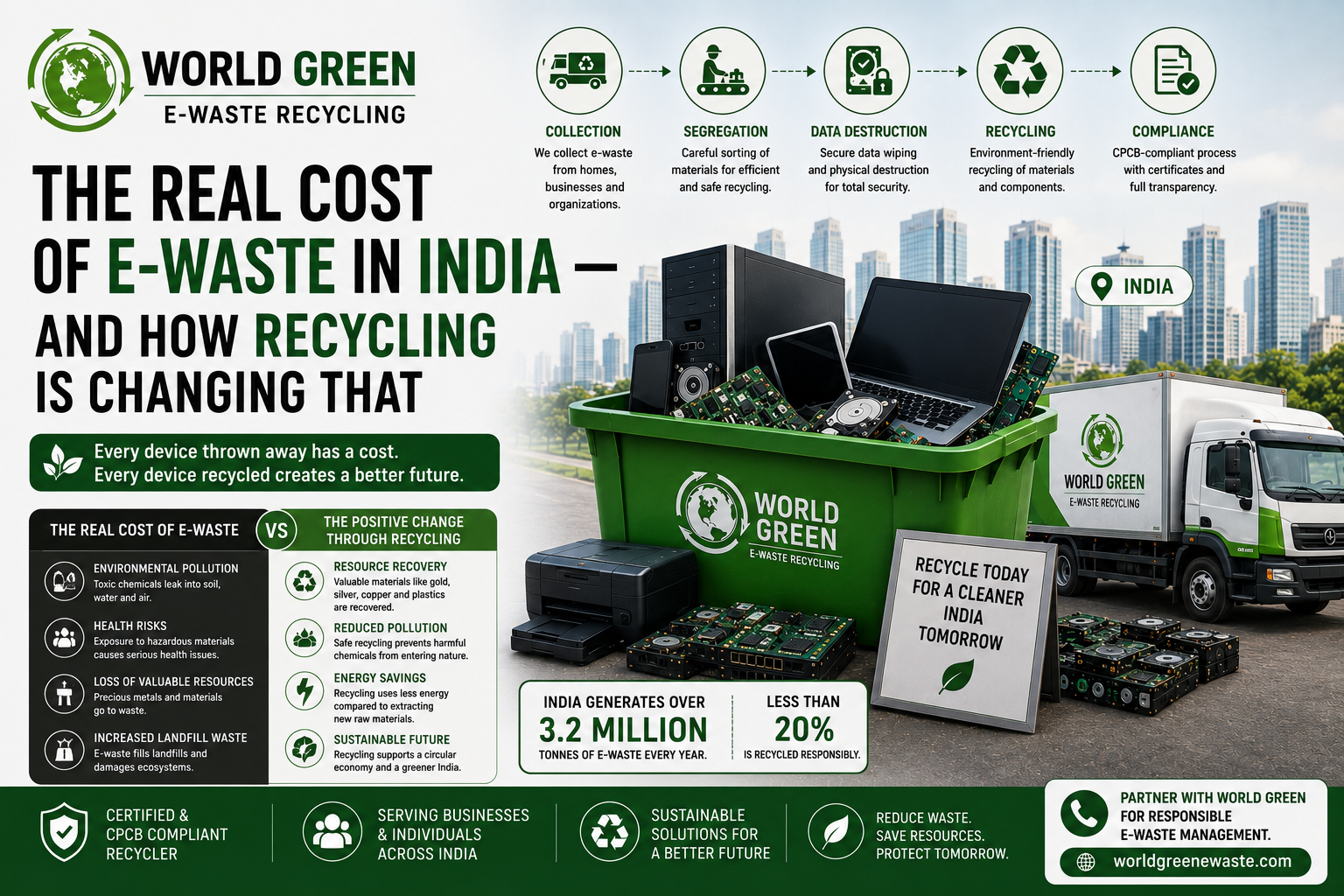
We live in a country that loves technology. New phones, faster laptops, smarter TVs — Indians are embracing electronics like never before. And honestly, there is nothing wrong with that. Technology is making life better, businesses more efficient, and opportunities more accessible. But there is a side to this story that rarely makes the headlines — what is all of this costing us?
The real cost of India's electronics boom is not just measured in rupees. It is measured in contaminated groundwater, poisoned soil, damaged health, and wasted resources. India's e-waste problem is large and growing — but here is the good news. Recycling is genuinely changing that story. And it is changing it faster than most people realize.
1. The Scale of India's E-Waste Problem
India is the third largest generator of e-waste in the world, producing over 3 million tonnes of electronic waste every single year. That number keeps climbing as more people buy more devices and upgrade more frequently. Smartphones, laptops, televisions, air conditioners, refrigerators, batteries — all of it eventually becomes waste. And right now, only a small fraction of that waste is being recycled through certified, safe channels. The rest ends up in landfills, with informal scrap dealers, or simply piling up in homes and offices with nowhere to go.
2. The Environmental Cost Nobody Talks About
When e-waste ends up in landfills or gets processed by informal recyclers, the environmental damage is significant and long-lasting. Electronics contain lead, mercury, cadmium, arsenic, and other toxic heavy metals that do not break down over time. Instead they leach into the soil, contaminate groundwater sources, and enter the food chain through crops grown in affected areas. Communities living near informal e-waste processing sites often face serious long-term health consequences — including respiratory problems, neurological damage, and increased cancer risk. This is the hidden price India is paying for its electronics addiction.
3. The Economic Cost of Doing Nothing
Here is something most people do not think about — India's e-waste also represents an enormous economic opportunity that is being thrown away. Old electronics contain gold, silver, copper, palladium, and rare earth metals — all of which have real market value. When these devices end up in landfills instead of certified recycling facilities, those materials are lost permanently. India then has to spend billions of rupees importing the same raw materials from other countries to manufacture new electronics. It is a cycle of waste that costs the country far more than most people realise.
4. How Certified Recycling Is Changing the Picture
This is where the story starts to shift — and genuinely for the better. Certified e-waste recycling companies are changing the way India handles its electronic waste, one device at a time. When old electronics are processed through certified channels like World Green E-Waste, the outcomes are completely different. Toxic materials are safely contained and never released into the environment. Valuable metals are recovered and fed back into manufacturing — reducing the need for fresh mining. Data is destroyed securely. And businesses get the documentation they need to stay legally compliant. Every device recycled properly breaks the cycle of damage and replaces it with a cycle of value.
5. Government Action Is Accelerating the Change
India's government recognised the scale of the problem and responded with the E-Waste Management Rules 2022 and stricter EPR (Extended Producer Responsibility) guidelines. These rules are pushing more e-waste into certified recycling channels by making businesses legally accountable for what happens to the electronics they sell. By 2026, enforcement has strengthened significantly — and the volume of e-waste being handled responsibly is growing as a result. The system is working — but it needs more participation to reach its full potential.
You Are Part of This Change
The real cost of e-waste in India is high — environmentally, economically, and socially. But it is a cost that can be reduced significantly when more people and businesses choose to recycle responsibly. Every old device that reaches a certified recycler instead of a landfill is a small but meaningful step in the right direction.
At World Green E-Waste, we are committed to making responsible e-waste recycling simple and accessible for everyone across Delhi NCR. From doorstep pickup and certified data destruction to EPR compliance and recycling certificates — we handle everything end to end. Get in touch with us today and be part of the change India needs.
📧 info@worldgreenewaste.com | 📞 +91 987 072 2728 | 🌐 www.worldgreenewaste.com
Read another Blog: - E-Waste Company in Noida and Ghaziabad
Categorias
Leia mais
En 2026, l’utilisation des smartphones et des tablettes a profondément transformé la manière dont les joueurs accèdent aux casinos en ligne. Les plateformes modernes casino en ligne cashlib compris l’importance de l’expérience mobile et proposent désormais des sites parfaitement optimisés pour les appareils mobiles. Les...

Nestled in the heart of Colorado’s world-renowned Beaver Creek Mountain, The Residences Bachelor Gulch offers an unparalleled opportunity to own a slice of luxury in a premier ski destination. These exclusive fractional luxury condos provide ski-in/ski-out access, combining the convenience of mountain living with the comfort of a high-end resort lifestyle. For those seeking an...

Shape your creative vision into a professional career with the Diploma in Fashion and Design Course by IDEAMAX Institute, Coimbatore’s leading hub for aspiring designers. This program blends artistic innovation with technical mastery, helping you learn garment construction, pattern making, fabric study, and digital design tools. At IDEAMAX Institute, you’ll gain real-world exposure...

The arrangement of living spaces requires a balance between functionality and aesthetic appeal. When individuals approach the process of styling a home, they often focus on large structural pieces while overlooking the smaller elements that define the character of a room. Integrating furniture decor serves as the bridge between raw architecture and a fully realized living experience. By...
When it comes to gaming IDs, we see numerous options available on the market. But what about visiting one, playing once, and staying on that forever? That is why every user deserves DubaiExch247. The most famous gaming platform in India and worldwide is worth everyone’s attention.