Lead Acid Battery Recycling in India: Everything You Need to Know in 2026
There is a good chance you have a lead acid battery somewhere in your life right now. Maybe it is powering your home inverter, sitting under the bonnet of your car, or keeping your office UPS running. Lead acid batteries are everywhere in India — they have been for decades. They are reliable, affordable, and they do their job well.
But what happens when they stop working? That is the question most people never think about — until they are suddenly sitting with a dead, heavy battery and no idea what to do with it. In 2026, how you dispose of a lead acid battery matters more than ever. Let us walk through everything you need to know — simply and clearly.
1. What Exactly Is a Lead Acid Battery?
A lead acid battery is one of the oldest and most widely used battery types in the world. Inside every lead acid battery are lead plates, sulphuric acid, and a plastic casing. You will find them in cars, trucks, motorcycles, home inverters, UPS systems, solar storage units, and industrial equipment. They are heavy, they hold a lot of charge, and they have a lifespan of roughly 3 to 5 years before they need replacing. India uses tens of millions of these batteries every year — which means tens of millions eventually need to be disposed of responsibly.
2. Why Lead Acid Batteries Are Particularly Dangerous
Do not let their familiar appearance fool you. A dead lead acid battery is one of the most hazardous waste items you can have sitting around. The lead inside is a highly toxic heavy metal that causes serious neurological damage — especially in children. The sulphuric acid is corrosive and can cause severe burns on contact. When these batteries end up in landfills or are broken open informally, lead leaches into soil and groundwater, contaminating drinking water sources and entering the food chain. Communities near informal battery recycling sites across India have documented cases of lead poisoning, developmental problems in children, and serious respiratory illness — all linked to improper battery disposal.
3. What India's Law Says About Lead Acid Battery Disposal
India has had regulations around lead acid battery disposal for many years — but in 2026, enforcement is at an all-time high. The Battery Waste Management Rules 2022 introduced strict Extended Producer Responsibility (EPR) obligations for battery manufacturers, importers, and dealers. They are required to ensure old batteries are collected back and sent to CPCB-authorised recyclers for safe processing. For businesses — whether you run a fleet of vehicles, operate a data centre, or manage solar installations — disposing of lead acid batteries through uncertified channels is both illegal and risky.
4. How Lead Acid Battery Recycling Actually Works
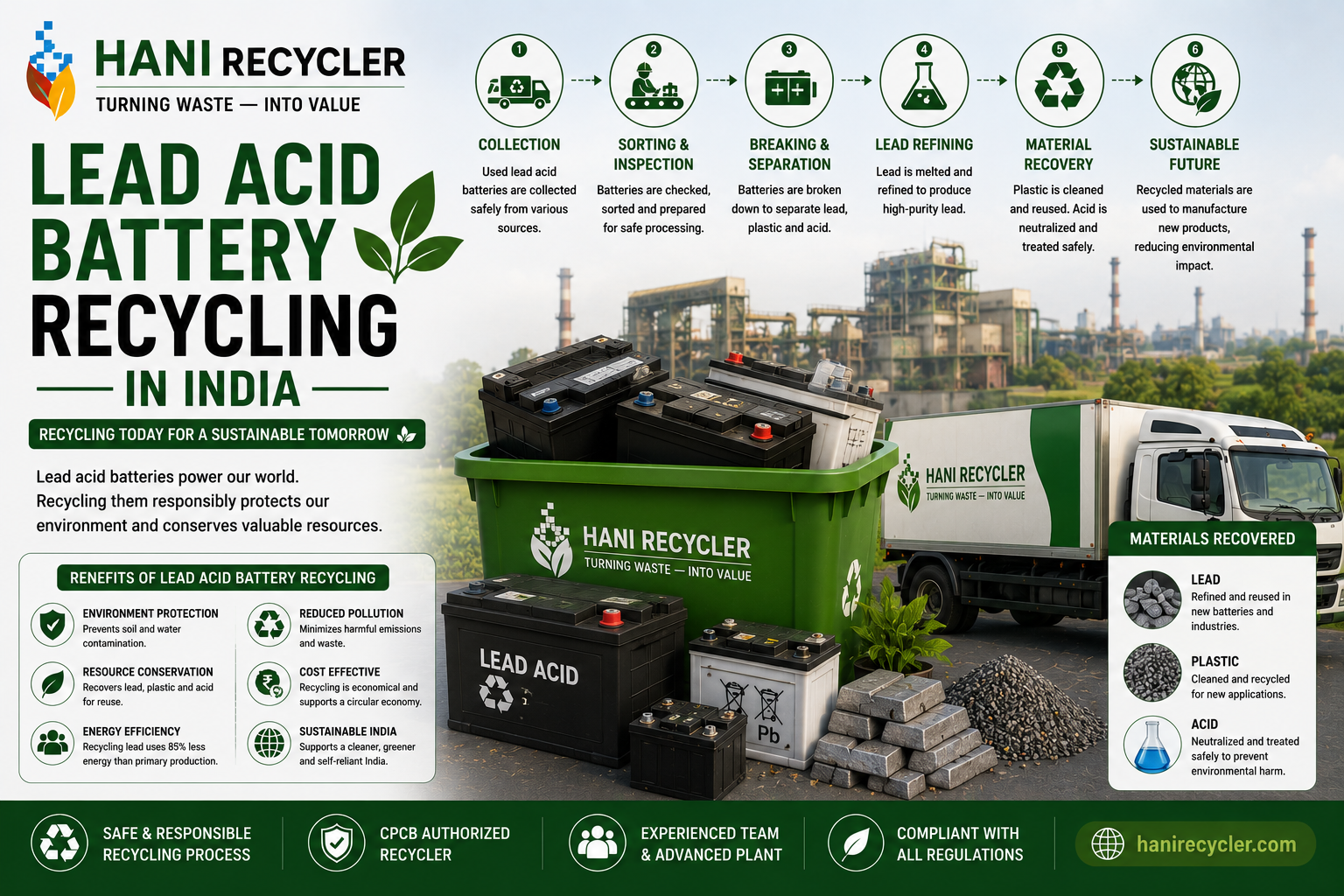
When a lead acid battery reaches a certified recycler like Hani Recycler, the process is carefully managed from start to finish. The battery is first safely transported and handled to prevent any acid spills. It is then neutralised, dismantled, and separated into its core components — lead plates, plastic casing, and acid. The lead is smelted and refined into high-purity lead that goes back into manufacturing new batteries. The plastic is recycled into new casings. The acid is neutralised or converted into sodium sulphate — used in detergents and glass manufacturing. Absolutely nothing goes to waste when it is done right.
5. Why You Should Never Hand It to Just Anyone
In India, old lead acid batteries are commonly collected by informal scrap dealers or roadside mechanics. While this might seem convenient, informal recycling of lead acid batteries is extremely dangerous. Acid is often dumped directly into drains. Lead is melted down in open areas without any safety equipment or ventilation. Workers — often without any protective gear — face severe and permanent health risks. And the surrounding community and environment pay the price long after. Choosing a certified recycler is not just the legal choice — it is the human choice.
6. How to Recycle Your Lead Acid Battery the Right Way
The process of recycling your old lead acid battery responsibly is genuinely simple. Whether you have one old inverter battery or a bulk load from a business fleet — just reach out to Hani Recycler and we will arrange a safe, scheduled pickup directly from your location. Our team handles transportation, processing, and all the paperwork. You receive a proper recycling certificate as documented proof that your battery was disposed of safely and legally. No stress. No confusion. Just the right outcome.
Do Not Let That Old Battery Sit Any Longer
An old lead acid battery sitting unused is not just taking up space — it is a potential health and environmental hazard. The longer it sits, the greater the risk of leaks, corrosion, and accidents. The smartest thing you can do is get it recycled now — through a certified, responsible partner who knows exactly what they are doing.
At Hani Recycler, we are one of India's trusted certified battery recyclers — handling lead acid batteries, lithium-ion batteries, EV batteries, and all types of electronic waste with full compliance and complete documentation. Contact us today and let us take that old battery off your hands — safely, legally, and responsibly.
📧 info@hanirecycler.com | 📞 +91 9897 541 728 | 🌐 www.hanirecycler.com
Read another Blog: How Lithium-Ion Battery Recycling Actually Works
Κατηγορίες
Διαβάζω περισσότερα
Upcoming Cosplay Event Kicking off on September 26 at noon PDT, players can indulge in a selection of exclusive StarCraft-inspired cosmetics that celebrate the game’s most iconic factions. Transform into Jim Raynor with a rugged barbarian look, embody Kerrigan’s formidable presence through the Spiritborn attire, or equip your druid with Tychus Findlay-themed gear, among other...

" According to the latest report published by Data Bridge Market Research, the Digital Health Market Data Bridge Market Research analyses that the global digital health market which was USD 255.87 billion in 2022, is expected to reach USD 565.23 billion by 2030, and is expected to undergo a CAGR of 15.5% during the forecast period of 2023 to 2030. A comprehensive Digital Health...

In today’s technology-driven world, data has become one of the most valuable resources for businesses. From mobile applications to online shopping platforms, every digital interaction generates data. Companies use this information to improve customer experiences, optimize operations, and make smarter business decisions. This is why the demand for skilled data professionals is increasing...
There comes a moment in many lives when outward success no longer answers inward questions. The noise of the world fades, and a quieter voice begins to speak—asking about purpose, meaning, forgiveness, and peace. At that moment, people often turn to spiritual journey books not for entertainment, but for understanding. These books do not rush the reader toward conclusions; instead, they...

Ensuring the stability of underground structures is a top priority for mining companies and civil engineering projects. When tunnels or underground shafts are not properly reinforced, they pose serious safety risks, including rockfalls, structural collapses, and operational delays. Two solutions that have become indispensable in this field are cable grout and tunnel guard. In this blog,...