


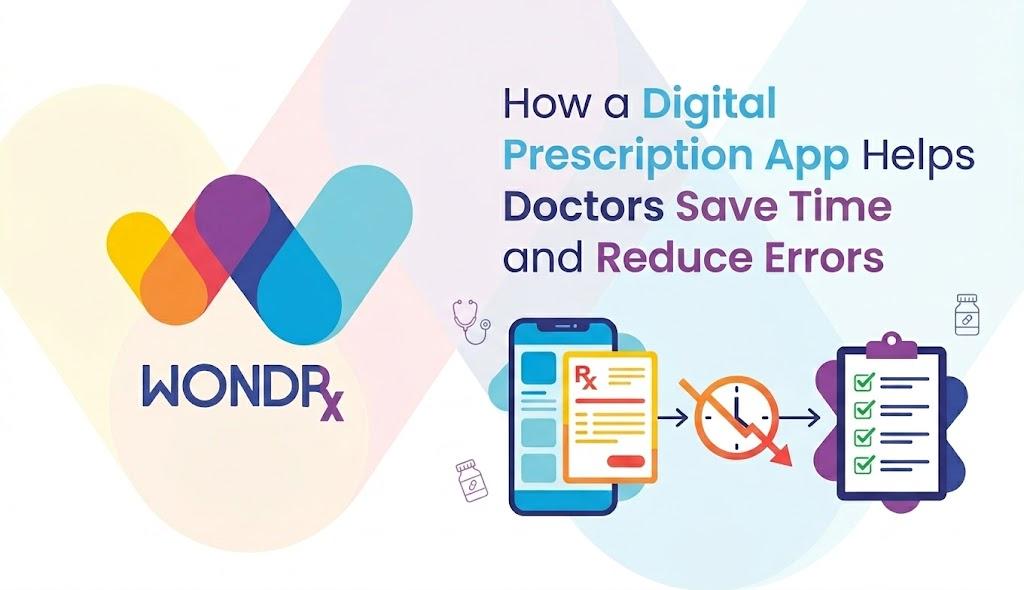
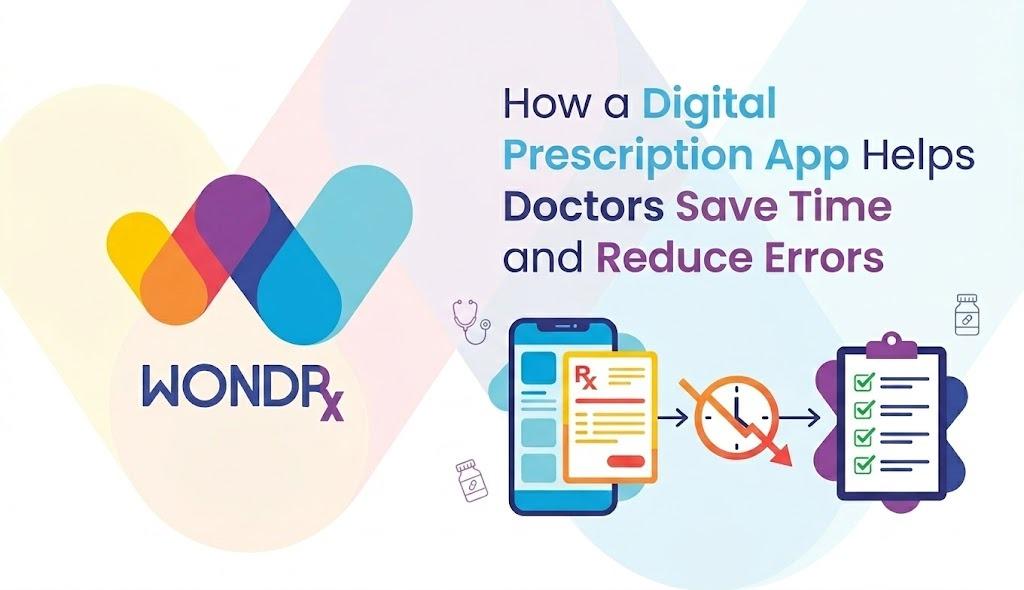
How a Digital Prescription App Helps Doctors Save Time and Reduce Errors
TL;DR
-
This blog is for doctors, clinic owners, and healthcare administrators in India who want to understand how a prescription app can streamline their daily OPD workflow and improve patient safety.
-
Handwritten prescriptions remain a major source of medication errors globally - one study links over 7,000 deaths annually to illegible handwriting and prescribing mistakes.
-
A digital prescription app automates drug checks, dosage alerts, and patient history access - reducing prescribing errors by up to 54% based on published research.
-
For Indian doctors managing 40-80 patients per OPD session, features like saved templates, auto-fill drug names, and SMS sharing can cut prescription time from minutes to seconds.
-
Switching to a prescription app is not just a convenience upgrade - it is a patient safety decision that also protects doctors from medico-legal risk.
India sees an estimated 3 billion prescriptions written every year. Almost all of them are still on paper.
For a doctor managing 50 patients in a single OPD session, that means 50 handwritten slips - often under pressure, often rushed, and occasionally unreadable. The pharmacist squints. The patient guesses. And somewhere in that chain, errors happen.
A prescription app for doctors is designed to break that chain. It replaces the prescription pad with a structured, digital workflow that is faster to use, impossible to misread, and connected enough to flag drug interactions before they become patient problems.
In this blog, we break down exactly how digital prescription tools help Indian doctors save time and reduce errors - and what to look for when choosing one.
The Real Cost of Paper Prescriptions for Indian Doctors
The challenges with paper prescriptions go far beyond illegibility. For a busy clinic or hospital in India, the inefficiencies pile up fast.
Every refill request means a phone call. Every follow-up visit means repeating the same prescription from memory or digging through a paper file. Every time a patient visits a different doctor, their medication history starts from scratch.
According to data from the Medical Council of India, there are close to 8,00,000 active doctors in India, and an estimated 3 billion prescriptions are written by doctors across urban India every year - almost all of them on paper.
That volume creates compounding inefficiencies. Time spent writing is time not spent listening. A prescription that a pharmacist cannot read is a prescription that may not get filled correctly.
One medical study suggests that over 7,000 patient deaths can be linked to illegible handwriting and other prescription errors. For a healthcare system already under strain, this is a preventable problem with a clear digital solution.
How a Prescription App for Doctors Saves Time
Faster Prescription Writing with Templates and Auto-fill
The single biggest time saver in any prescription app is the template feature. Instead of writing out the same five medications for a common cold or a recurring hypertensive patient, doctors can save templates and apply them in one tap.
Drug name auto-fill means you type the first three letters and the app populates the rest - including strength, dosage, and frequency. For doctors who treat high volumes of patients with similar conditions (diabetic patients, post-surgical follow-ups, paediatric consultations), this alone can cut prescription time by 60-70%.
Handwriting prescriptions, sending faxes, and waiting to speak with pharmacists over the phone can slow down the daily process significantly - these manual tasks take valuable time away from patient care. A prescription app eliminates all three.
Instant Sharing via SMS or WhatsApp
Most prescription apps in India allow doctors to send prescriptions directly to patients via SMS or WhatsApp. The patient receives a clean, readable PDF. No paper to lose, no trip to the clinic to pick up a copy.
This is especially relevant for follow-up prescriptions. A doctor can approve a refill remotely in under 30 seconds - instead of asking the patient to come in, wait, and collect a paper slip.
Centralized Patient Records
A good digital prescription tool doubles as a lightweight EMR. Patient history, previous prescriptions, known allergies, and ongoing medications are accessible from a single screen.
For Indian doctors who see the same patients across multiple OPD cycles, this removes the need to ask "what were you prescribed last time?" at every visit. The prescription app remembers - so the doctor does not have to.
How a Digital Prescription Reduces Medication Errors
Eliminating Illegibility as a Root Cause
The most direct benefit of a digital prescription is that it cannot be misread. Every drug name is typed. Every dosage is structured. The pharmacist receives clear instructions, and the patient gets the correct medication.
Compared to handwritten scripts, e-prescriptions are clearer and easier to understand, which reduces the odds of medication errors. Prescribers using an electronic health record system can also include other information with the prescription, which helps save time and improve health outcomes.
Drug Interaction and Allergy Alerts
Advanced prescription apps include clinical decision support - built-in alerts that flag a potential drug interaction or a known patient allergy before the prescription is finalized.
For a doctor seeing 60 patients in a session, it is humanly impossible to mentally cross-check every medication combination against every patient's allergy history. The app does it automatically, in real time.
Research published in the Journal of Medical Internet Research found that digital health technology interventions reduced medication errors by 54.38% on average, with a range of 24% to 83% depending on implementation. These are not marginal improvements - they represent a structural change in how safely prescriptions are written.
Structured Dosage and Frequency Inputs
Paper prescriptions leave room for ambiguity. "1 tablet twice daily" written in a hurry can be misread as "1 tablet thrice daily." Digital prescription forms use dropdowns and standardized fields - the dosage, route, and frequency are selected, not handwritten.
This structured approach removes interpretation from the equation entirely. The pharmacist reads what was prescribed, not what they think was prescribed.
Controlled Substance and Refill Oversight
For doctors managing patients on long-term medications or controlled substances, a prescription app adds a layer of accountability that paper simply cannot offer.
A comprehensive data feed can deliver 12 months of patient medication history in seconds, and controlled substance history is visible within the prescribing workflow - reducing the risk of overprescribing and ensuring regulatory compliance.
This is particularly relevant as India's healthcare system moves toward ABDM integration, where a patient's complete health record - including prescriptions - is expected to be digitally accessible and linked to their ABHA ID.
Key Features to Look for in a Prescription App for Doctors
Not all prescription apps are built equally. If you are evaluating options for your clinic or hospital, here are the features that actually matter:
Drug database with Indian generics: The app should have an updated list of Indian brand names and generic equivalents - not just US or European drug databases that list names your local pharmacist will not recognize.
Offline functionality: Connectivity in tier-2 and tier-3 Indian cities can be unreliable. A prescription app that works offline and syncs when connected is essential.
Prescription customization: Your digital prescription should carry your letterhead, registration number, and clinic details - exactly as a paper prescription would.
Patient record management: Basic EMR features - previous visits, ongoing medications, allergy notes - save time at every consultation.
WhatsApp and SMS sharing: Direct sharing without requiring the patient to download an app is non-negotiable for Indian patients.
ABDM and NMC compliance: As digital health regulations in India evolve, ensure the app is built with compliance in mind.
Digital Prescription and the Medico-Legal Protection It Offers
This is a point most articles skip over - but it matters.
A paper prescription can be altered, misread, or lost. A digital prescription creates an immutable, time-stamped record of exactly what was prescribed, at what dosage, and when. This protects doctors in cases of patient complaints, pharmacy disputes, or legal scrutiny.
In India, where medico-legal cases against doctors are increasing, having a clean digital audit trail is no longer just a convenience. It is a form of professional protection.
E-prescribing helps improve healthcare quality and patient safety by reducing medication errors, with in-workflow checks for drug interactions. And when something does go wrong, the record of what was prescribed - and what checks were run - is preserved in full.
Indian Prescription Apps Worth Knowing About
The Indian market now has several dedicated prescription apps built for local clinical workflows:
WONDRx is built specifically for the Indian healthcare system, connecting doctors, pharmacies, labs, and patients in a single workflow. Their Smart Rx Kit even allows doctors to write on paper while digitizing the prescription simultaneously - making adoption seamless without changing pen-and-paper habits.
MyRx is a cloud-based tool popular among Indian doctors for its simplicity, integrated EMR, and support for telemedicine prescriptions.
Prescrip is an iOS-based EHR and prescription app tailored for Indian physicians, with offline functionality and wireless printer support.
STAT Prescription Maker offers template-based prescription writing and PDF generation, making it popular for high-volume OPD settings.
Each of these solves the same core problem - replacing the paper prescription pad with a faster, safer, and more professional digital alternative.
Conclusion
The prescription pad has served Indian doctors for decades. But the cost of that tradition - in time wasted, errors made, and records lost - is becoming harder to justify.
A prescription app for doctors is not a complex transformation. It is a practical tool that fits into an existing OPD workflow, reduces the friction of every consultation, and builds a safer experience for patients and doctors alike.
Key takeaways from this blog:
-
Paper prescriptions are a leading source of medication errors that are almost entirely preventable
-
Digital prescription apps can reduce medication errors by over 50% based on published research
-
Features like drug auto-fill, templates, and allergy alerts directly save time in a high-volume Indian OPD
-
WhatsApp/SMS sharing, offline support, and ABDM compatibility matter most for Indian clinical settings
-
A digital prescription record also protects doctors medico-legally in a way paper cannot
If you are managing 40+ patients a day and still writing every prescription by hand, the switch to a digital prescription tool is one of the highest-ROI changes you can make to your practice. Start with a free tool, run it for a week, and see the difference.
Digital prescription apps help doctors write faster, reduce medication mistakes, and improve patient care with secure, paperless prescription management.
Categorias
Leia mais
ISO 22000 Internal Auditor Training: Building Confidence in Food Safety Systems Understanding ISO 22000 and Its ImportanceISO 22000 is an internationally recognized standard designed to ensure food safety across the entire food chain, from farm to fork. It integrates key elements such as hazard analysis, prerequisite programs, and the principles of HACCP into a structured management...

Meta Description: ADSO provides Industrial project cargo UAE solutions, including Project cargo forwarding, Project freight forwarding, Breakbulk project forwarding Dubai, Project logistics Dubai, and heavy cargo transportation services. Industrial Project Cargo UAE: Complete Heavy Cargo & Project Logistics Solutions The UAE is home to major industrial, energy, construction, and...

The latest March data from the Netflix ISP Speed Index highlights shifts in internet providers' streaming performance during prime time. This monthly report evaluates which ISPs deliver the most reliable Netflix experience globally. A significant development since December involves the rollout of complex encoding techniques designed to enhance streaming efficiency. This approach reduces the...
J188 là một trong những nền tảng giải trí trực tuyến uy tín, chất lượng cao và được nhiều người chơi tin tưởng lựa chọn. Với mục tiêu mang đến trải nghiệm giải trí tuyệt vời, J188 không ngừng nâng cấp hệ thống, cải thiện dịch vụ và tối ưu giao diện để phù hợp với mọi đối tượng người dùng. Đây là...
The demand for adaptable living and working environments is reshaping the furniture industry. With changing lifestyles and economic priorities, consumers are increasingly opting for access-based models over ownership. Furniture rental services address these preferences by offering stylish, functional furnishings with minimal commitment and maximum convenience. Supported by insights from...