


How Smarter Engagement Is Reshaping Life Sciences Today
The life sciences industry has never operated under more pressure to prove its relevance at the individual level. Physicians are time-starved. Patients are better informed than ever. Payers are demanding outcomes over volume. In this environment, the companies that will lead are not those spending the most on field forces — they are the ones that have fundamentally rethought how they communicate, when they show up, and what they bring to every interaction.
This is not a story about technology replacing people. It is a story about context replacing guesswork.
The Problem With Traditional Commercial Models
For decades, pharmaceutical and biotech companies relied on a relatively simple commercial playbook: hire enough reps, give them enough samples, and make enough visits. The logic was statistical. If you knocked on enough doors, some of them would open. The model worked tolerably well in an era when physicians had fewer competing demands on their attention and when information was harder to come by.
Neither of those conditions holds today. A physician who wants to understand a drug's mechanism of action, side-effect profile, or real-world evidence can access that information in minutes. A rep who shows up with a printed detail aid and a pitch rehearsed in a hotel ballroom is competing against a doctor's own research, peer-reviewed journals, and digital platforms that never close. The old volume-based approach has a diminishing return that no amount of headcount can fix.
What companies need instead is relevance. And relevance is only possible when you understand the specific clinical interests, prescribing behavior, channel preferences, and workflow realities of each individual healthcare professional you are trying to reach.
Why Personalization Is a Data Problem First
The instinct in many organizations is to treat personalization as a creative problem — that if marketing could just write better content or design better campaigns, engagement rates would improve. This misses the root issue. Personalization at scale is not a content challenge. It is a data architecture and analytics challenge.
Knowing which oncologist is actively treating patients who match your drug's label, which cardiologist just participated in a clinical trial adjacent to your portfolio, or which neurologist prefers email over in-person visits at 9 a.m. on Tuesdays — none of that comes from creative instinct. It comes from structured, integrated, and intelligently interpreted commercial data.
This is where platforms built for the life sciences commercial ecosystem begin to earn their keep. ZS Discovery is one example of a tool designed to help commercial and medical teams surface insights that would otherwise require weeks of manual analysis — connecting signals across data sources to reveal which opportunities matter most and why. When analytics is embedded into the workflow rather than siloed in a separate reporting function, the people making decisions have what they need before the conversation, not after.
Making Omnichannel Work Without Making It Overwhelming
Omnichannel has become one of the most overused and least understood terms in pharma commercial strategy. In practice, most organizations interpret it as "we have a website, a rep, an email, and a medical science liaison — that counts as omnichannel." It does not.
True omnichannel engagement means that every touchpoint — digital, field, medical, patient support — is informed by and connected to every other touchpoint. A physician who downloads a clinical monograph from your website should not receive a rep call the next day offering to mail them the same monograph. A patient who has been struggling with adherence should not receive a promotional message about starting therapy. These disconnects erode trust faster than any competitor could.
The answer is not more channels. The answer is more coordination. Organizations that invest in the infrastructure to unify their commercial signals — and build the governance to act on them in real time — are the ones that turn customer engagement life sciences from a department tagline into a measurable competitive advantage.
Field Teams as Intelligence Hubs, Not Just Delivery Vehicles
One of the most underappreciated shifts in modern commercial strategy is the repositioning of field teams. The rep who shows up with a message is becoming less valuable. The rep who shows up with a question — one informed by what the data says this physician actually needs — is becoming indispensable.
This requires a different kind of training. It also requires different tooling. When field teams have access to next-best-action recommendations, pre-call analytics, and real-time synthesis of clinical and commercial signals, they stop being messengers and start being advisors. That is a fundamentally different relationship. And fundamentally different relationships produce fundamentally different results.
The companies winning in this space are not waiting for some future state of AI to arrive. They are building now — with the data they have, the platforms available to them, and a clear-eyed view of what genuine customer engagement life sciences looks like when it is executed with discipline and intent.
The question is not whether your organization believes in smarter engagement. The question is whether you have built the infrastructure to actually deliver it.
Κατηγορίες
Διαβάζω περισσότερα
When I first tried Watermelon Lemonade Monster, I noticed right away how sharp, clean, and precise the flavor felt. It wasn’t just the blend itself. It was the tech behind the coil. As someone who likes understanding how flavor is shaped by engineering, I found myself wanting to break down why this e-liquid performs so well, especially in modern devices built for better efficiency. Why...

" According to the latest report published by Data Bridge Market Research, the Home Beer Brewing Machine Market The global home beer brewing machine market size was valued at USD 54.70 billion in 2025 and is expected to reach USD 126.07 billion by 2033, at a CAGR of 11.00% during the forecast period. Home Beer Brewing Machine Market report is a window to the industry which...

Cricket is no longer a game only played in stadiums and TV sets. Advanced digital platforms, innovative gaming concepts and real-time interaction of matches are some of the aspects of engagement that fans are today enjoying in a new dimension. With the rising interest of the aviators game and the rising need to have a live cricket application, the contemporary cricket ecosystem is more vibrant...

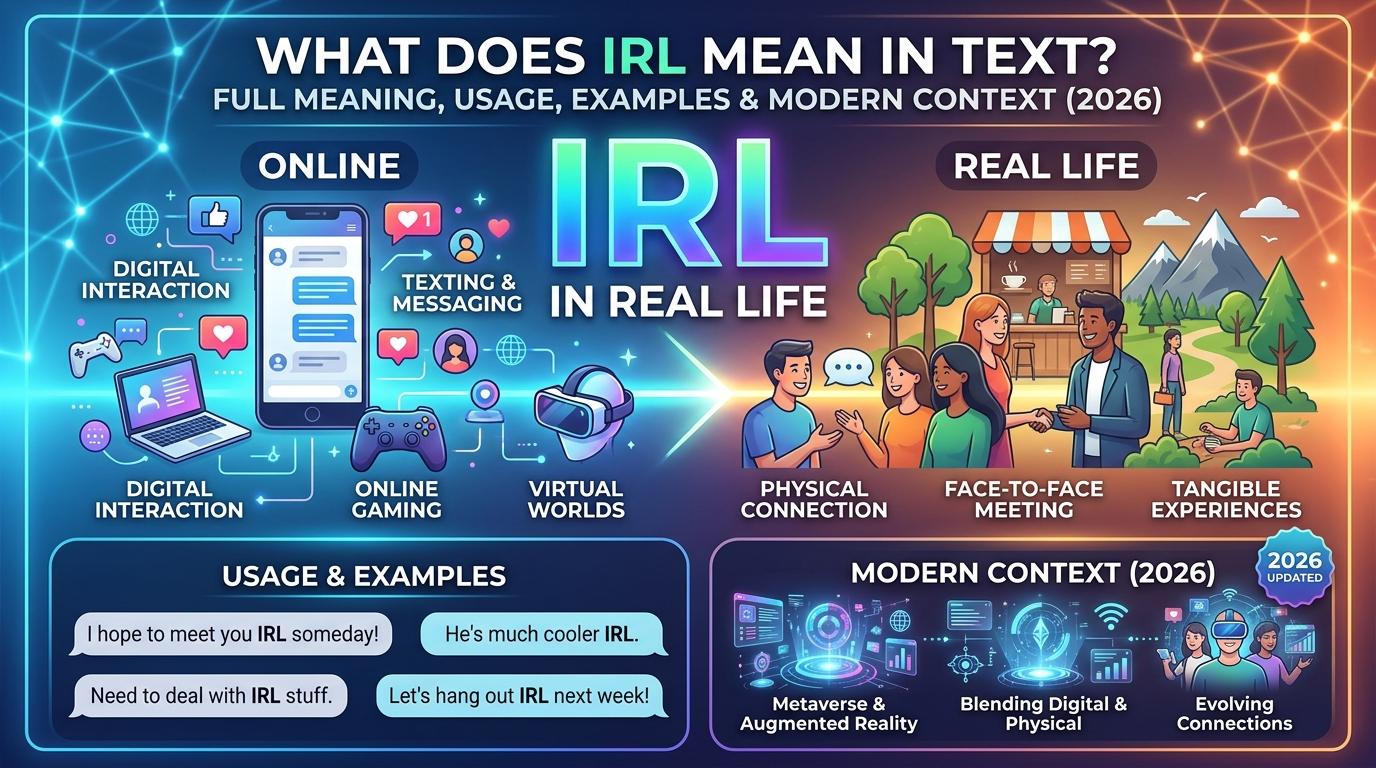
In today's digital world, people communicate through texts, social media, online games, and messaging apps more than ever before. As a result, internet slang and abbreviations have become a major part of everyday conversations. One of the most common terms you'll encounter online is IRL. If you've seen someone write "Let's meet IRL" or "My IRL friends know about this," you might be wondering...
Generative AI is revolutionizing industries by changing how businesses create content, analyze information, and automate workflows. As AI becomes a standard part of the workplace, professionals must adapt to a new way of working where technology supports, rather than replaces, human expertise. Employers Gen AI and Machine Learning Course in Bangalore are increasingly...