Solar Drying Equipment Market Trends: Why Businesses Are Switching from Electric to Thermal Storage

Explore the solar drying equipment market and learn how thermal batteries are solving intermittency issues. Perfect for agribusiness owners seeking lower operational costs.
For agribusiness owners, the daily decision of how to dry a harvest is both financial and logistical. Electric dryers offer consistency but at a punishing utility cost. Open-air sun drying is free but unreliable and unhygienic. The emerging sweet spot is the solar drying equipment market, which bridges this gap by using photovoltaic (PV) panels not just for fans but for direct thermal storage. The latest innovations allow businesses to capture energy during peak sun hours and deploy it after sunset, fundamentally changing the economics of dehydration.
How Modern Solar Dryers Outperform Traditional Models
Old-style solar dryers were essentially glass boxes with vents. They worked only when the sun was high and failed completely in humid conditions. Today’s advanced equipment uses evacuated tube collectors, similar to those on solar water heaters, but adapted for air. These tubes can generate temperatures up to 150°C even in winter. Coupled with variable-speed DC fans powered by a small PV panel, they maintain constant airflow. The real breakthrough, however, is the integration of thermal batteries. One leading design uses a 200-liter water tank as a heat sink. During the day, excess heat warms the water; at night, the system reverses flow to extract that stored warmth. Data from the solar drying equipment market shows that such hybrid systems achieve 65-80% solar fraction, meaning fossil backup is rarely needed.
Case Study: Mango Drying in the Philippines
A cooperative in Cebu province was losing 40% of its mango crop to mold during the rainy season. They invested in a modular solar drying tent with integrated rock-bed storage. The rocks, ordinary basalt gravel, heat up during the day. At night, insulated flaps close, and fans push air through the warm rocks. This simple, low-tech solution extended drying hours by 12 per day, reducing mold loss to under 5%. The payback was six months. This example highlights a key trend: the solar drying equipment market is not just for high-tech factories. Low-cost, ruggedized designs are empowering off-grid communities to participate in global supply chains, from dried herbs to fish jerky.
Selecting the Right Equipment for Your Climate
Not all solar dryers are equal. In humid tropical zones, a direct dryer may reintroduce moisture at night. A better choice is an indirect dryer where the air is heated in a separate collector before passing through the food; this keeps the product chamber sealed. In arid regions, a mixed-mode dryer (direct radiation plus heated air) is faster. Furthermore, consider hybrid-ready models. These include a small electric resistance heater or a heat exchanger for a biomass stove. When clouds roll in for days, the hybrid mode keeps production alive without a complete shutdown. Manufacturers are now offering modular units that scale from 100 kg to 10 tons per batch, making solar drying accessible for both boutique tea producers and large rice mills.
The Future: AI-Optimized Drying Cycles
The next frontier is smart control. New sensors can measure moisture content in real-time and adjust fan speed and heater engagement automatically. Machine learning algorithms learn the typical drying curve for each product—mango vs. chili vs. coffee—and predict the optimal shutdown time to prevent over-drying. This preserves flavor and color, which are critical for premium pricing. As the solar drying equipment market expands, we will see more turnkey solutions where the farmer simply loads the tray and closes the door; the system handles the rest, syncing with weather forecasts to maximize solar gain. This level of automation transforms drying from an artisanal skill into a reliable industrial process, unlocking new revenue streams for early adopters.
Understand industry shifts with well-researched analysis:
Categorias
Leia mais
Piano melodies continue to inspire musicians because of their emotional depth, timeless elegance, and versatility across musical genres. From cinematic scores to modern ambient compositions, piano sounds remain one of the most valuable elements in digital music production. For composers and producers seeking expressive and realistic piano performance, grand piano vst free solutions from...

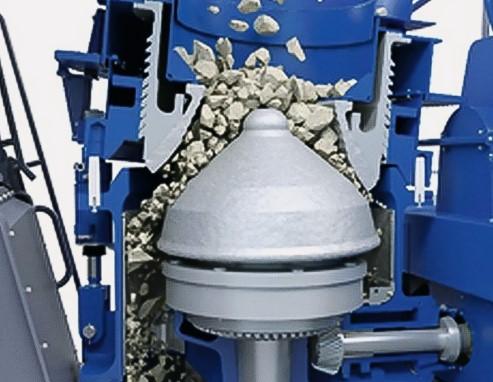
The Cone Crusher is a cornerstone in modern construction and mining operations. This Cone Crusher delivers high-efficiency material reduction, allowing operators to crush granite, limestone, and recycled concrete with precision. Dmcrushers has engineered this equipment to combine durability and high throughput, ensuring uniform output while minimizing downtime. Its advanced cone mechanism and...
I’ve been writing about videogames professionally for over three years, and writing for most of my life before that—so trust me when I say that nothing makes me curse the English language more than having to pin down a genre. It’s a necessary evil, sure. Telling someone a game is a strategy title rather than an RPG can save them a refund request. But the headaches I get...

Every couple understands the whirlwind of emotions, meticulous planning, and eager anticipation that precedes a wedding. Among these myriad details is a seemingly small but undeniably significant component: the wedding envelope. It’s the first tactile representation of your big day, setting the stage for what’s to come. And when it comes to making a lasting impression without...

3:1 heat shrinking tubes with glue factory provide both insulation and mechanical support for electrical connections. The 3:1 shrink ratio ensures tubing fits tightly over wires and connectors, while the adhesive melts to seal gaps, reducing exposure to moisture and dust. Varied diameters, wall thicknesses, and colors allow customization for different wire sizes and types. Thin walls cover...