


How Indian Companies Can Protect Their Brand From Online Trademark Infringement

In a world where businesses have shifted their weight significantly to the digital platform, online trademark infringement in India has become one of the most significant legal issues. The threat is broad and evolving, this includes counterfeit listings on major marketplaces, domain name squatting, and social media impersonation. For Indian companies, understanding this threat and developing a strong strategy is no more an option but a business imperative.
Understand Online Trademark Infringement in India
Trademark infringement occurs when an unauthorised party uses an identical or deceptively similar mark to a registered trademark which causes confusion in the minds of consumers. In the era of digital economy, it takes many forms like counterfeit products being listed on online shopping platforms, deceptively similar-sounding domain names are registered, fake social accounts impersonating official brands are created, online advertising is done using a competitor’s trademark, and unauthorised logos are used in online advertisements. Due to the rapid expansion of the marketplaces like Amazon, Flipkart, and Meesho and the evolution of their sales via social media platforms, the extent of the online trademark infringement of the companies based in India has expanded considerably, becoming an issue that no brand owner can afford to overlook. Therefore, effective protection in the online world requires proactive monitoring and prompt action as soon as an infringement is detected.
Start with a strong Trademark Registration
Any brand protection plan starts with obtaining a trademark registration. In India, the registration on trademarks can be obtained by filing a formal application at the Office of the Controller General of Patents, Designs and Trade Marks under the Trade Marks Act, 1999. Since India is a common law country, priority in use is always beneficial and helps the parties to claim common law rights, however, registration of trademark provides the exclusive legal right to use the mark and protect the rights against any unauthorized use by any third-party.
Thus, Companies should consider obtaining the registration of the trademark not just for the core product or service, but in all relevant classes that the companies are operating or intend to operate. Besides, protection of different versions of the mark such as logo forms, stylised words and taglines seals the loopholes that infringers normally use. Similarly, when the business has international interests, the use of the Madrid Protocol system in international filing is useful to cover various jurisdictions with one application.
Monitor the Digital Landscape
Trademark Registration alone does not suffice; trademark rights should be proactively defended as well. Companies are expected to adopt a systematic monitoring approach that monitors their brand name, logos, and identifies trademark infringement through e-commerce, social media, domain registries, and the entire web.
With Amazon, Flipkart, and Meesho having millions of third party sellers, trademark infringement in e-commerce becomes a severe issue in India. The number of listings is so large that it makes it impossible to monitor it manually. These marketplaces can be scanned by automated brand protection tools that will flag suspicious listings to be reviewed by humans. These tools are image recognizing, key word matching, which allows them to find possible infringements on a speed. Social media monitoring is also crucial, impersonation accounts on Instagram, Facebook, and WhatsApp are a major entry point into fraud with infringers using the image of a brand to sell fake goods.
A Trademark law firm can provide an additional layer of scrutiny that would examine flagged listings and determine whether they are legally infringed. Practically, the best brand protection measures would be the use of automated monitoring systems along with legal expertise of a law firm and their legal professionals. Henceforth, when the actual infringement is detected, the brand can enforce its exclusive rights not only timely but also legally.
Leverage Platform Enforcement Mechanisms
Many large e-commerce websites and social media platforms have official methods of reporting intellectual property theft. The Brand Registry programme of Amazon provides registered trademark owners with an expanded set of tools to locate and report possible infringement. Whereas Flipkart, Meesho, and other Indian sites have their own reporting system. The process usually involves the demonstration of trademark registration under the Trade Marks Act, 1999. This is another reason why initial formal registration is the key pre-requisite in case of any attempt to implement any strategy for such protection.
After registration, the owner of a brand may order a takedown request which is legally and contractually bound to be followed by the platforms according to its terms of service and the law. With that being said, platforms are not necessarily as swift and decisive. This is where an assistance and legal advisory from a law firm will be useful. An experienced IP attorney and law firm will be capable of drafting the notices that are legally accurate, reaching out to the platforms to enforce a more decisive course of action, and at times, invoke the grievance mechanisms and the intermediary liability procedures stipulated in the Information Technology Act, 2000.
Similarly, in case of domain name disputes, infringers who register a domain with the incorporation of brand’s mark with an intention to deceive the consumers, the Uniform Domain Name Dispute Resolution Policy (UDRP) within WIPO and INDRP process before the NIXI are the quicker and less expensive alternative to complete judicial/arbitration proceedings. Indian companies have constantly enforced their rights by successfully recovering their domains, usually with the help of a law firm capable of assembling and delivering the case effectively. By way of UDRP and/or INDRP proceedings, an infringing domain name can be easily cancelled and subsequently transferred in the name of the brand owner, who is also the rightful proprietor of the mark.
Legal Remedies Under Indian Law
Indian companies can resort to strong legal solutions when platform mechanisms are not effective or when infringement is exceptionally outrageous. The Trade Marks Act, 1999 provides provisions including civil proceedings against infringers. In particular, under Section 134 of the Act, in cases of infringement or passing off, a civil suit can be initiated against the defaulting party. The relief, in such a suit, can be any of the following, or a combination of the same-
- Injunction, which directs the infringing party to restrict its unlawful/unauthorized use of the trademark;
- Damages, which is a compensatory relief to be paid by the defaulting party for loss of goodwill and reputation or injury caused by its actions;
- Account of profits, which can be granted in cases where the infringing party has gained unlawful profits due to its wrongful acts.
Indian Courts have previously shown their willingness to grant ex parte injunctions and orders that are obtained without prior notice in cases where there is evident and continuing infringement. This is especially useful in online context, where an infringer can swiftly switch domains or remove listings or relocate businesses elsewhere to avoid the consequences when they are aware of a legal action.
Additionally, the business can consider taking the administrative remedies by way of filing the opposition and/or rectification before the Trademark offices. Once the enforcement proceedings, in whichever way chosen, are completed, it is imperative to ensure that the defaulting party complies with the result of such proceedings and all infringing/passing off activities are halted.
Build Internal Capacity and External Partnership
Securing a brand on the internet involves legal expertise, marketing, IT and customer service coordination. Accordingly, it is recommended that companies intending to protect their brands and/or facing high infringement issues should seek the services of a specialist intellectual property law firm that has experience in online enforcement. A law firm can provide the effective strategies to deal with any infringing marks and can adeptly handle any opposition, rectification, and litigation proceedings as and when required.
Conclusion
The digital marketplace provides the Indian companies with the opportunities which are quite extraordinary, but it also opens them up to some severe threats. The management to protect a brand against online trademark infringements in India must start with the formation of solid legal grounds, continuous monitoring, and implement platform mechanisms and legal remedies as soon as the infringement is observed. Businesses that undertake such safeguarding place themselves at a better position to achieve the consumer confidence and brand equity, which will help sustain long-term success in India’s competitive online economy.
Originally posted here: https://www.ahlawatassociates.com/blog/online-trademark-infringement-india-protect-your-brand
Категории
Больше
Perkembangan teknologi telah membawa perubahan besar dalam dunia hiburan digital, termasuk permainan kartu yang kini dapat diakses dengan mudah melalui internet. Salah satu nama yang cukup dikenal dalam komunitas pemain adalah dewapoker link. Platform ini menjadi pilihan bagi banyak pemain yang ingin menikmati permainan kartu dengan sistem yang modern, praktis, dan mudah...

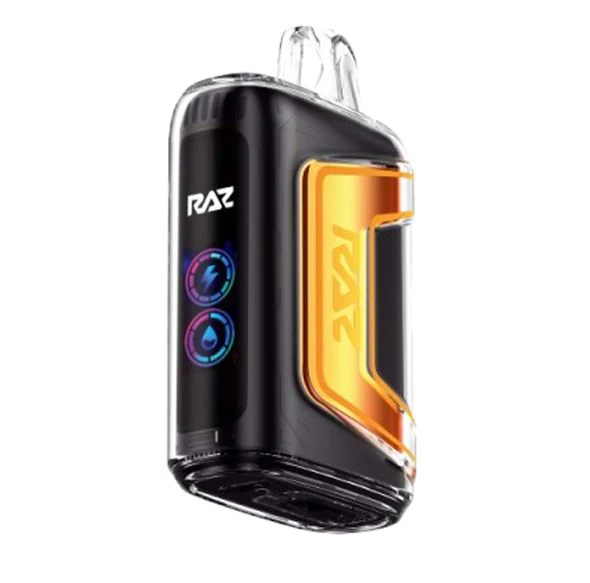
I have become more intentional about vaping over the last couple of years. Health is something I think about every day so I look for options that deliver the taste I enjoy without harshness or excess. That is why I started using Raz Tobacco Flavor when I want a classic tobacco experience that feels manageable. The Problem: Tobacco Flavors That Feel Too Aggressive Daily Traditional tobacco vapes...
Learning a foreign language has become more important than ever in today’s competitive world. Among the many global languages, French continues to attract students from different educational and professional backgrounds. Spoken in several countries across Europe, Africa, and Canada, French opens doors to international education, global careers, and cultural understanding. This growing...
In today's digital world, users expect quick and smooth access to online platforms. Whether it's checking an account or using features, no one wants to deal with delays or errors. However, login issues are quite common, and they can be frustrating when you don't know what's causing them. If you are facing trouble with your Reddy Book Club login, you are not alone. Many users experience login...

Get updated and exam-focused 220-1201 Dumps and verified 220-1201 PDF Dumps from DumpsHero. Prepare confidently with expert-crafted study material designed to help you pass your CompTIA 220-1201 certification exam on the first attempt. 220-1201 Exam Dumps to Achieve the Best Results on Your First Attempt DumpsHero provides trusted and professionally designed CompTIA 220-1201 exam questions that...