


How Brain Games and Logic Puzzles Improve Mental Performance
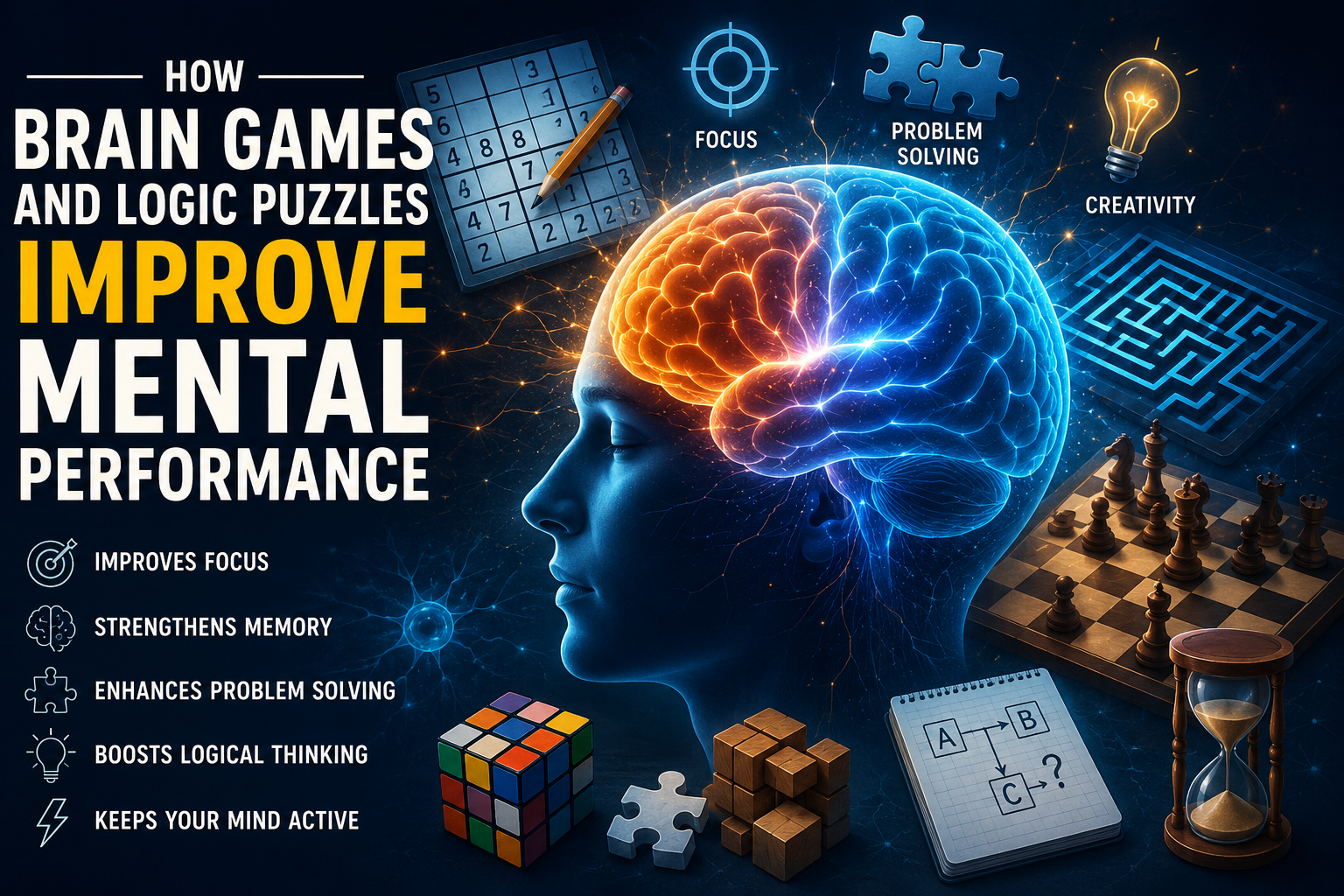
A few months ago, I was stuck waiting at an airport with a delayed flight and nothing particularly interesting to do. Instead of scrolling through social media, I opened a puzzle app and started working through a few logic challenges. What surprised me wasn't how quickly the time passed—it was how focused I became. For nearly half an hour, I wasn't thinking about emails, notifications, or the delay. My attention was completely locked onto solving the next puzzle.
That experience highlights something many puzzle enthusiasts already know: brain games and logic puzzles do more than fill spare time. They give the mind a workout. While they won't magically make someone a genius overnight, they can encourage habits that support sharper thinking, better concentration, and stronger problem-solving skills.
Why the Brain Enjoys a Good Challenge
Human beings are naturally curious. We like figuring things out.
It's the reason people enjoy mysteries, strategy games, escape rooms, and even guessing what will happen next in a movie. The brain gets a sense of satisfaction when it solves a problem that initially seemed difficult.
Brain games tap directly into that tendency. They create a situation where the answer isn't immediately obvious, forcing the mind to search for patterns and connections. Sometimes the solution appears quickly. Other times it takes several failed attempts before everything suddenly makes sense.
That moment when the pieces finally come together is part of what keeps people coming back to puzzles.
Unlike passive entertainment, puzzles require involvement. You can't simply watch them happen. You have to participate, think, and make decisions along the way.
Logic Puzzles Teach More Than Finding the Right Answer
One thing I've noticed while solving logic puzzles is that the answer itself often becomes less important than the process used to reach it.
Many puzzles look confusing at first glance. The clues seem unrelated, and there doesn't appear to be a clear starting point. Then, after a few minutes of analysis, a small detail begins to stand out. One clue leads to another, and eventually the entire puzzle starts making sense.
This teaches an important lesson: not every problem should be approached with speed. Some challenges require patience.
Logic puzzles encourage people to slow down, evaluate information carefully, and avoid jumping to conclusions. Those habits can be surprisingly useful in everyday situations, whether you're comparing options before making a purchase or trying to solve a complicated issue at work.
The Hidden Link Between Puzzles and Concentration
Modern life makes concentration difficult.
Phones buzz. Messages appear. New distractions arrive every few minutes. As a result, many people find it harder to stay focused on one task for an extended period.
Puzzles create a different experience. Once you're invested in solving a challenge, your attention naturally narrows. You start looking for clues, testing ideas, and checking assumptions.
I've often found myself rereading a puzzle several times before noticing the one detail that changes everything. That level of focus doesn't happen accidentally. It develops because the puzzle demands it.
Over time, regularly engaging with logic puzzles can help build the habit of paying closer attention to details rather than rushing through information.
Memory Gets a Workout Too
Memory is involved in almost every type of puzzle.
Think about Sudoku for a moment. Players constantly remember previous moves while planning future ones. The same thing happens in riddles and logic challenges, where clues discovered earlier often become important later.
What makes puzzles interesting is that they rarely ask people to memorize information for the sake of memorization. Instead, they require information to be used.
You're not simply remembering facts—you are actively applying them to solve a problem.
That combination of memory and reasoning creates a much more engaging mental exercise than passive information consumption.
Problem-Solving Becomes a Habit
Perhaps the most valuable skill puzzles develop is persistence.
Anyone who regularly solves challenging puzzles knows the feeling of being stuck. You look at the problem and have absolutely no idea what to do next.
Then you try a different approach.
Maybe that doesn't work either.
Eventually, however, a clue appears, a pattern emerges, or a new perspective reveals itself.
This process trains the brain to become comfortable with uncertainty. Instead of immediately giving up when faced with a difficult problem, puzzle solvers learn to keep experimenting until they discover a solution.
That mindset can be useful far beyond games and puzzles. Real-life challenges rarely come with obvious answers, and the ability to work through uncertainty is often what separates success from frustration.
Final Thoughts
Brain games and logic puzzles remain popular because they combine challenge with enjoyment. They encourage concentration, strengthen reasoning skills, exercise memory, and promote a more thoughtful approach to solving problems.
The best part is that they don't require a major time commitment. A few minutes spent on a puzzle during a lunch break or while waiting for an appointment can provide meaningful mental stimulation.
Not every puzzle will be solved quickly. Some will be frustrating. Others will seem impossible until the answer suddenly becomes clear. That's part of the appeal.
In the end, the value of brain games isn't just about finding the correct answer. It's about keeping the mind active, curious, and willing to tackle challenges one step at a time.
Categorias
Leia Mais
In today’s fiercely competitive marketplace, visibility is everything. No matter how exceptional your products or services may be, customers need to know you exist before they can buy from you. That’s where discount printing flyers becomes a game-changing marketing solution. Businesses looking to maximize exposure while keeping costs under control are discovering that professionally...

Navigating Nurs FPX Assessments: Excelling in Literature Reviews and Professional Practice Reports The field of nursing is evolving at a rapid pace, driven by new research, healthcare technologies, and a strong focus on patient-centered care. To ensure that nursing professionals are equipped to lead and adapt to these changes, advanced nursing education programs like Nurs...

As organizations continue to embrace digital transformation, managing and securing user identities has become a top priority. The rapid adoption of cloud computing, remote work, mobile applications, and connected devices has significantly expanded the digital ecosystem, creating new opportunities—and new security challenges. Identity & Access Management (IAM) solutions have emerged as...

Your laptop must power up fully every single day. Local users face real battery charge blocks here. iPhone Fix Richardson offers the best MacBook Repair Plano services. Our team knows how vital a working port is for you. We provide fast MacBook Repair Plano to keep your device running. Modern systems need great care to work well. Many other companies use cheap parts that break down fast. We...

Niche edits are simple in concept but powerful in practice. You take an existing article, one that's already live, already indexed, already ranking, and you add a link to it. Your link, pointing to your site. That's it. No waiting for a new page to get indexed. No, hoping Google notices a brand new post. The authority is already there. Link insertion services handle the outreach,...
