


ISO Internal Auditor Training: A Complete Guide to Building Audit Expertise
Introduction to ISO Internal Auditor Training
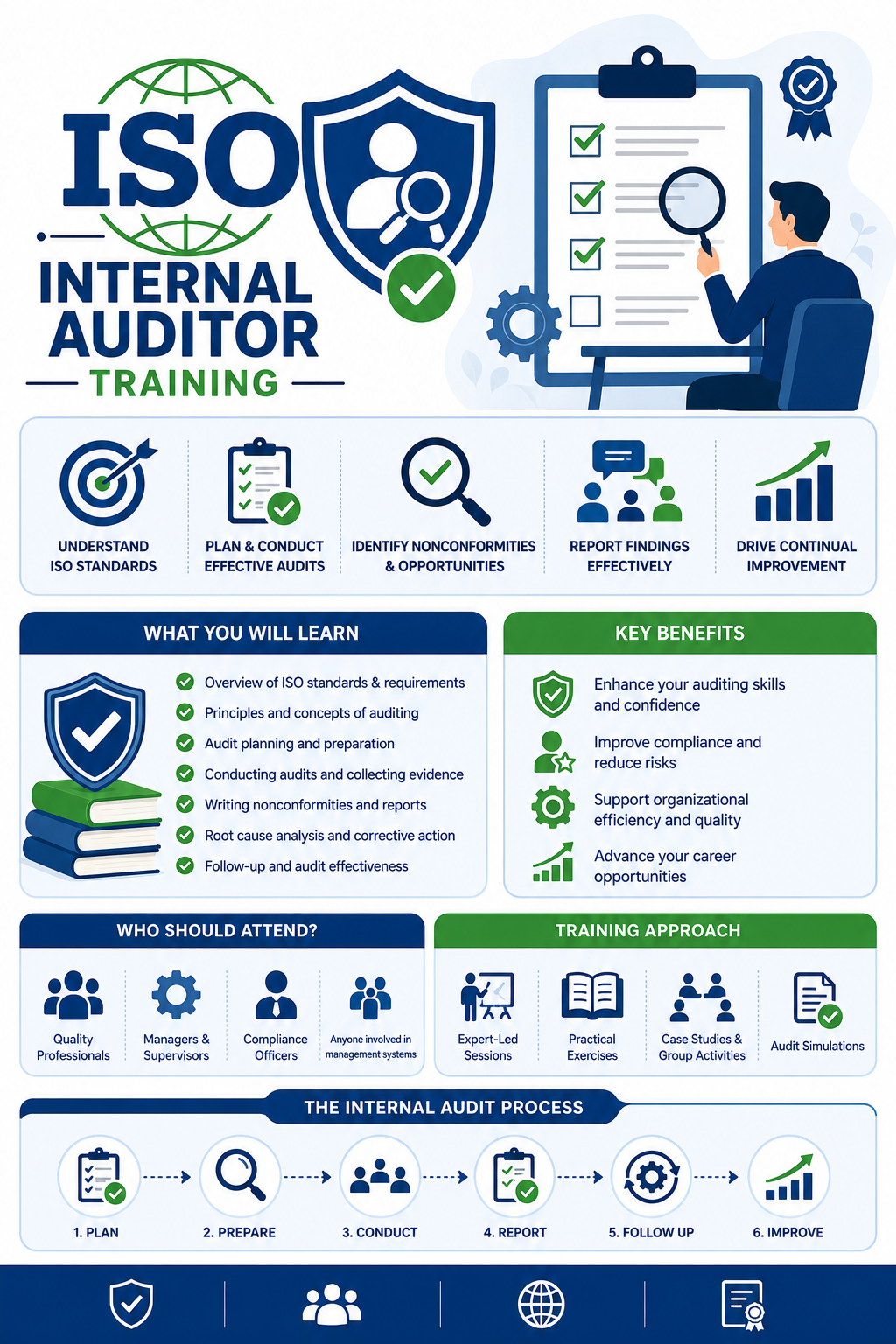
ISO Internal Auditor Training is designed to equip professionals with the knowledge and skills required to conduct internal audits of management systems. These systems may include standards such as ISO 9001 (Quality Management), ISO 14001 (Environmental Management), and ISO 45001 (Occupational Health and Safety). Internal auditing plays a crucial role in ensuring that organizations comply with ISO standards and continuously improve their processes. This training helps individuals understand audit principles and apply them effectively within their organization.
Understanding the Role of an Internal Auditor
An internal auditor is responsible for evaluating the effectiveness of an organization’s management system. They assess whether processes comply with ISO standards and identify areas for improvement. Internal auditors also help organizations prepare for external audits by certification bodies. Through proper auditing practices, they contribute to risk reduction, improved efficiency, and better decision-making.
Key Components of ISO Internal Auditor Training
The training program covers essential topics such as audit principles, audit planning, execution, reporting, and follow-up actions. Participants learn how to develop audit checklists, gather objective evidence, and identify non-conformities. The course also focuses on communication skills, ensuring auditors can present findings clearly and professionally. Practical exercises and case studies are often included to provide real-world experience.
Benefits of ISO Internal Auditor Training
ISO Internal Auditor Training offers several benefits for both individuals and organizations. For professionals, it enhances career prospects by providing valuable auditing skills and internationally recognized knowledge. It increases confidence in conducting audits and understanding ISO requirements. For organizations, trained internal auditors help maintain compliance, improve operational performance, and ensure continual improvement. They also reduce the risk of non-compliance and enhance overall system effectiveness.
Who Should Attend This Training?
This training is suitable for quality managers, environmental officers, safety professionals, auditors, and employees involved in maintaining ISO standards. It is also beneficial for individuals seeking to build a career in auditing or improve their understanding of management systems. Organizations often encourage team members responsible for compliance and quality assurance to undergo this training.
Certification and Career Opportunities
Upon completion of ISO Internal Auditor Training, participants may need to pass an examination to receive certification. This certification demonstrates their ability to conduct internal audits effectively. It opens career opportunities in auditing, quality management, compliance, and consulting across various industries.
Conclusion
ISO Internal Auditor Training is essential for organizations aiming to maintain high standards and achieve continuous improvement. It equips professionals with the skills needed to evaluate systems, identify gaps, and drive performance improvements. By investing in this training, organizations can strengthen their internal processes and ensure long-term success.
Категории
Больше
Introduction MyCustomer360 is transforming the way businesses interact with their customers through intelligent customer service virtual assistant solutions. In today's competitive business landscape, customer expectations are higher than ever. They demand instant responses, personalized support and seamless communication across multiple channels. While businesses strive to meet these...

Betäubungs-Engine der W-Engine Der wertvolle versteinerte Kern gehört zur W-Engine der Stufe A und wurde speziell zur Verstärkung von Betäubungseffekten entwickelt. Er erhöht die Benommenheitseffekte, besonders bei Gegnern mit hoher Lebenspunktzahl. Ein besonderes Merkmal dieses Kerns ist der Effekt „Behemoth Hunter“, der die Betäubung um bis zu 20 %...

Preparing a birthday party may prove to be both enjoyable and daunting, especially where food preparation is concerned. The guests will definitely expect good food quality, efficient service, and menus which match the occasion. Therefore, finding the best Birthday Party Catering Long Island firm proves to be essential. By using such professionals, the task is left to them as you enjoy the party...

Learn smart strategies, tips, and winning techniques to maximize your success on Playinexch 247 in 2026. Platforms for exchange and gaming such as Playinexch 247 have become increasingly popular by 2026, drawing gamers who are looking for entertainment and the potential for earning. But, prevailing on these platforms is not only dependent on luck. It calls for dedication, approach and savvy...

Starting a business in the United Arab Emirates (UAE) is one of the most exciting opportunities for entrepreneurs looking to tap into a thriving economy, a strategic global location, and an investor-friendly environment. From small startups to multinational corporations, thousands of businesses choose the UAE each year because of its stability, tax advantages, and access to international...