Email Marketing Blueprint for Consistent Revenue
Email Marketing Blueprint for Consistent Revenue

Email marketing remains one of the most profitable digital marketing channels for businesses looking to generate predictable revenue and build long-term customer relationships. While social media algorithms change frequently and paid advertising costs continue to rise, email marketing gives businesses direct access to their audience without relying on third-party platforms.
However, consistent revenue does not come from sending random promotional emails. Successful businesses use a strategic email marketing blueprint that combines audience segmentation, content marketing, SEO-driven content, automation, and customer relationship management. This approach helps turn subscribers into loyal customers while creating a reliable source of recurring revenue.
If you want sustainable growth, higher customer retention, and predictable income, this guide will show you the complete email marketing blueprint for consistent revenue.
Why Is Email Marketing Essential for Business Growth?
Email marketing allows businesses to communicate directly with customers and nurture relationships over time.
Key benefits of email marketing include:
-
Direct access to your audience
-
Higher customer engagement
-
Better customer retention
-
Increased website traffic
-
Stronger conversion opportunities
Businesses that combine email marketing with SEO and content marketing often achieve more sustainable long-term growth.
What Makes a Successful Email Marketing Blueprint?
Many businesses focus only on promotions, but successful email marketing strategies prioritize value and relationship building.
Core components of a successful blueprint include:
-
Audience segmentation
-
Personalized communication
-
Content marketing integration
-
Automated email sequences
-
Continuous optimization and testing
Successful digital marketing campaigns focus on creating trust before asking for a sale.
Step 1: Build a High-Quality Email List
A profitable email marketing strategy starts with attracting the right subscribers.
Effective list-building methods include:
-
Free eBooks and guides
-
SEO checklists and templates
-
Webinars and workshops
-
Newsletter subscriptions
-
Exclusive content offers
Quality subscribers are far more valuable than large lists filled with uninterested contacts.
Step 2: Segment Your Audience
Not all subscribers have the same interests or needs. Audience segmentation helps businesses deliver more relevant content.
Popular segmentation strategies include:
-
Demographic segmentation
-
Purchase history analysis
-
Customer interests
-
Geographic location
-
Engagement behavior
Segmented email campaigns often achieve higher open rates, click-through rates, and conversions.
Step 3: Create a Value-Driven Content Strategy
Content marketing plays a major role in successful email marketing campaigns. Valuable content keeps subscribers engaged and builds trust.
Content ideas include:
-
Digital marketing tips
-
SEO strategies and insights
-
Industry news and trends
-
Educational tutorials
-
Customer success stories
Businesses that consistently provide value often experience stronger customer loyalty and revenue growth.
Step 4: Use Automation to Nurture Leads
Automation allows businesses to deliver the right message at the right time without manual effort.
Important automated email sequences include:
-
Welcome email series
-
Lead nurturing campaigns
-
Abandoned cart reminders
-
Re-engagement campaigns
-
Customer onboarding sequences
Automation improves customer experiences while increasing conversion opportunities.
Why Is Personalization Important for Revenue Growth?
Personalized emails create stronger connections and improve customer engagement.
Effective personalization strategies include:
-
Using subscriber names
-
Personalized product recommendations
-
Behavior-based content delivery
-
Targeted promotional offers
-
Customized email journeys
Personalized campaigns often generate significantly higher revenue than generic email broadcasts.
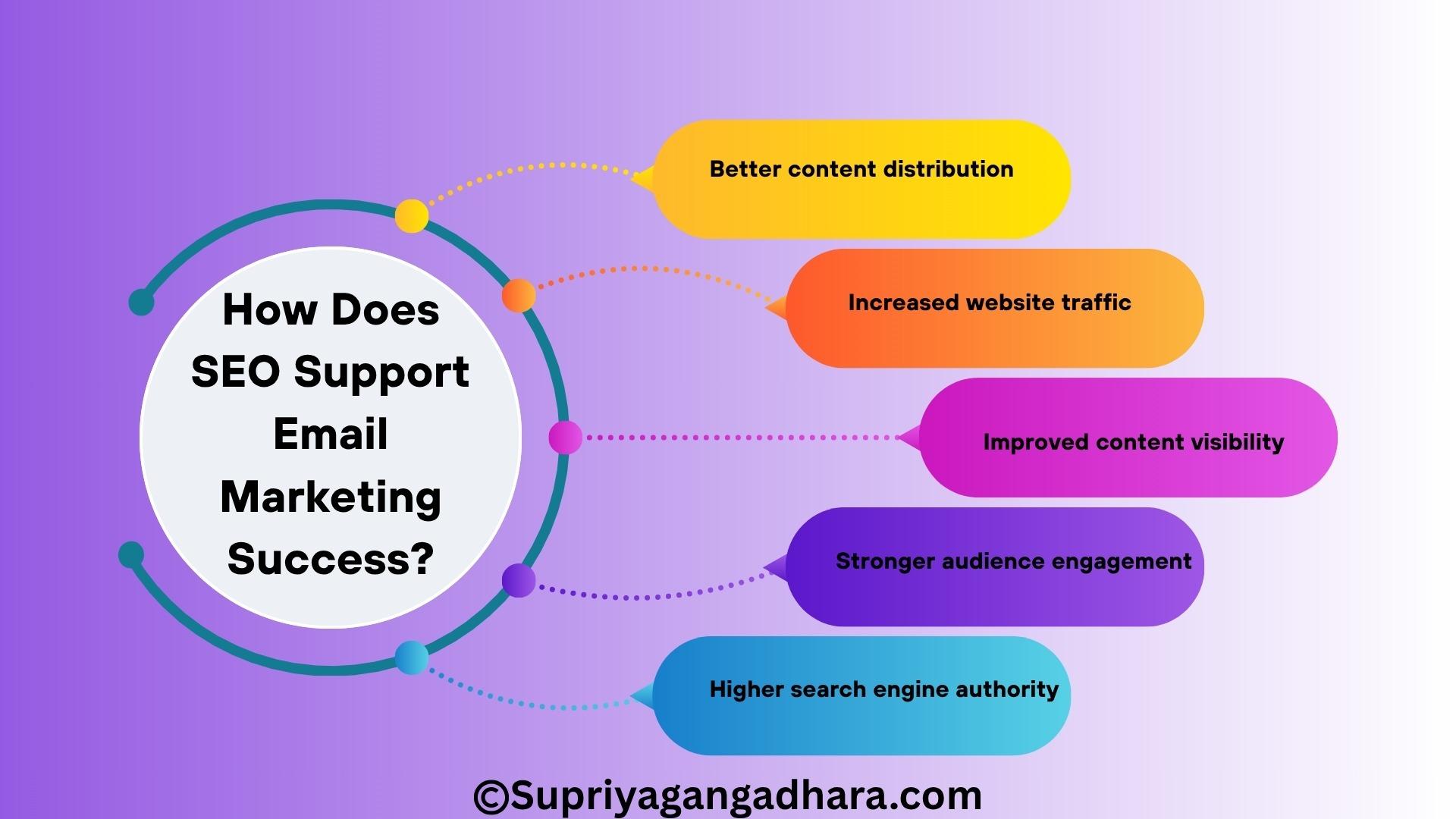
How Does SEO Support Email Marketing Success?
SEO and email marketing work together to increase traffic, engagement, and conversions.
SEO benefits for email marketing include:
-
Better content distribution
-
Increased website traffic
-
Improved content visibility
-
Stronger audience engagement
-
Higher search engine authority
Sharing SEO-optimized blog content through email campaigns helps businesses maximize the value of their content marketing efforts.
Step 5: Optimize Subject Lines for Higher Open Rates
The subject line determines whether subscribers open or ignore your email.
Effective subject line strategies include:
-
Creating curiosity
-
Highlighting clear benefits
-
Using action-oriented language
-
Including numbers and statistics
-
Keeping messages concise
Higher open rates create more opportunities for engagement and revenue generation.
Step 6: Focus on Strong Call-to-Actions
Every email should guide subscribers toward a specific action.
Effective CTA strategies include:
-
Clear and direct messaging
-
Benefit-focused language
-
Visible button placement
-
Limited distractions
-
Consistent design elements
Strong call-to-actions improve click-through rates and increase conversions.
Can AI Improve Email Marketing Revenue?
Artificial Intelligence is transforming digital marketing and email optimization.
AI-powered email marketing advantages include:
-
Predictive customer behavior analysis
-
Automated personalization
-
Smart send-time optimization
-
Subject line generation
-
Campaign performance forecasting
AI tools help businesses improve efficiency while increasing engagement and sales.
Why Is Mobile Optimization Critical?
Most emails are now opened on mobile devices. Poor mobile experiences can reduce engagement and conversions.
Mobile optimization strategies include:
-
Responsive email design
-
Short and readable content
-
Mobile-friendly buttons
-
Fast-loading images
-
Simplified layouts
Mobile-friendly emails often achieve higher engagement rates and better revenue performance.
Step 7: Measure and Optimize Performance
Tracking performance helps businesses identify what works and improve future campaigns.
Important email marketing metrics include:
-
Open rates
-
Click-through rates
-
Conversion rates
-
Revenue per email
-
Unsubscribe rates
Data-driven optimization helps marketers improve campaign effectiveness over time.
How Can Businesses Create Recurring Revenue Through Email Marketing?
Consistent revenue comes from nurturing customer relationships rather than focusing only on one-time sales.
Recurring revenue strategies include:
-
Customer loyalty programs
-
Educational email series
-
Personalized product recommendations
-
Upselling and cross-selling campaigns
-
Ongoing customer engagement initiatives
Businesses that focus on long-term relationships often generate more predictable revenue growth.
Conclusion
Email marketing remains one of the most powerful digital marketing strategies for generating consistent revenue and building long-term customer relationships. However, success requires more than sending promotional emails; it requires audience segmentation, content marketing, SEO integration, automation, and continuous optimization.
Businesses that follow a structured email marketing blueprint can increase customer engagement, improve conversions, and create sustainable revenue streams. By combining valuable content, AI-powered automation, and customer-focused communication, email marketing becomes more than a marketing channel; it becomes a scalable engine for predictable business growth and long-term profitability.
Categorias
Leia mais
Introduction Running a healthcare practice in Texas comes with its own unique challenges—especially when it comes to managing complex billing processes. Among all specialties, anesthesia billing stands out as one of the most intricate and time-consuming. From time-based coding to strict payer regulations, even minor errors can lead to significant revenue loss. That’s why many...

Technical Textile Market: According to the latest report published by Data Bridge Market Research, the Technical Textile Market The global technical textile market size was valued at USD 205.7 billion in 2024 and is expected to reach USD 325.5 billion by 2032, growing at a CAGR of 5.90% during the forecast period Global market research analysis report gives...

"According to the latest report published by Data Bridge Market Research, the Europe Fraud Detection Transaction Monitoring Market The Europe fraud detection transaction monitoring market size was valued at USD 5.11 billion in 2024 and is expected to reach USD 24.47 billion by 2032, at a CAGR of 21.6% during the forecast period. This Europe Fraud...

The global electroplating market is witnessing steady expansion, supported by strong demand from the automotive and consumer electronics sectors. Valued at US$ 15.8 Bn in 2022, the industry is projected to grow at a CAGR of 4.1% from 2023 to 2031, reaching US$ 22.8 Bn by the end of 2031. Increasing applications of galvanized steel, rising vehicle production, and surging global consumption of...
Demulsifiers are specialty chemical agents used to separate emulsified water from crude oil and hydrocarbon streams. These chemicals are essential in improving oil recovery efficiency, enhancing refining processes, and supporting wastewater treatment across various industrial sectors. Demulsifier Market Analysis The Demulsifier Market Share Analysis highlights consistent growth supported...