Introduction
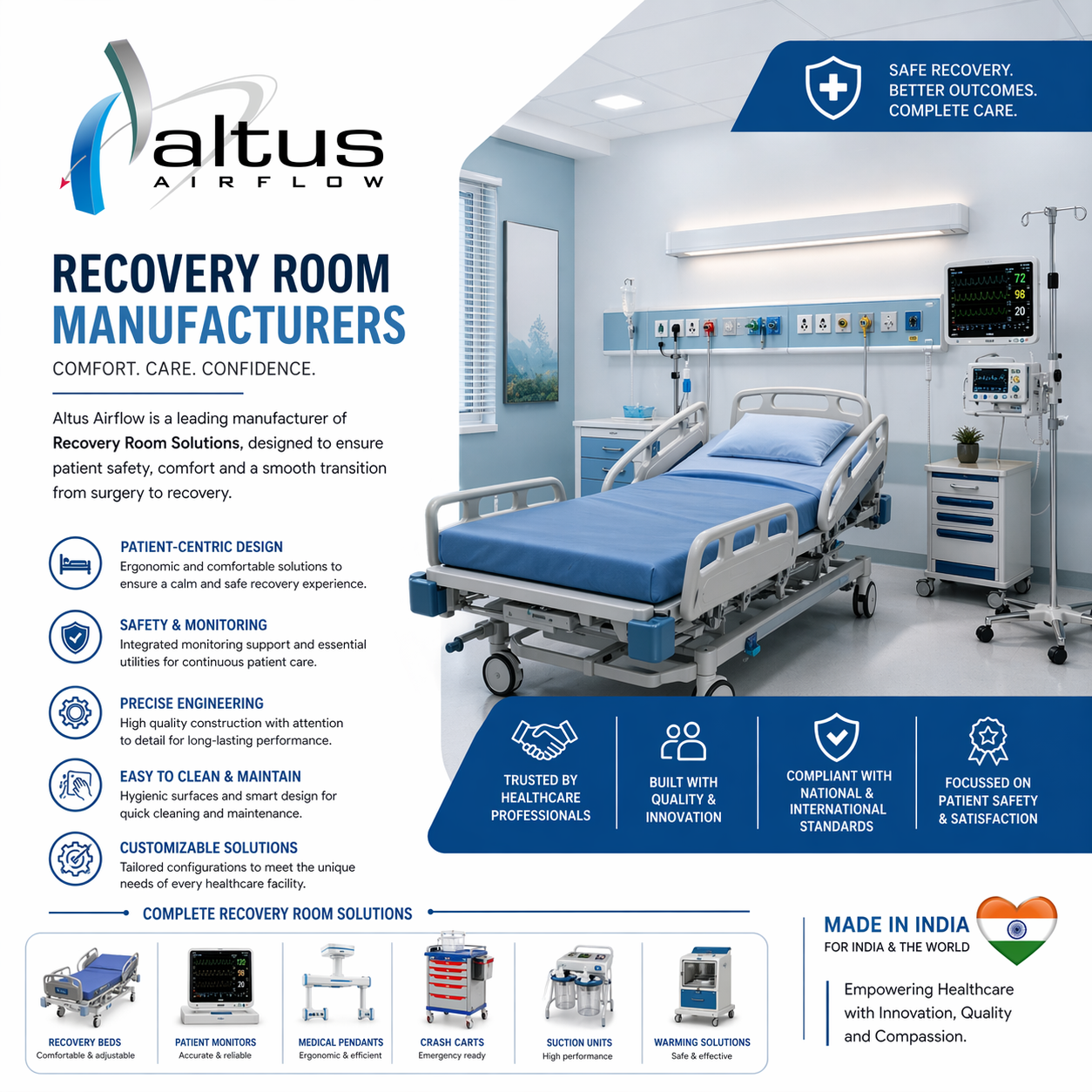
Recovery rooms are essential healthcare spaces where patients are monitored after surgery or medical procedures until they regain stability and can be safely transferred to another care unit. Since hospitals vary significantly in size, specialty, patient load, and infrastructure, a one-size-fits-all recovery room design is rarely effective. Modern healthcare facilities require flexible and adaptable solutions that align with their operational goals and clinical requirements. This is where Recovery Room Manufacturers play an important role by creating customized recovery room environments that maximize efficiency, patient safety, and staff productivity.
Can Recovery Rooms Be Customized for Different Hospitals?
Yes, recovery rooms can be fully customized to meet the specific requirements of different hospitals. Modern recovery room design focuses on flexibility, ensuring that healthcare facilities receive solutions that suit their available space, patient capacity, workflow patterns, and future expansion plans.
The customization process begins with a detailed assessment of the hospital’s infrastructure. Designers and engineers evaluate the available floor area, proximity to operation theatres, emergency departments, and patient transfer routes. This assessment helps determine the most effective layout for patient monitoring and clinical operations.
One of the most important aspects of customization is bed capacity planning. Smaller hospitals may require compact recovery rooms with fewer beds, while larger hospitals often need extensive post-operative care areas capable of handling high patient volumes. The layout is designed accordingly to ensure optimal utilization of available space.
Space optimization is particularly important in urban hospitals where floor area may be limited. Recovery room layouts can be designed to maximize efficiency without compromising patient safety, accessibility, or medical functionality. Strategic placement of beds, monitoring systems, and nursing stations helps create a highly functional environment.
Medical gas pipeline systems are customized according to the number of beds and anticipated patient needs. Oxygen outlets, vacuum systems, and compressed air connections are positioned to ensure quick and convenient access for healthcare professionals.
Monitoring infrastructure is also tailored to hospital requirements. Some facilities may require centralized monitoring stations that allow staff to observe multiple patients simultaneously, while others may prefer bedside monitoring systems depending on operational preferences and budget considerations.
Infection control measures are integrated into every customized recovery room design. Air filtration systems, controlled airflow patterns, antimicrobial surfaces, and proper bed spacing are incorporated based on hospital standards and patient care requirements.
Nursing station design is another critical element of customization. Stations are strategically positioned to provide clear visibility of patients and support rapid response during emergencies. Larger recovery rooms may include multiple observation points to improve efficiency.
Modular construction techniques have further enhanced customization capabilities. Prefabricated wall systems, ceiling panels, and service units can be configured according to the hospital’s needs and modified later if expansion becomes necessary.
Technology integration is becoming increasingly important in modern recovery rooms. Hospitals can incorporate smart monitoring systems, digital patient records, alarm management systems, and centralized control stations based on their operational goals.
Patient comfort is also considered during customization. Adjustable lighting, noise control measures, ergonomic bed placement, and family-friendly features can be incorporated to improve the recovery experience.
Future scalability is a major advantage of customized recovery room solutions. Hospitals can plan for future growth by incorporating flexible infrastructure that allows additional beds, equipment, and monitoring systems to be added as demand increases.
Through this comprehensive approach, Recovery Room Manufacturers ensure that every recovery room is designed to support the hospital’s unique clinical objectives while maintaining compliance with healthcare regulations and patient safety standards.
Conclusion
Recovery rooms can be fully customized to suit the unique needs of different hospitals, regardless of their size or specialty. Through flexible layouts, modular construction, advanced technology integration, and scalable infrastructure, hospitals can create efficient and patient-centered post-operative care environments. The expertise of Recovery Room Manufacturers ensures that these customized solutions enhance patient outcomes, improve workflow efficiency, and support long-term healthcare growth.
FAQs
1. Can recovery rooms be customized for different hospitals?
Yes, Recovery Room Manufacturers design recovery rooms according to hospital space, patient volume, workflow needs, and clinical requirements.
2. What factors are considered when customizing a recovery room?
Factors include available space, bed capacity, medical equipment requirements, infection control standards, patient flow, and future expansion plans.
3. Can small hospitals have customized recovery rooms?
Yes, recovery rooms can be tailored for hospitals of all sizes, including compact facilities with limited space.
4. How does customization improve recovery room efficiency?
Customization optimizes workflow, enhances patient monitoring, improves accessibility to equipment, and supports better staff productivity.
5. Are modular recovery room systems customizable?
Yes, modular systems offer high flexibility and can be configured, expanded, or modified according to changing hospital requirements.