From USD 28 Billion to USD 147 Billion: Inside the Explosive Growth of the Lithium Market
Introduction
The global Lithium Market is experiencing one of the most remarkable growth trajectories in the history of industrial commodities. Valued at USD 28.02 billion in 2024, the market is projected to surge to USD 147.39 billion by 2034, registering a compound annual growth rate (CAGR) of 18.08% over the forecast period. This extraordinary expansion is not a coincidence it is the direct result of a world pivoting rapidly toward clean energy, electrified transportation, and next-generation digital infrastructure.
Lithium, a soft silvery-white alkali metal found in spodumene minerals and brine deposits, has emerged as the cornerstone of modern energy storage. Its exceptional electrochemical properties make it indispensable for the rechargeable lithium-ion batteries that power everything from smartphones and laptops to electric vehicles (EVs) and grid-scale energy storage systems. As industries, governments, and consumers globally commit to decarbonization, the Lithium Market has stepped into the spotlight as one of the most strategically critical sectors of the 21st century.
The Driving Forces Behind Lithium Market Expansion
Several powerful macroeconomic and technological forces are converging to supercharge the Lithium Market. Chief among them is the global clean energy investment wave. According to the International Energy Agency, global energy investment exceeded USD 3 trillion for the first time in 2024, with USD 2 trillion directed specifically toward clean energy technologies and infrastructure. Large-scale solar, wind, and grid storage projects require enormous volumes of lithium battery systems to store intermittent renewable energy making lithium an indispensable input across the entire clean energy value chain.
Rising electric vehicle sales are an equally powerful catalyst. The IEA reported that global electric car sales exceeded 17 million units in 2024 alone, a figure that continues to climb year over year. Each EV battery requires significant quantities of lithium, and as automakers from Tesla and GM in North America to BYD and CATL in China scale up production, demand for the metal intensifies. Governments are amplifying this trend through policy frameworks such as the U.S. Inflation Reduction Act (IRA), which provides direct incentives for EV adoption and domestic battery manufacturing, and the European Union's stringent carbon emission targets that are compelling automakers to transition away from internal combustion engines.
The proliferation of smartphones and portable electronics provides a third major demand pillar. The GSMA's annual State of Mobile Internet Connectivity Report revealed that over 54% of the global population now owns a smartphone. With features such as larger displays, faster processors, 5G connectivity, and augmented reality capabilities demanding greater battery power, lithium consumption per device is increasing alongside global device volumes.
𝐄𝐱𝐩𝐥𝐨𝐫𝐞 𝐓𝐡𝐞 𝐂𝐨𝐦𝐩𝐥𝐞𝐭𝐞 𝐂𝐨𝐦𝐩𝐫𝐞𝐡𝐞𝐧𝐬𝐢𝐯𝐞 𝐑𝐞𝐩𝐨𝐫𝐭 𝐇𝐞𝐫𝐞:
https://www.polarismarketresearch.com/industry-analysis/lithium-market
Segmental Insights: Products and Applications
Within the Lithium Market, the product landscape is dominated by two primary categories: lithium carbonates and lithium hydroxide. The carbonates segment commanded the largest revenue share in 2024, owing to its extensive use as a raw material for cathode production in EV and consumer electronics batteries, as well as its applications in ceramics, glass manufacturing, and pharmaceuticals.
However, the hydroxide segment is gaining significant momentum and is projected to grow at a robust pace through 2034. This shift is being driven by the automotive industry's migration toward high-nickel cathode chemistries formulations that require lithium hydroxide rather than carbonate and that deliver higher energy density and longer driving ranges. As next-generation EV batteries adopt these advanced chemistries, demand for battery-grade lithium hydroxide is set to accelerate markedly.
On the applications side, the consumer electronics segment stands out as the fastest-growing category, expected to register a CAGR of 25.42% from 2025 to 2034. The convergence of remote work culture, digital learning ecosystems, smart home technologies, and next-generation computing is intensifying demand for efficient portable power solutions. Rising disposable incomes in emerging economies are further expanding the addressable market for premium electronic devices, all of which rely on lithium-ion power cells.
Regional Dynamics: Asia Pacific Leads, Europe Accelerates
From a geographic standpoint, Asia Pacific commanded 46.02% of global Lithium Market revenue in 2024, a dominance rooted in the region's unrivalled concentration of EV manufacturing capacity and consumer electronics production. China, Japan, South Korea, and India are all major contributors, with Chinese companies such as CATL and BYD operating at the very pinnacle of the global battery supply chain. China's aggressive carbon neutrality targets and government-backed EV subsidies have created a self-reinforcing demand cycle that continues to absorb enormous quantities of lithium.
North America holds a substantial and growing position in the Lithium Market, driven by the rapid expansion of domestic EV production and a strategic push to reduce dependence on Asian battery suppliers. The U.S. is investing heavily in new lithium mining, refining, and battery recycling facilities, supported by the IRA's broad incentive package.
Europe presents perhaps the most exciting growth story in the near term. The region is projected to grow at the fastest pace among all geographies through 2034, propelled by the EU's binding emissions targets and the accelerating transition to electric mobility by European automakers including Volkswagen, BMW, and Mercedes-Benz. The European Battery Alliance is actively developing a regional battery supply chain, and major Gigafactories are being constructed across Germany, Sweden, and Hungary.
Conclusion: A Market Poised for Decade-Defining Growth
The Lithium Market stands at an extraordinary inflection point. With global decarbonization commitments tightening, EV adoption accelerating, and digital consumption expanding relentlessly, the structural demand drivers underpinning lithium's growth are not cyclical they are secular. From the brine lakes of Chile's Atacama Desert to the battery gigafactories of China and Europe, lithium has become the connective tissue of the clean energy economy.
For investors, policymakers, and industry participants, understanding the Lithium Market's trajectory is not merely a matter of financial interest it is essential strategic intelligence. As the market scales from USD 28 billion today toward the USD 147 billion horizon of 2034, the decisions made now regarding supply chain development, sustainability practices, and technological innovation will define the competitive landscape for decades to come. The age of lithium is not approaching it has arrived.
More Trending Latest Reports By Polaris Market Research:
Voice Picking Solutions Market
Categorieën
Read More
TikTok continues to introduce new features to keep users engaged, and one of the most popular additions is TikTok Stories. These short-lived posts allow users to share quick updates, photos, and videos that disappear after a limited time. Because stories are temporary, many users search for a reliable TikTok story downloader to save their favorite content before it disappears. In this article,...

How Carbide Inserts Improve Quality in Modern Manufacturing Manufacturing industries are characterized by high precision, quality, and production efficiency. With the need to achieve such high standards, modern machining processes have come to rely on the use of high-quality cutting tools. Among the most important innovations in the production of such tools is the carbide insert. This cutting...
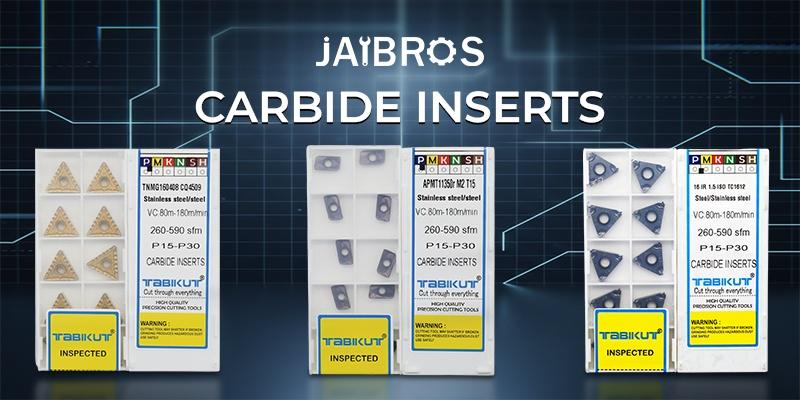
Upgrade your machining performance with advanced CNC tools. Learn how they improve accuracy, speed, and product quality. How Precision Tooling Enhances Speed, Accuracy, and Manufacturing Output Quality of machining is the cornerstone of a manufacturing business, regardless of the size of the company, be it one individual machine shop or the manager of a large manufacturing...

Commercial electrical contractors in Calgary provide professional electrical installation, maintenance, and repair services for offices, retail spaces, and industrial facilities. Modern commercial buildings in Calgary rely heavily on safe, efficient, and well-designed electrical systems. From office lighting and power distribution to industrial machinery and emergency systems, electricity is...

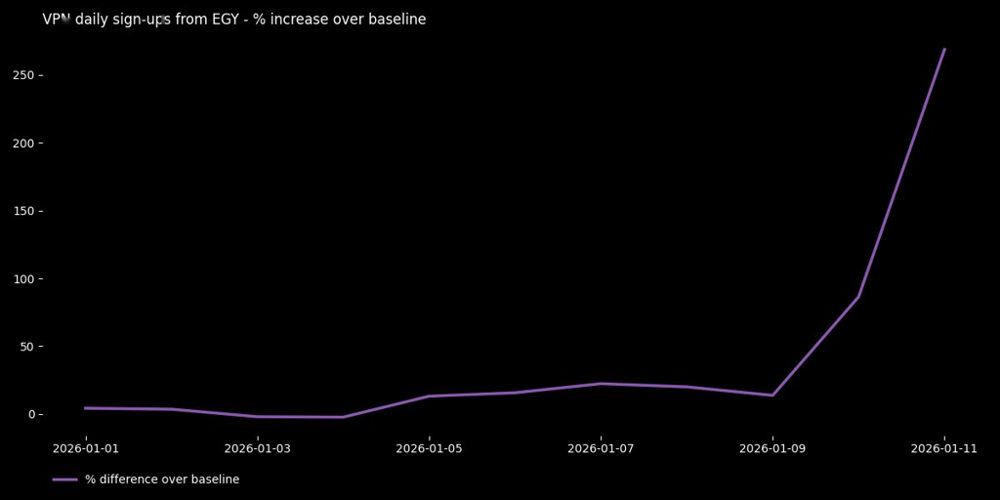
Egypt Blocks Discord: VPN Usage Surges as Users Seek Alternatives Reports emerged Saturday that Discord has become inaccessible across Egypt, with users experiencing connection failures and loading issues on major internet service providers. The sudden disruption bears hallmarks of a government-imposed restriction rather than a technical outage. The communication platform's apparent blocking...