The Rise of Smart Lenses: How Artificial Intelligence is Redefining Photography
The Intelligent Lens: How AI Cameras Are Reshaping Our Visual World
The way we capture, analyze, and interact with visual data is undergoing a seismic shift. No longer just passive recording devices, cameras have evolved into intelligent, cognitive systems capable of understanding their surroundings. This technological leap is fundamentally transforming industries ranging from consumer electronics to global security. As organizations and individuals increasingly recognize the value of automated visual intelligence, the global AI Camera Market is experiencing unprecedented expansion. Valued at USD 14.52 billion in 2023, this dynamic sector is projected to soar to USD 49.07 billion by 2032, growing at a robust compound annual growth rate (CAGR) of 14.5%.
But what exactly powers this revolution, and why is it becoming indispensable across so many facets of modern life?
Demystifying the "Smart" in AI Cameras
At its core, an AI camera is a sophisticated imaging system augmented by artificial intelligence software, primarily leveraging computer vision, deep learning, and content-aware computing. Unlike traditional cameras that merely capture light, AI cameras process visual data in real time. They can identify, categorize, and track objects, animals, and human faces within a frame.
For the everyday consumer, this means smartphones that automatically adjust exposure, color balance, and focus to capture the perfect shot without requiring professional expertise. For enterprises, it translates to surveillance systems that do not just record footage, but actively analyze it to detect anomalies, recognize authorized personnel, and trigger instantaneous alerts.
Key Drivers Fueling Unprecedented Growth
Several converging factors are accelerating the adoption of intelligent imaging technologies:
- Elevated Security and Public Safety Demands: In an era where security concerns encompass everything from retail theft to large-scale public safety, passive surveillance is no longer sufficient. AI cameras offer proactive threat detection. By integrating edge computing, these devices can process data locally, reducing latency and enabling immediate responses to unauthorized access or unusual behavior in smart cities and corporate facilities.
- The Smartphone Photography Boom: The consumer electronics segment currently dominates the landscape. Tech giants like Apple, Samsung, and Google have made AI-driven computational photography a central selling point. Features like portrait mode, night sight, and real-time language translation via camera lenses have democratized professional-grade photography, placing it directly into the hands of billions.
- Increased Affordability and Accessibility: Historically, advanced computer vision systems were prohibitively expensive. However, rapid advancements in semiconductor technology and AI software have significantly driven down costs. This democratization allows small businesses, independent developers, and individual consumers to integrate AI vision into their operations and devices.
𝐄𝐱𝐩𝐥𝐨𝐫𝐞 𝐓𝐡𝐞 𝐂𝐨𝐦𝐩𝐥𝐞𝐭𝐞 𝐂𝐨𝐦𝐩𝐫𝐞𝐡𝐞𝐧𝐬𝐢𝐯𝐞 𝐑𝐞𝐩𝐨𝐫𝐭 𝐇𝐞𝐫𝐞:
https://www.polarismarketresearch.com/industry-analysis/ai-camera-market
Transformative Applications Across Industries
The versatility of AI cameras extends far beyond taking better selfies or securing a storefront. Their applications are actively revolutionizing multiple sectors:
- Automotive: Advanced Driver Assistance Systems (ADAS) and autonomous vehicles rely heavily on AI cameras for lane detection, pedestrian recognition, and real-time obstacle avoidance, making roads significantly safer.
- Healthcare: From monitoring patient movements in elderly care facilities to assisting in medical imaging diagnostics and telemedicine, intelligent cameras are enhancing both patient safety and clinical outcomes.
- Retail: Store owners utilize AI vision for customer behavior analytics, optimizing store layouts, managing inventory in real time, and preventing loss without intrusive human oversight.
Navigating Challenges: The Privacy Imperative
With great technological power comes significant responsibility. The proliferation of AI cameras, particularly those equipped with facial recognition, has sparked valid concerns regarding data privacy and mass surveillance. Consumers and regulatory bodies are increasingly demanding transparency and control over how visual data is collected and stored.
In response, forward-thinking manufacturers are innovating with privacy-by-design principles. Features such as automated facial blurring, dynamic area masking, and localized edge processing (where data is analyzed on the device and never sent to the cloud) are becoming standard. These advancements ensure that the benefits of intelligent monitoring can be realized without compromising individual civil liberties.
The Road Ahead
As we look toward the next decade, the integration of AI cameras will only deepen. The convergence of 5G connectivity, advanced neural networks, and edge computing will enable faster, more accurate, and more autonomous visual systems. Companies like NVIDIA, Sony, and Canon continue to push the boundaries of what is possible, introducing new modules and sensors tailored for highly specific AI applications.
Ultimately, the intelligent camera is no longer a futuristic concept; it is a present-day reality. By seamlessly blending the physical and digital worlds, AI cameras are not just capturing the future they are actively helping to build a safer, more efficient, and more creative world for everyone.
More Trending Latest Reports By Polaris Market Research:
5G Fixed Wireless Access (FWA) Market
North America Gaucher Disease Treatment Market
الأقسام
إقرأ المزيد
Zach Galifianakis revealed the global Netflix premiere date for his upcoming film during a recent Los Angeles event. The comedy, "Between Two Ferns: The Movie," is set to launch on the streaming platform on September 20, 2019. Directed by Scott Aukerman, the film expands upon the beloved public access talk show parody. Aukerman also co-wrote the screenplay with Galifianakis, who stars in the...

At ARPY Renewables, we provide end-to-end solar energy solutions tailored to the needs of residential, commercial, and industrial customers. Our core services include Solar EPC, Installation & Commissioning, Solar Annual Maintenance Contracts (AMC), Solar Panel Cleaning, and Open Access Solar Power Solutions. We manage every stage of your solar journey, from planning and engineering to...

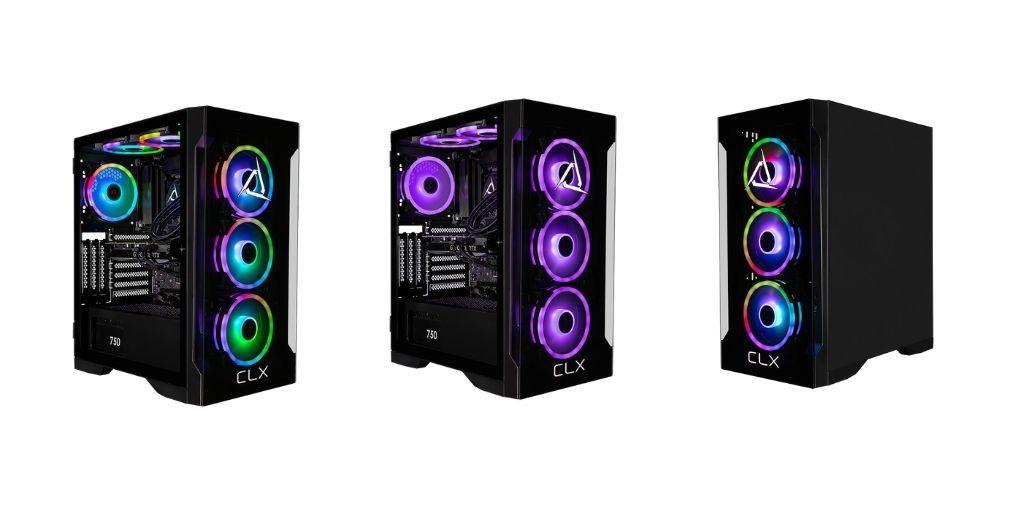
High-end gaming PCs carry a certain reputation that’s difficult to shake. People see the glowing RGB lights and LED screens and instantly picture someone grinding out competitive matches late into the night. While that image isn’t necessarily wrong, though, it’s far from complete. Modern gaming rigs have quietly evolved into powerful all-around machines that can handle far...
IntroductionLe divertissement numérique continue de transformer les habitudes des utilisateurs en France. Les plateformes en ligne offrent aujourd’hui des expériences variées, accessibles nouveau casino en ligne et interactives. Comprendre leur fonctionnement permet aux joueurs de profiter pleinement des services numériques tout en restant attentifs à la...

Make sure to catch these essential movies before they exit Netflix on February 1st. First up is the dark comedy Bad Santa, a gritty holiday film that follows two misfit thieves, played by Billy Bob Thornton and Tony Cox, as they scheme to rob a department store during Christmas season. Expect plenty of crude humor and sharp satire. Next, experience Tim Burton’s subtle yet heartwarming...