


Content Marketing Framework for Business Success
Content Marketing Framework for Business Success
Content marketing has become one of the most important pillars of modern digital marketing. Businesses today can no longer rely solely on advertising to attract customers because consumers prefer brands that educate, inform, and provide value before asking for a sale. This is where a strong content marketing framework becomes essential for sustainable business growth.
A well-structured content marketing framework helps businesses attract the right audience, improve SEO performance, build trust, and generate consistent leads. When combined with digital marketing strategies, social media marketing, and search engine optimization, content marketing becomes a powerful tool for driving long-term success.
If you want more website traffic, stronger brand authority, and better customer engagement, this guide will show you a proven content marketing framework for business success.
Why Is Content Marketing Important for Business Growth?
Content marketing focuses on creating and distributing valuable content that attracts and engages potential customers.
Key benefits of content marketing include:
-
Increased website traffic
-
Better audience engagement
-
Higher brand authority
-
Improved lead generation
-
Stronger customer relationships
Businesses that invest in content marketing often achieve more sustainable growth compared to those relying only on paid advertising.
What Makes a Successful Content Marketing Framework?
A successful framework provides a clear structure for planning, creating, distributing, and optimizing content Marketing .
Core elements include:
-
Audience research
-
Content planning
-
SEO optimization
-
Content distribution
-
Performance analysis
Effective digital marketing strategies use all these elements together to maximize results.
Step 1: Define Your Business Goals
Before creating content, businesses need clear objectives.
Common content marketing goals include:
-
Increasing brand awareness
-
Generating leads
-
Driving website traffic
-
Improving customer retention
-
Boosting sales and conversions
Clearly defined goals help businesses create more focused and effective content strategies.
Step 2: Understand Your Target Audience
Successful content marketing starts with understanding who your customers are and what they need.
Important audience insights include:
-
Demographics
-
Interests and behaviors
-
Pain points and challenges
-
Online habits
-
Purchase motivations
The better you understand your audience, the more relevant and effective your content becomes.
Step 3: Conduct SEO Keyword Research
SEO is a critical part of content marketing because it helps content reach the right audience through search engines.
Benefits of keyword research include:
-
Better search visibility
-
Increased organic traffic
-
Improved content relevance
-
Higher ranking opportunities
-
Better audience targeting
Businesses should focus on keywords related to digital marketing, SEO, content marketing, and their specific industry.
Step 4: Create Valuable Content
The heart of every content marketing strategy is valuable content that helps solve audience problems.
Popular content formats include:
-
Blog articles
-
Videos and reels
-
Infographics
-
Case studies
-
eBooks and guides
Content that educates, informs, or entertains usually performs better than purely promotional material.
Step 5: Build a Content Distribution Strategy
Creating great content is only part of the process. Businesses must also distribute content effectively.
Popular distribution channels include:
-
Social media platforms
-
Email marketing campaigns
-
Business websites and blogs
-
Online communities
-
Industry publications
Effective distribution increases content visibility and audience reach.
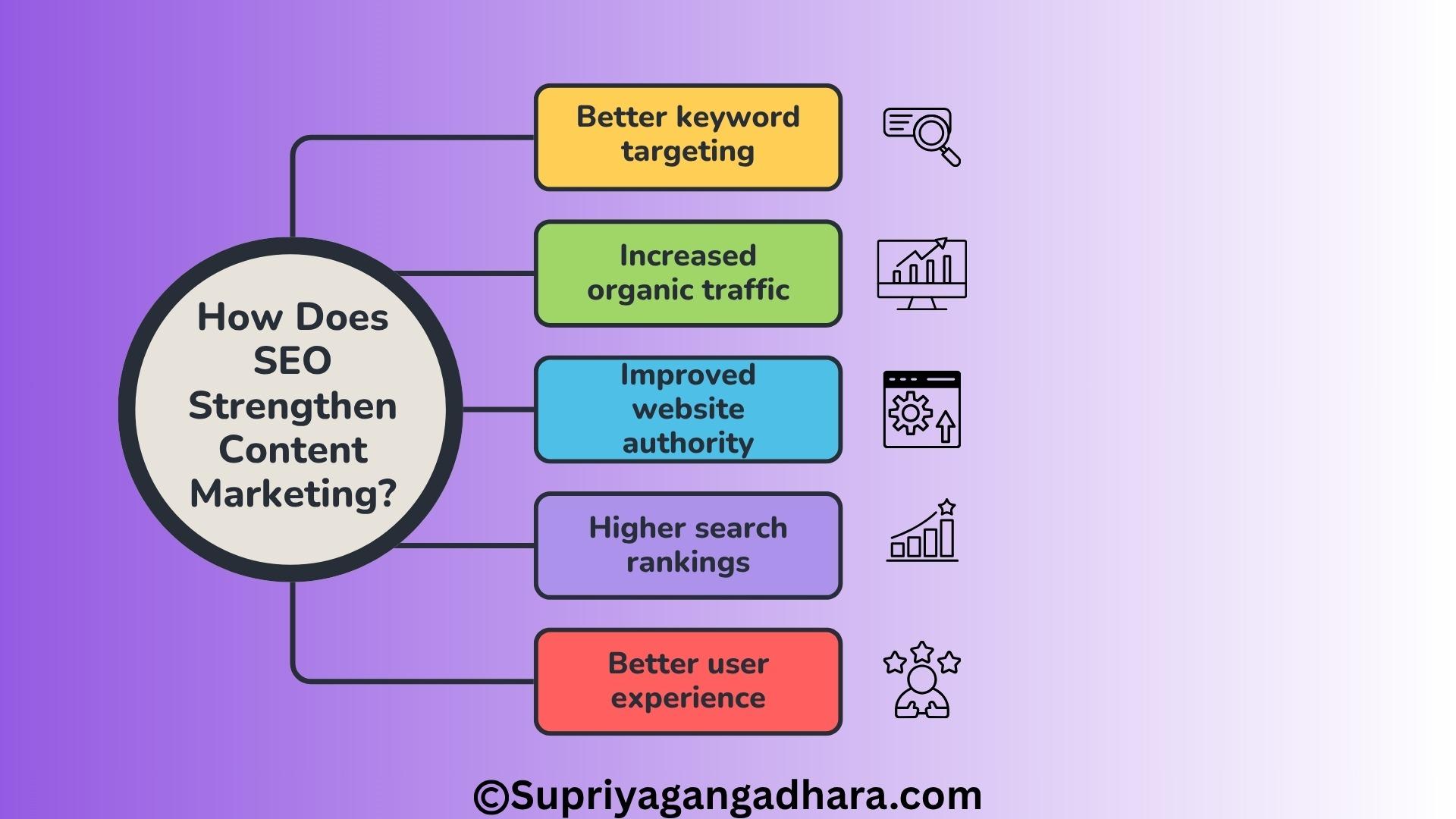
How Does SEO Strengthen Content Marketing?
SEO and content marketing work together to improve search rankings and online visibility.
SEO benefits include:
-
Better keyword targeting
-
Increased organic traffic
-
Improved website authority
-
Higher search rankings
-
Better user experience
Businesses that combine SEO with content marketing often achieve stronger long-term results.
Step 6: Use Social Media to Amplify Content
Social media marketing helps businesses extend the reach of their content and engage directly with audiences.
Benefits of social media distribution include:
-
Increased brand awareness
-
Better audience interaction
-
Higher content engagement
-
More website traffic
-
Stronger customer relationships
Sharing content consistently helps businesses build loyal communities around their brands.
Step 7: Implement Email Marketing
Email marketing remains one of the most effective ways to distribute content and nurture leads.
Email content ideas include:
-
Blog updates
-
Industry insights
-
Educational resources
-
Customer success stories
-
Promotional campaigns
Combining content marketing with email marketing helps businesses maintain consistent communication with their audience.
Can AI Improve Content Marketing?
Artificial Intelligence is transforming digital marketing and content creation.
AI-powered content marketing benefits include:
-
Faster content research
-
Better keyword analysis
-
Content optimization suggestions
-
Audience behavior insights
-
Performance forecasting
AI tools help businesses create more efficient and data-driven content strategies.
Step 8: Measure Content Performance
Tracking performance helps businesses understand which content generates the best results.
Important content marketing metrics include:
-
Website traffic
-
Engagement rates
-
Lead generation numbers
-
Conversion rates
-
Search engine rankings
Data-driven analysis helps improve future content marketing campaigns.
Why Is Consistency Important?
Content marketing is a long-term strategy that requires regular effort and continuous improvement.
Benefits of consistency include:
-
Better audience trust
-
Increased brand recognition
-
Higher search visibility
-
Improved customer loyalty
-
Sustainable growth opportunities
Businesses that publish consistently often outperform competitors over time.
How Can Businesses Turn Content Into Revenue?
The ultimate goal of content marketing is to support business growth and revenue generation.
Revenue-driving strategies include:
-
Creating lead-generation content
-
Building email subscriber lists
-
Offering valuable resources
-
Using strong calls-to-action
-
Nurturing prospects through content funnels
Businesses that align content marketing with sales objectives often achieve stronger ROI.
Conclusion
Content marketing is one of the most effective digital marketing strategies for building brand authority, increasing website traffic, and generating long-term business growth. However, success requires more than simply publishing content. Businesses need a structured framework that combines audience research, SEO optimization, content creation, social media marketing, email marketing, and performance analysis.
By following a proven content marketing framework, businesses can attract qualified audiences, build trust, and create sustainable growth opportunities. When combined with AI-powered tools and data-driven optimization, content marketing becomes a powerful engine for business success, customer engagement, and long-term profitability.
Nach Verein filtern
Read More
The creative project presented on the domain pollypenrose com in the work titled “I Was Never Good at Yoga” reflects an original and thoughtful exploration of the body, movement, and personal expression through photography. The concept behind this artistic work focuses on the indisputable fact that the body does not necessarily need to conform to traditional standards of grace,...

It’s the kind of nightmare no pony car owner wants to face. Picture this: you’re cruising down the Princes Highway on a rainy Sydney evening, and without a flicker of warning, every single exterior light on your Ford Mustang goes completely dark. No headlights, no taillights, no side markers—just a mean-looking machine that’s suddenly invisible to everyone else on the...

IBLBET menjadi salah satu kata kunci yang banyak digunakan oleh pengguna internet ketika mencari informasi mengenai platform hiburan digital berbasis permainan online. iblbet daftar teknologi membuat aktivitas berbasis internet semakin mudah diakses melalui berbagai perangkat, termasuk komputer, tablet, dan smartphone. Kondisi tersebut turut mendorong meningkatnya minat masyarakat terhadap...
NewStartCap.com is a financial services platform offering debt consolidation, personal loans, and debt relief solutions. It helps individuals with moderate credit reduce monthly payments, manage debt effectively, and achieve long-term financial stability through personalized financial strategies. https://newstartcap.com/

The global forging market is witnessing sustained growth as industries continue to demand high-strength, durable, and precision-engineered metal components. Forging is a critical manufacturing process used to produce components with superior mechanical properties for applications across automotive, aerospace, construction, energy, railways, industrial machinery, and oil and gas industries. As...