Criteria for Selecting Injection Molding Manufacturers: 10 Key Factors to Evaluate
Why Selecting the Right Injection Molding Manufacturer Matters
Choosing an injection molding manufacturer is one of the most consequential decisions in the product development lifecycle. The right manufacturing partner directly influences your product quality, time to market, production costs, and long-term competitiveness. The criteria for selecting injection molding manufacturers must go far beyond comparing piece-price quotes — they must encompass technical capabilities, quality systems, production capacity, supply chain resilience, and the supplier's ability to support your product from prototype through full-scale production and beyond. A poor choice can lead to costly quality failures, delivery delays, and lost market opportunities, while the right partner becomes a force multiplier for your business growth. This guide outlines the 10 most important evaluation criteria to apply when selecting an injection molding manufacturer for your next project.
1. Technical Capabilities and Machine Fleet
The foundation of any injection molding manufacturer evaluation is their technical capability. Assess the breadth and capacity of their machine fleet: do they operate machines ranging from 50 tons to 1000+ tons, enabling them to produce both small precision components and large structural parts? What is their shot size capability, and do they support engineering resins, high-temperature polymers, and filled materials? Leading injection molding manufacturers operate scientific molding processes, utilize in-mold sensing and cavity pressure monitoring, and maintain automated material handling systems that reduce contamination risk and improve process consistency. Evaluate whether the manufacturer supports secondary operations in-house — including ultrasonic welding, pad printing, hot stamping, and automated assembly — as this reduces supply chain complexity and quality risk by keeping more of the value stream under one roof.
2. Quality Certifications and Management Systems
Quality certifications are non-negotiable criteria for selecting injection molding manufacturers, particularly for regulated industries. ISO 9001 certification is the baseline expectation for any credible injection molding manufacturer. For medical device applications, ISO 13485 certification is mandatory to ensure compliance with FDA Quality System Regulation (QSR) and EU MDR requirements. For automotive components, IATF 16949 certification demonstrates the manufacturer's ability to meet the industry's most rigorous quality management standards. Beyond certifications, evaluate the manufacturer's quality infrastructure: do they maintain coordinate measuring machines (CMM), optical inspection systems, material testing laboratories, and statistical process control (SPC) systems? Can they provide PPAP (Production Part Approval Process) documentation, FMEA (Failure Mode and Effects Analysis), and full material traceability? The strength of these quality systems is a direct predictor of your long-term satisfaction as a customer.
3. Mold Design and Tooling Expertise
The quality of the mold directly determines the quality of every part produced. When evaluating injection molding manufacturers, scrutinize their mold design and tooling capabilities. Do they have an in-house tooling design team, or do they outsource mold fabrication? In-house tooling reduces lead times, improves communication, and enables faster design iterations. How large is their proven mold design database, and what is their average mold life achievement? Leading injection molding manufacturers maintain databases of 1,000+ proven mold designs and routinely achieve mold lives exceeding 500,000 to 1,000,000 cycles. Evaluate their mold maintenance programs, their use of mold flow simulation software (such as Moldflow or Moldex3D), and their approach to Design for Manufacturing (DFM) — a strong DFM process catches design issues before tooling is cut, saving significant cost and time downstream.
4. Production Capacity and Scalability
Your injection molding manufacturer must be able to scale with your business. Evaluate their current production capacity utilization, their ability to add shifts or machines to support demand surges, and their track record of on-time delivery. Ask for their on-time delivery rate over the past 12 months — leading injection molding manufacturers consistently achieve 95%+ on-time delivery. For high-volume programs, assess their automation capabilities: do they use robotic part removal, automated inspection, and lights-out manufacturing to maintain cost competitiveness and quality consistency? For lower-volume or prototype programs, evaluate their flexibility: can they support rapid tooling changes, short runs, and fast design iterations? The best injection molding manufacturers offer scalable capacity that grows with your program from prototype through mature high-volume production.
5. Material Expertise and Supply Chain Management
Material expertise is a frequently overlooked but critical criterion for selecting injection molding manufacturers. Can the manufacturer process your required resin grades, including glass-filled, flame-retardant, and high-temperature engineering polymers? Do they maintain strong relationships with major resin suppliers (such as BASF, Covestro, SABIC, and Dupont) to ensure material availability and competitive pricing? Leading injection molding manufacturers provide material selection consulting, help optimize resin grade selection for cost and performance, and maintain material inventory management systems that prevent production disruptions. For regulated applications, verify that the manufacturer can provide full material certification documentation, including ROhs, REACH, and FDA compliance certificates as required for your application.
6. Geographic Location and Logistics
Geographic location influences both cost and supply chain resilience. Domestic injection molding manufacturers offer shorter lead times, easier communication, and reduced logistics costs for North American and European customers. Offshore manufacturers may offer lower piece prices but introduce longer lead times, higher freight costs, and increased supply chain risk. Increasingly, many companies adopt a hybrid approach: using domestic injection molding manufacturers for low-volume, high-mix, and time-sensitive programs, while leveraging offshore capacity for mature high-volume programs where logistics lead time is acceptable. When evaluating location, also consider the manufacturer's logistics capabilities: do they offer vendor-managed inventory (VMI), kanban replenishment, and direct-to-line delivery services that reduce your inventory carrying costs?
7. Engineering Support and Design for Manufacturing
The best injection molding manufacturers are true engineering partners, not just contract manufacturers. Evaluate the depth of their engineering team: do they employ dedicated application engineers, mold design engineers, and process engineers who can support your project from concept through production? A strong Design for Manufacturing (DFM) review process is one of the highest-ROI services an injection molding manufacturer can provide — identifying draft angle issues, wall thickness optimizations, gate location improvements, and tolerance recommendations before tooling is committed can save tens of thousands of dollars in downstream rework. Leading injection molding manufacturers also provide mold flow analysis, finite element analysis (FEA) for structural validation, and prototyping services (including 3D printing and CNC machined prototypes) to validate designs before production tooling is cut.
8. Financial Stability and Business Continuity
Injection molding manufacturing relationships often span 5 to 10 years or longer. The financial stability of your injection molding manufacturer is therefore a critical but often overlooked evaluation criterion. Review the manufacturer's financial health, their customer diversification (over-reliance on a single major customer creates risk), and their capital investment plans for new equipment and facility expansion. Business continuity planning is equally important: does the manufacturer have backup power generation, redundant material handling systems, and disaster recovery protocols? For mission-critical components, consider whether the injection molding manufacturer has multiple production facilities that can support production转移 in the event of a localized disruption. A financially stable, well-managed injection molding manufacturer is a long-term asset to your supply chain resilience.
9. Cost Transparency and Total Cost of Ownership
While piece price is important, it is only one component of total cost of ownership. The criteria for selecting injection molding manufacturers must include a rigorous total-cost analysis that accounts for tooling amortization, setup costs, scrap rates, logistics costs, quality costs, and inventory carrying costs. Transparent cost breakdown is a hallmark of a trustworthy injection molding manufacturer: they should be willing to separate tooling costs, piece prices at different volume tiers, and one-time setup or sampling fees. Be wary of unusually low piece-price quotes that do not account for hidden costs such as high scrap rates, excessive setup times, or poor on-time delivery that forces you to carry excess inventory. The right injection molding manufacturer offers competitive pricing with full transparency and predictable cost structures as your volumes grow.
10. Cultural Fit and Communication
Finally, the human and cultural dimensions of the relationship matter enormously. The injection molding manufacturer should demonstrate responsiveness, transparency, and proactive communication. Evaluate how they handle problems: do they surface issues early with proposed solutions, or do they minimize problems until they become crises? Request customer references and speak directly with their existing customers about their experience. Strong injection molding manufacturers maintain long-term relationships with their customers, with many customer partnerships spanning 5, 10, or even 20+ years. Cultural alignment on quality standards, delivery commitments, and continuous improvement philosophy is a strong predictor of a successful long-term manufacturing partnership.
Conclusion
Selecting the right injection molding manufacturer requires a structured, multi-dimensional evaluation that goes far beyond comparing piece-price quotes. By systematically evaluating technical capabilities, quality systems, tooling expertise, production capacity, material knowledge, geographic fit, engineering support, financial stability, cost transparency, and cultural alignment, you can identify a manufacturing partner who will support your success for years to come. The criteria for selecting injection molding manufacturers outlined in this guide provide a robust framework for making this critical decision with confidence.
About SHINY Mold & Manufacturing
Dongguan SHINY Mold (SHINY), founded in 2003 and headquartered in Chang'an, Dongguan, specializes in the R&D and manufacturing of high-precision plastic molds, aluminum alloy, and magnesium alloy die-casting molds. We provide end-to-end solutions from design to assembly. With over 20 years of technical expertise, a database of 5,000+ proven molds, ±0.01mm machining accuracy, and automated production systems, we deliver stable, efficient, and reliable mold and product manufacturing services.
Why Choose SHINY?
Precision Engineering: Critical machining tolerances within ±0.01mm, supported by high-precision machining and inspection equipment.
Deep Expertise: A database of 5,000+ mature mold designs spanning automotive, new energy, robotics, medical devices, home appliances, UAVs, power tools, and lighting.
Smart Manufacturing: Equipped with 24/7 unmanned robotic palletizing systems, flexible automated production cells, and over 100 injection molding machines (80T–1800T).
Certified Quality: Certified to ISO 9001, ISO 14001, ISO 13485, and IATF 16949 standards.
Global Delivery: Annual delivery of 2,000+ sets of molds to customers in the U.S., Europe, and beyond.
Integrated One-Stop Manufacturing: End-to-end services: product design → prototype making → mold development → injection/die-casting molding → product assembly, including special processes like two-shot molding and gas-assisted injection.
We are committed to being your trusted partner in molds and manufactured products. For project inquiries or technical support, please feel free to contact us.
Categorias
Leia Mais
Lab Grown Diamond Jewellery | Adornet – A Brilliant New Way to Shine Introduction Have you ever admired diamond jewellery and wondered if there’s a smarter, more responsible way to enjoy its beauty? You’re not alone. Today, people across the world are rethinking luxury, and lab grown diamond jewellery is at the heart of this change. At Adornet, diamonds aren’t...
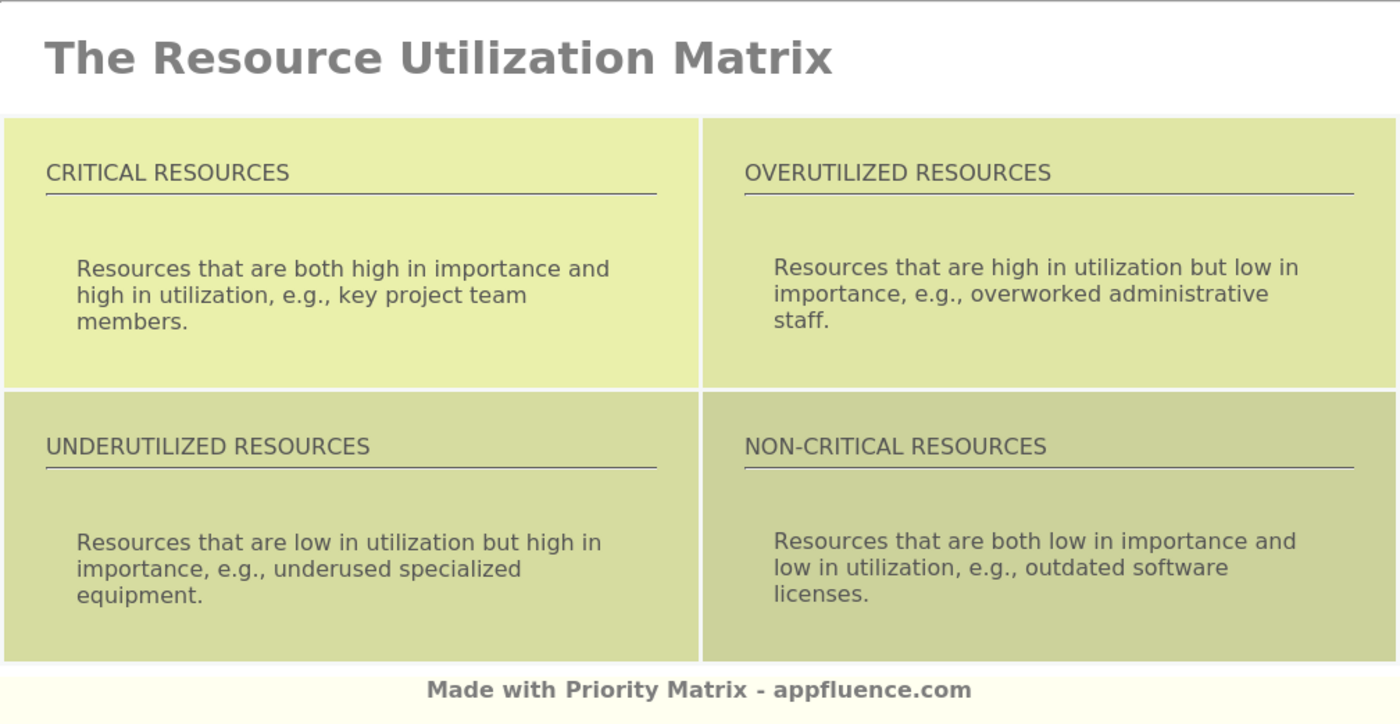
Project Dependency Matrix Template & Forecast vs. Actual.Use a project dependency matrix template and forecast vs. actual analysis to track progress, manage risks, and improve project success! Simplify Projects with Smart Planning Tools Managing projects without proper tools can feel chaotic. That’s where a project dependency matrix template and forecast vs. actual analysis come in!...
The global CNG, RNG, and Hydrogen Tanks Market, valued at USD 2.6 billion in 2023, is poised for robust expansion and is projected to reach USD 6.6 billion by 2032, according to the latest industry analysis. This remarkable growth reflects an impressive CAGR of 10.6% during the 2024–2032 forecast period, underscoring the accelerating shift toward low-carbon fuels, sustainable...

In today’s fast-changing digital world, businesses face increasing competition across every industry. Whether it is a startup, local business, e-commerce store, educational institute, healthcare company, or large enterprise, every brand is competing for customer attention online. Consumers now rely heavily on search engines, social media, websites, and digital reviews before...

Expositor es más que un título; es una oportunidad estratégica para posicionar tu marca frente a un público altamente segmentado y listo para descubrir nuevas soluciones. Formar parte de un evento especializado en publicidad y marketing significa acceder a un entorno donde la innovación, la creatividad y los negocios convergen. En un mercado cada vez...