


How 3D Integrated Circuits (3D ICs) Are Rewriting the Economics of AI, Data Centers, and Advanced Computing Infrastructure
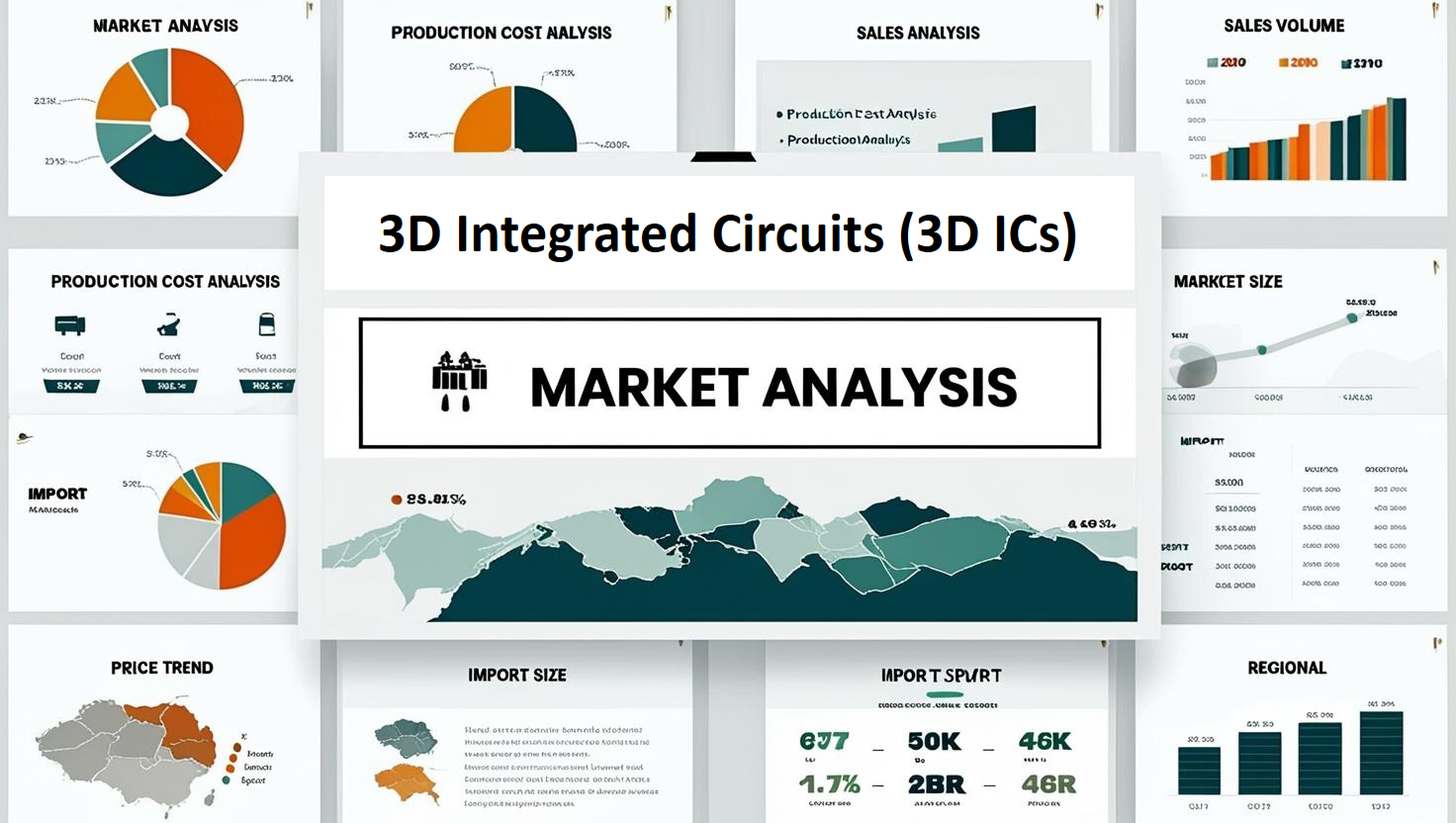
How 3D Integrated Circuits (3D ICs) Are Rewriting the Economics of AI, Data Centers, and Advanced Computing Infrastructure
The semiconductor industry has entered an era where shrinking transistors is no longer the only path to performance. The next leap is vertical. The story of 3D Integrated Circuits (3D ICs) market is not merely about stacking chips; it is about redesigning the physical architecture of computation itself.
For nearly five decades, semiconductor progress followed a horizontal roadmap. More transistors were packed into smaller areas, enabling higher performance generation after generation. However, as process nodes moved below 10 nanometers, the cost of scaling began rising faster than the performance benefits. In several advanced manufacturing facilities, wafer fabrication investments now exceed billions of dollars per production line, forcing the industry to seek alternatives.
This is where 3D Integrated Circuits (3D ICs) emerged as a strategic infrastructure solution.
Instead of placing processors, memory, accelerators, and communication components side by side, 3D Integrated Circuits (3D ICs) stack them vertically using through-silicon vias, hybrid bonding, and advanced packaging technologies. The result is shorter communication pathways, lower latency, higher bandwidth, and significantly improved performance per watt.
The impact becomes visible when examining data movement. In modern AI systems, more than 60% of total energy consumption can be associated with moving data between memory and compute resources rather than performing calculations themselves. By reducing interconnect distances from centimeters to micrometers, 3D Integrated Circuits (3D ICs) can dramatically improve energy efficiency while increasing computational throughput.
The Infrastructure Story: Building Up Instead of Out
Every technological revolution is fundamentally an infrastructure story.
Cloud computing required hyperscale data centers.
5G required dense antenna networks.
Artificial intelligence requires a new computing architecture.
That architecture increasingly points toward 3D Integrated Circuits (3D ICs).
Consider a conventional processor package. Signals often travel several millimeters or even centimeters between compute and memory components. In advanced stacked architectures, those distances shrink by factors of hundreds or thousands. Electrical resistance decreases, signal integrity improves, and bandwidth expands.
A modern high-bandwidth memory stack can deliver data transfer rates exceeding several terabytes per second. Such performance would be difficult to achieve economically through traditional planar architectures.
The infrastructure supporting 3D Integrated Circuits (3D ICs) extends far beyond semiconductor fabs. It includes advanced packaging facilities, wafer bonding systems, precision metrology tools, thermal management platforms, and automated inspection equipment.
Industry investments increasingly reflect this shift. Advanced packaging capacity expansions have become a strategic priority across major semiconductor manufacturing regions including North America, East Asia, and Europe. In many cases, packaging investment growth rates are outpacing traditional front-end wafer fabrication expansion because packaging has become a performance differentiator rather than a finishing step.
Why AI Became the Catalyst for 3D Integrated Circuits (3D ICs)
Artificial intelligence is fundamentally a bandwidth problem.
Training large language models requires moving enormous datasets across processors, memory subsystems, networking infrastructure, and storage arrays. A single AI training cluster may contain tens of thousands of accelerators connected through high-speed interconnects.
In such environments, every nanosecond matters.
This is why 3D Integrated Circuits (3D ICs) have become central to AI hardware design. Stacked memory architectures enable significantly faster data access compared with traditional memory configurations. Reduced communication distances also lower power consumption, a critical metric as AI facilities increasingly face energy constraints.
A large AI data center can consume hundreds of megawatts of power. Even a 10% improvement in compute efficiency can translate into substantial operational savings over the facility lifecycle.
The economics are straightforward.
When compute demand grows by multiples, infrastructure operators cannot simply scale energy consumption at the same rate. They need architectural innovations. 3D Integrated Circuits (3D ICs) provide one of the most effective pathways toward that objective.
Market Momentum Signals a Structural Shift
According to Staticker, the global 3D Integrated Circuits (3D ICs) market in 2026 is expected to demonstrate strong year-on-year expansion, with sustained double-digit growth projected through the forecast period as AI accelerators, high-performance computing systems, advanced memory architectures, automotive electronics, and edge computing deployments continue increasing demand for vertically integrated semiconductor designs. The forecast suggests that adoption rates for 3D Integrated Circuits (3D ICs) will outpace many conventional semiconductor packaging approaches as manufacturers prioritize performance-per-watt improvements, bandwidth density, and heterogeneous integration strategies across next-generation computing platforms.
Mapping the Use Cases: Where Vertical Integration Changes Everything
The first major application area for 3D Integrated Circuits (3D ICs) is high-performance computing.
Supercomputers increasingly require dense computational architectures capable of processing trillions of operations per second. In these systems, reducing communication bottlenecks often delivers greater performance gains than simply adding more cores.
A second major application is AI inference.
As enterprises deploy generative AI into customer service, software development, healthcare analytics, and industrial automation, inference workloads are becoming larger and more frequent. Low-latency memory access enabled by 3D Integrated Circuits (3D ICs) helps accelerate these deployments while maintaining energy efficiency.
A third use case is automotive electronics.
Modern vehicles increasingly resemble data centers on wheels. Advanced driver-assistance systems process inputs from cameras, radar, lidar, and numerous sensors simultaneously. Some premium vehicles generate multiple terabytes of data daily during operation and testing.
To process such information efficiently, automotive chip designers are adopting architectures associated with 3D Integrated Circuits (3D ICs). The benefits include smaller footprints, faster processing, and improved reliability under constrained space conditions.
The fourth use case is edge computing.
Factories, logistics hubs, hospitals, and telecommunications facilities increasingly require local processing capabilities. Sending every workload to centralized cloud infrastructure introduces latency and bandwidth costs.
Compact systems based on 3D Integrated Circuits (3D ICs) allow edge devices to deliver greater computational density within limited physical space, making them attractive for distributed infrastructure deployments.
The Thermal Challenge That Created an Engineering Race
Every technological breakthrough creates a new bottleneck.
For 3D Integrated Circuits (3D ICs), that bottleneck is heat.
Stacking silicon layers improves performance but also increases thermal density. Engineers must now manage heat flow through multiple semiconductor layers rather than a single surface.
The numbers are significant. Power densities in advanced AI processors continue rising, requiring innovative cooling architectures. This has triggered substantial investment into liquid cooling systems, thermal interface materials, microfluidic technologies, and advanced heat spreaders.
As a result, the growth of 3D Integrated Circuits (3D ICs) is also stimulating adjacent infrastructure sectors including cooling equipment, advanced materials, semiconductor packaging tools, and precision manufacturing technologies.
The story therefore extends beyond semiconductors. It is becoming a broader industrial ecosystem transformation where computing, manufacturing, energy efficiency, and materials science converge around a common objective: extracting more performance from every square millimeter of silicon.
Request for customization: https://staticker.com/reports/3d-integrated-circuits-3d-ics-market/
Κατηγορίες
Διαβάζω περισσότερα
Cricket is no longer just a sport watched on television. Today, it has become a complete digital entertainment experience where fans stay connected through live scores, fantasy contests, match analysis, and online engagement platforms. With the rapid growth of IPL popularity and online cricket communities, platforms connected to cricket entertainment are also gaining massive attention. One name...

Call Girls in Bangalore Bangalore Cheap Escorts Experience the finest companionship in the Garden City with Sofeeya.in, Bangalore’s most trusted and luxurious Bangalore Escorts Agency. Whether you are a busy executive seeking refined conversation, a traveler wanting memorable evenings, or someone craving genuine connection, Sofeeya.in delivers elegance, beauty, and complete...

Your home is your sanctuary. You work hard to keep it clean and safe. But pests can ruin that peace in a single day. Searching for pest control jericho is the fastest way to regain your comfort. Kreshco Pest Control offers expert care right here in the area. We know you cannot wait around for weeks to see results. We work fast to get your property back to normal. You deserve a team that...

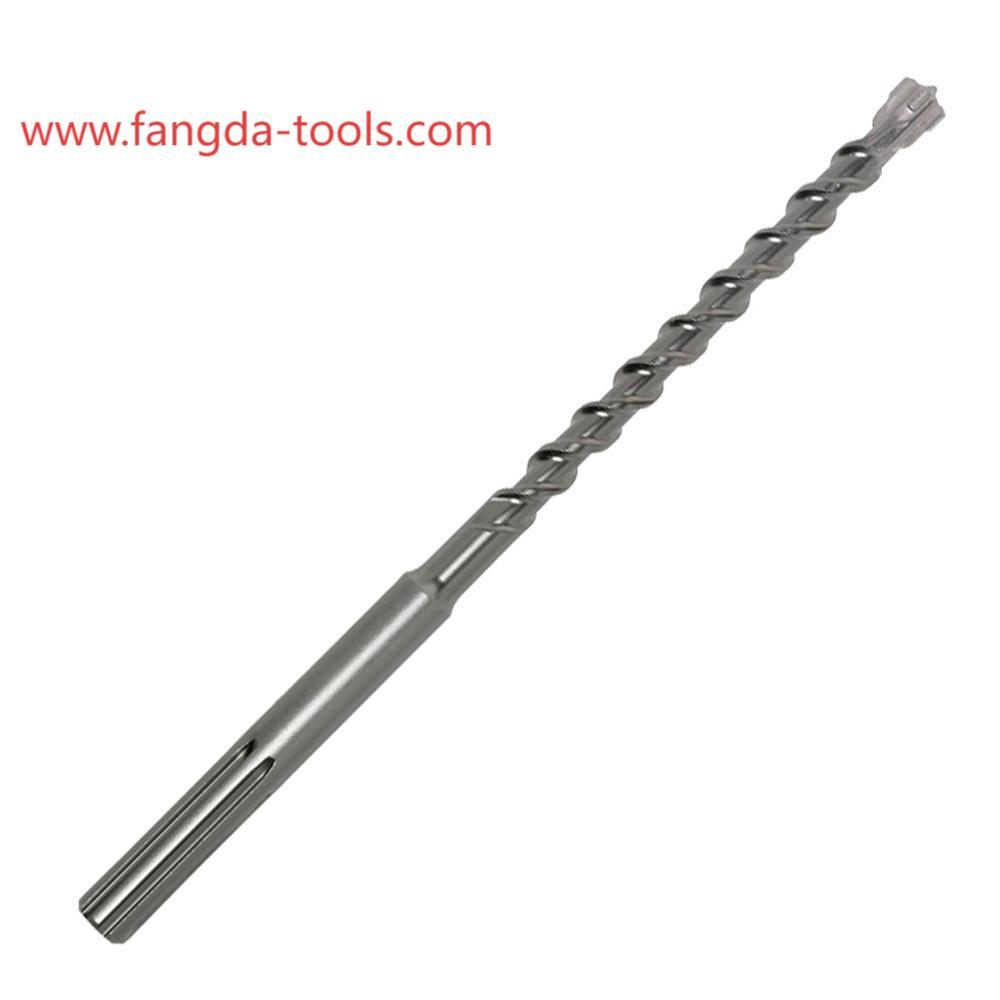
In construction and heavy-duty applications, using tools that combine durability with accuracy is essential. The Hammer Drill Bit from Fangda provides professional craftsmen and industrial users with reliable performance and consistent results. Engineered with precision tips and reinforced steel, these drill bits are designed to penetrate hard materials such as concrete, brick, and stone while...
Choosing a new home involves much more than selecting the right number of bedrooms or comparing monthly rental rates. Today's renters are looking for communities that combine spacious homes, modern amenities, convenient locations, and a lifestyle that promotes comfort, recreation, and connection. Many prospective residents also compare features such as townhomes with stainless steel appliances...
