In modern power transmission and distribution networks, selecting the right overhead cable is not just a technical decision it is a strategic one that directly impacts system reliability, project cost, and long-term maintenance. For utilities, EPC contractors, and procurement teams, the challenge often lies in balancing performance, durability, and cost-efficiency in diverse environmental conditions.
This guide provides a comprehensive, engineer-focused overview of overhead cables, helping you understand types, applications, selection criteria, and how to make informed purchasing decisions aligned with market demands.
What is an Overhead Cable?
An overhead cable is an electrical conductor installed above ground, typically supported by poles or transmission towers, used to transmit and distribute electricity across short and long distances. These cables are widely used due to their cost-effectiveness, ease of installation, and scalability compared to underground systems.
Overhead cables are essential in:
- Power transmission networks
- Rural electrification projects
- Urban distribution systems
- Industrial power supply
Types of Overhead Cables
Understanding the different types of overhead cables is critical for selecting the right solution for your project.
1. AAC (All Aluminum Conductor)
AAC cables are made entirely of aluminum strands, offering excellent conductivity and corrosion resistance.
Best suited for:
- Short-distance transmission
- Urban distribution networks
- Areas with low mechanical stress
2. AAAC (All Aluminum Alloy Conductor)
AAAC cables use aluminum alloy, providing better strength and corrosion resistance than AAC.
Advantages:
- Higher strength-to-weight ratio
- Better sag performance
- Ideal for coastal and high-humidity areas
3. ACSR (Aluminum Conductor Steel Reinforced)
ACSR cables consist of aluminum strands reinforced with a steel core, offering high tensile strength.
Applications:
- Long-span transmission lines
- High mechanical load environments
- Mountainous and windy regions
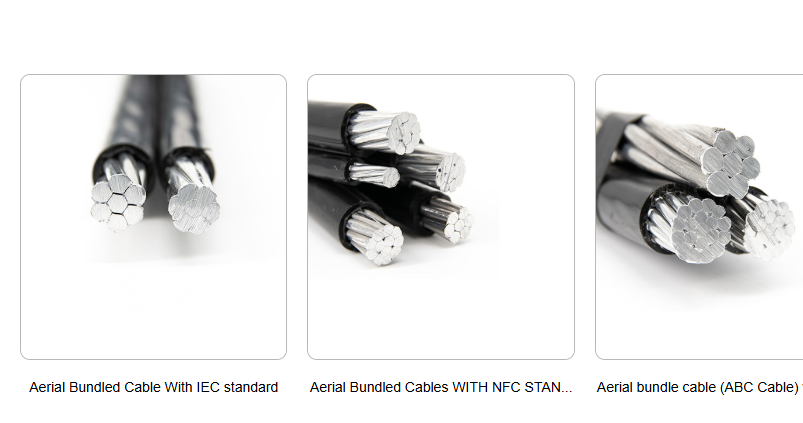
4. ABC (Aerial Bundled Cable)
ABC cables are insulated conductors bundled together, improving safety and reducing power losses.
Key benefits:
- Reduced risk of electrical faults
- Ideal for densely populated areas
- Lower maintenance requirements
5. LV Power Cable & Concentric Cable
These cables are used in low-voltage distribution systems, often for residential and commercial power delivery.
Key Factors to Consider When Choosing Overhead Cable
Selecting the right overhead cable involves more than just picking a conductor type. Engineers and procurement teams must evaluate several technical and commercial factors.
Electrical Performance
- Current carrying capacity
- Voltage rating
- Resistance and conductivity
Higher conductivity materials reduce transmission losses and improve efficiency.
Mechanical Strength
- Tensile strength
- Sag and tension characteristics
- Resistance to wind and ice loads
For long spans, ACSR is often preferred due to its reinforced core.
Environmental Conditions
- Temperature variations
- Corrosion exposure (coastal/industrial areas)
- UV resistance
AAAC cables perform well in corrosive environments, making them ideal for coastal projects.
Installation and Maintenance
- Ease of installation
- Required infrastructure
- Maintenance frequency
ABC cables simplify installation in urban areas and reduce fault risks.
Cost Efficiency
Procurement teams must balance upfront costs with lifecycle value. While some cables may have higher initial costs, they often deliver lower maintenance and longer service life.
Market Trends Driving Overhead Cable Demand
The global demand for overhead cables is rapidly increasing due to several key factors:
Expansion of Power Infrastructure
Developing regions are investing heavily in grid expansion and rural electrification, boosting demand for cost-effective overhead solutions.
Renewable Energy Integration
Wind and solar farms require reliable transmission lines to connect generation sites to the grid. Overhead cables remain the most viable option for these applications.
Urbanization
Rapid urban growth increases the need for safe and efficient distribution systems, where ABC cables are gaining popularity.
Cost Optimization Pressure
Utilities and EPC contractors are under pressure to reduce project costs while maintaining reliability, making overhead cables a preferred choice over underground alternatives.
Advantages of Overhead Cable Systems
Overhead cable systems offer several advantages that make them the preferred choice for many power projects:
- Lower installation costs compared to underground cables
- Easier fault detection and repair
- Faster deployment timelines
- Flexibility for network expansion
These benefits make overhead cables ideal for both new projects and grid upgrades.
Challenges and How to Overcome Them
Despite their advantages, overhead cables also present certain challenges.
Weather Exposure
Overhead cables are exposed to wind, rain, and extreme temperatures.
Solution:
Use high-quality materials like AAAC or ACSR designed for durability.
Line Losses
Transmission losses can occur due to resistance.
Solution:
Select conductors with high conductivity and optimize line design.
Safety Concerns
In urban areas, exposed conductors can pose risks.
Solution:
Adopt insulated solutions like ABC cables to enhance safety.
Why Quality Manufacturing Matters
The performance of an overhead cable depends heavily on manufacturing quality. Poorly manufactured conductors can lead to:
- Increased power losses
- Reduced lifespan
- Higher maintenance costs
This is why choosing a reliable manufacturer is critical for project success.
HNBF Power, as a global manufacturer of overhead conductors and power cables, focuses on delivering high-quality AAC, AAAC, ACSR, and ABC cables designed for demanding utility and industrial applications. Their solutions are engineered to meet international standards and provide consistent performance across diverse environments.
How to Optimize Procurement for Overhead Cables
For procurement professionals, optimizing the sourcing process is key to achieving cost and performance goals.
Evaluate Supplier Capabilities
- Manufacturing capacity
- Quality certifications
- Export experience
Request Technical Specifications
Ensure detailed specifications including:
- Conductor size and construction
- Electrical properties
- Mechanical performance
Consider Customization
Projects often have unique requirements. Working with a manufacturer that offers customized solutions can improve overall efficiency and reduce project risks.
Future of Overhead Cable Technology
The overhead cable industry is evolving with innovations focused on:
- High-temperature low-sag (HTLS) conductors
- Improved corrosion-resistant materials
- Smart grid integration
These advancements are helping utilities improve efficiency and meet growing energy demands.
Frequently Asked Questions (FAQs)
1. What is the most commonly used overhead cable type?
ACSR is widely used due to its high strength and ability to handle long spans, making it ideal for transmission lines.
2. When should I use ABC cable instead of bare conductors?
ABC cables are best suited for urban or densely populated areas where safety and reduced power theft are important.
3. How do environmental conditions affect cable selection?
Harsh environments such as coastal or industrial areas require corrosion-resistant conductors like AAAC.
4. What factors influence overhead cable pricing?
Pricing depends on material type, conductor size, manufacturing quality, and customization requirements.
5. How can I ensure long-term reliability of overhead cables?
Choose high-quality cables from reputable manufacturers and ensure proper installation and maintenance practices.
Conclusion
Selecting the right overhead cable is essential for ensuring reliable, efficient, and cost-effective power transmission and distribution. By understanding cable types, evaluating key technical factors, and aligning with market trends, engineers and procurement teams can make informed decisions that support long-term project success.
HNBF Power stands ready to support utilities, EPC contractors, and industrial buyers with high-performance overhead cable solutions tailored to specific project needs.
Contact HNBF Power for Customized Solutions
If you are planning a power transmission or distribution project and need expert guidance on selecting the right overhead cable, contact HNBF Power today. Their team can provide customized solutions designed to meet your technical requirements, environmental conditions, and budget goals.