In today’s high-precision manufacturing environment, joining technology plays a critical role in determining product quality, structural integrity, and production efficiency. Among the most widely adopted industrial joining solutions, the resistance welder stands out for its speed, repeatability, and suitability for mass production.
For OEMs, automotive suppliers, appliance manufacturers, and automation integrators, resistance welding is not just a joining method—it is a production backbone that supports scalable, cost-efficient, and high-strength metal assembly.
As a global specialist in industrial welding and metal-joining systems, Heron Welder delivers advanced resistance welding machines, automation lines, and customized engineering solutions tailored for modern factories.
What is a Resistance Welder?
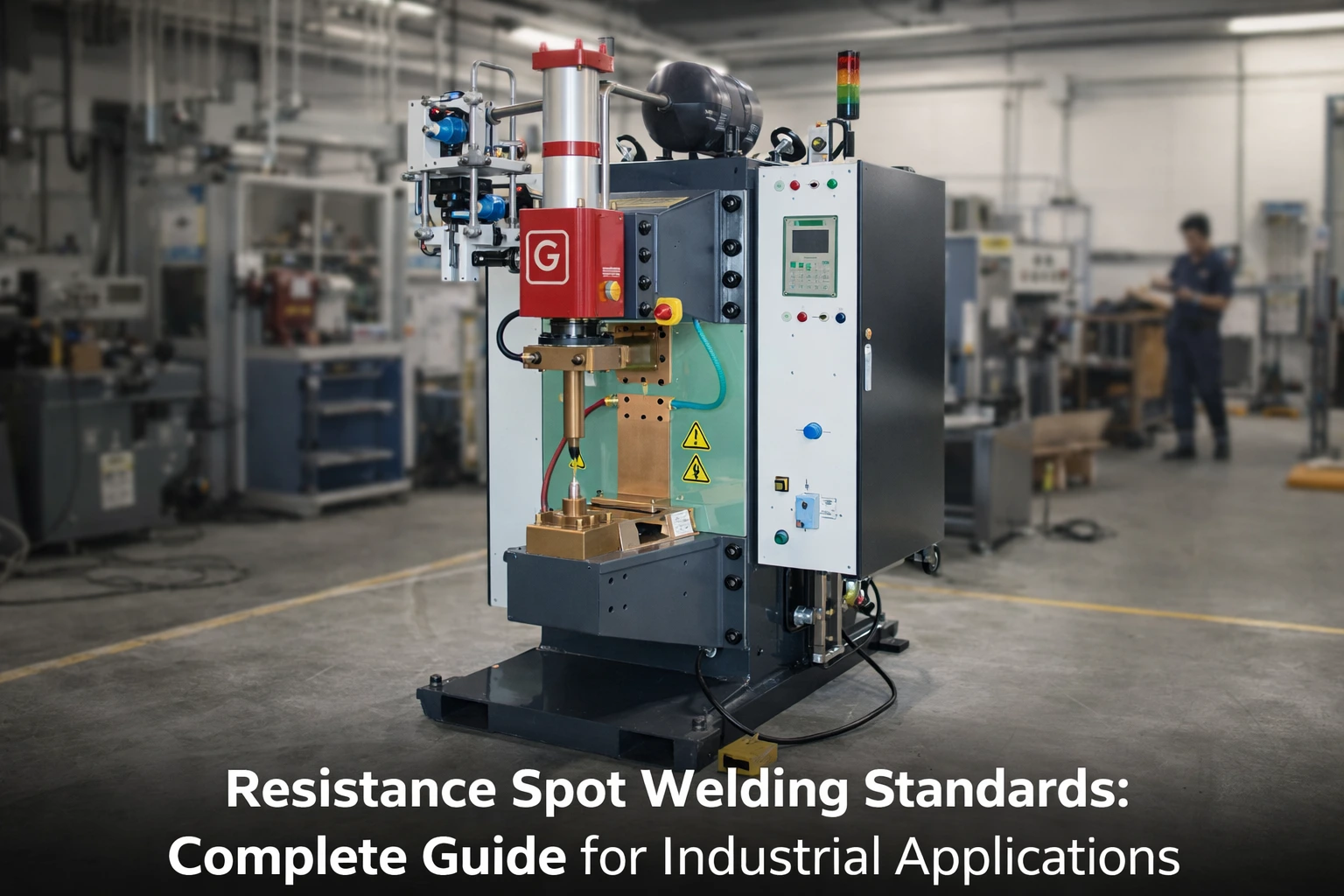
A resistance welder is an industrial machine that joins metal parts by applying controlled electric current, pressure, and time to generate heat at the contact interface. The heat produced by electrical resistance melts the metal locally, forming a strong weld nugget once pressure is maintained during cooling.
Unlike traditional welding methods that require filler materials or external heat sources, resistance welding relies purely on the material’s own resistance to electrical current.
Core Working Principle
The resistance welding process follows a simple but highly controlled sequence:
- Two metal workpieces are clamped between copper electrodes
- High electrical current is passed through the contact point
- Heat is generated due to electrical resistance
- Metal reaches plastic or molten state
- Pressure is maintained to form a solid-state or fusion bond
- Current stops and the weld solidifies under pressure
This process ensures fast cycle times, minimal distortion, and consistent weld quality—making it ideal for high-volume production environments.
Types of Resistance Welding Machines
Modern resistance welder systems are designed for different industrial applications and material requirements. The most common types include:
1. Spot Welding Machines
Spot welders are used to join overlapping sheet metals at specific points. They are widely used in automotive body assembly, appliance manufacturing, and sheet metal fabrication.
2. Projection Welding Machines
Projection welding uses pre-formed projections or embossments to concentrate current flow, allowing multiple welds in a single cycle. It is commonly used for nuts, bolts, and fastener welding.
3. Seam Welding Machines
Seam welders create continuous or overlapping welds using rotating wheel electrodes. They are ideal for airtight or leak-proof joints such as fuel tanks and containers.
4. MFDC Resistance Welders
Medium Frequency Direct Current (MFDC) welders offer high energy efficiency, precise current control, and improved weld consistency. They are widely used in advanced automotive and precision manufacturing lines.
5. Capacitor Discharge Welders
These systems store electrical energy in capacitors and release it rapidly for extremely fast welding cycles. They are used for delicate components and dissimilar material welding.
Key Advantages of Resistance Welding Technology
The resistance welder has become a preferred solution in industrial manufacturing due to its unique operational benefits:
High Production Speed
Resistance welding cycles typically take milliseconds to seconds, enabling large-scale production with minimal downtime.
Strong and Reliable Joints
Welds are highly consistent, providing excellent mechanical strength and fatigue resistance when properly controlled.
No Filler Materials Required
This reduces material cost and simplifies supply chain management.
Clean and Environmentally Friendly Process
No open flame, fumes, or consumables like flux or filler rods are required.
Easy Automation Integration
Resistance welding systems integrate seamlessly with robotic arms, CNC systems, and fully automated production lines.
Industrial Applications of Resistance Welders
Resistance welding technology is widely used across multiple industries where efficiency, durability, and precision are essential.
Automotive Industry
One of the largest users of resistance welding, especially for:
- Car body frames
- Door panels
- Exhaust systems
- Battery trays for EVs
Electrical and Electronics Manufacturing
Used for:
- Busbars
- Connectors
- Battery tabs
- Conductive assemblies
Appliance Manufacturing
Common applications include:
- Washing machine drums
- Refrigerator panels
- Microwave housings
HVAC and Sheet Metal Fabrication
Used for:
- Air ducts
- Metal enclosures
- Industrial ventilation systems
Construction and Infrastructure Components
Applied in:
- Steel reinforcement assemblies
- Structural metal frameworks
- Modular fabrication systems
Resistance Welder vs Other Welding Methods
Understanding how a resistance welder compares to other welding technologies helps manufacturers choose the right solution.
Resistance Welding vs MIG/TIG Welding
- MIG/TIG requires filler materials and skilled operators
- Resistance welding is faster and highly automated
- MIG/TIG is better for thick or complex geometries
- Resistance welding excels in sheet metal mass production
Resistance Welding vs Laser Welding
- Laser welding offers high precision but higher equipment cost
- Resistance welding is more cost-effective for high-volume production
- Laser welding requires strict surface preparation
- Resistance welding tolerates minor surface variations better
Resistance Welding vs Mechanical Fastening
- Mechanical fastening requires additional parts (screws, rivets)
- Resistance welding creates permanent joints without extra components
- Welding reduces assembly complexity and weight
Key Process Parameters in Resistance Welding
To achieve consistent weld quality, engineers must carefully control several parameters:
Welding Current
Higher current increases heat generation but must be controlled to avoid expulsion or burn-through.
Weld Time
Short weld times reduce heat-affected zones and improve cycle efficiency.
Electrode Force
Proper force ensures stable contact and prevents surface damage or inconsistent welds.
Electrode Design
Copper electrodes must be shaped to match the application and ensure uniform current distribution.
Material Properties
Different metals such as steel, stainless steel, and aluminum require customized welding settings.
Automation and Smart Manufacturing Integration
Modern resistance welders are no longer standalone machines. They are fully integrated into Industry 4.0 production systems.
Advanced systems now include:
- PLC-based control systems
- Real-time weld monitoring
- Data logging and quality tracking
- Robotic welding integration
- Adaptive current control systems
These features allow manufacturers to achieve zero-defect production goals, improve traceability, and reduce operational downtime.
Heron’s Engineering Approach to Resistance Welding
As a specialized manufacturer in industrial welding systems, Heron Welder focuses on delivering:
- High-performance spot and projection welding machines
- MFDC advanced welding systems
- Custom-built automated welding production lines
- Integrated clinching and self-pierce riveting solutions
- Smart controllers for precision welding control
The company’s engineering approach is centered on product reliability, process stability, and production efficiency, ensuring that every system meets the demands of modern manufacturing environments.
Best Practices for Optimizing Resistance Welding Performance
To maximize efficiency and weld quality, manufacturers should follow these practices:
- Regular electrode maintenance and dressing
- Proper material surface cleaning before welding
- Optimized parameter setting for each material type
- Routine calibration of welding controllers
- Integration of real-time quality monitoring systems
Implementing these practices reduces defects, improves consistency, and extends machine lifespan.
FAQs about Resistance Welder
1. What materials can be joined using a resistance welder?
Resistance welders are commonly used for steel, stainless steel, nickel alloys, and some aluminum applications depending on system capability.
2. Is resistance welding suitable for thick materials?
It is most effective for thin to medium sheet metals. For thick materials, alternative or hybrid welding methods may be required.
3. What industries benefit most from resistance welding?
Automotive, appliance manufacturing, electrical systems, HVAC fabrication, and battery production are the primary users.
4. How long does a resistance weld take?
Most welds are completed within milliseconds to a few seconds depending on material and application.
5. Can resistance welding be automated?
Yes, resistance welding is highly compatible with robotic systems and fully automated production lines.
Conclusion
The resistance welder remains one of the most efficient and scalable metal joining technologies in modern manufacturing. Its ability to deliver fast, clean, and repeatable welds makes it essential for high-volume industrial production.
From automotive assembly lines to precision electrical manufacturing, resistance welding continues to evolve with automation, digital control systems, and advanced process monitoring.
With deep engineering expertise and a focus on industrial innovation, Heron Welder provides manufacturers with reliable, high-performance welding solutions designed to meet the future of smart manufacturing.
Request a Custom Welding Solution
If you are looking to improve production efficiency, reduce welding defects, or integrate automated resistance welding systems into your factory, Heron offers customized engineering support and turnkey solutions tailored to your production needs.
Contact Heron Welder’s engineering team to discuss your requirements and get a customized consultation for your manufacturing line.