


What Is CNC Machining and Its Role in Automation
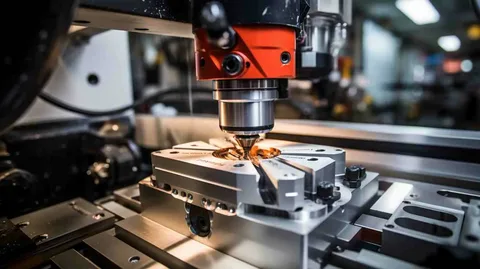
CNC machining has become one of the most important technologies in modern manufacturing. It enables industries to produce highly precise components with minimal human intervention, improving speed, accuracy, and consistency. If you are wondering what is CNC machining, it is a computer-controlled manufacturing process that uses programmed instructions to operate machine tools such as mills, lathes, routers, and grinders.
In today’s automated world, CNC machining plays a critical role in shaping industries like automotive, aerospace, electronics, and medical manufacturing. It bridges the gap between digital design and physical production, making it possible to create complex parts with incredible efficiency.
- CNC stands for Computer Numerical Control
- It automates machine tool operations using programmed code
- It increases accuracy and reduces manual errors
- It is widely used in mass production and prototyping
Understanding the Basics of CNC Machining
To fully understand what is CNC machining, it is important to break down its basic structure. CNC machining works by converting digital designs into numerical codes (G-code and M-code) that control machine movements. These instructions guide cutting tools to shape raw materials like metal, plastic, or wood into precise components.
Unlike traditional machining, which relies heavily on manual control, CNC machining operates with minimal human input once the program is set. This makes it highly reliable and suitable for repetitive production tasks where consistency is essential.
- CNC machines follow pre-programmed instructions
- G-code controls movement and machining operations
- M-code manages machine functions like coolant and tool changes
- Works with CAD (Computer-Aided Design) and CAM (Computer-Aided Manufacturing) systems
The automation aspect of CNC machining significantly reduces human error and improves production speed. Operators mainly focus on programming, monitoring, and quality control rather than manual cutting or shaping.
In modern industries, this basic understanding of CNC machining helps businesses adopt smarter manufacturing methods and improve efficiency across production lines.
How CNC Machining Works in Manufacturing
CNC machining follows a step-by-step process that transforms a digital design into a finished product. It begins with designing a model using CAD software, followed by converting it into machine-readable instructions using CAM software. The CNC machine then executes these instructions with high precision.
Each movement of the machine is controlled automatically, ensuring that every cut, drill, or shape is executed exactly as designed. This level of automation makes CNC machining ideal for complex and detailed parts.
- Step 1: Create a digital design using CAD software
- Step 2: Convert design into G-code using CAM software
- Step 3: Load program into CNC machine
- Step 4: Machine executes instructions automatically
- Step 5: Finished product is inspected for quality
CNC machining systems can operate continuously with very little downtime, making them highly productive for industrial use. This automation allows manufacturers to produce large quantities of parts without compromising quality.
By understanding what is CNC machining, manufacturers can better appreciate how digital instructions drive real-world production with speed and accuracy.
Types of CNC Machines Used in Automation
CNC machining includes several types of machines, each designed for specific tasks. These machines work together in automated systems to handle different stages of production. Common types include CNC mills, lathes, routers, and plasma cutters.
Each machine type offers unique capabilities, allowing manufacturers to choose the right tool for their production needs. Automation ensures that these machines operate efficiently with minimal human supervision.
- CNC Milling Machines: Used for cutting and shaping solid materials
- CNC Lathes: Rotate material for symmetrical parts
- CNC Routers: Used for wood, plastic, and soft metals
- CNC Plasma Cutters: Used for cutting metal sheets with precision
Automation in these machines reduces labor costs and increases production speed. Advanced CNC systems can even switch tools automatically, further improving efficiency.
When exploring what is CNC machining, it becomes clear that these different machines are essential components of a fully automated manufacturing ecosystem.
The Role of CNC Machining in Industrial Automation
CNC machining plays a major role in industrial automation by reducing the need for manual labor and improving production efficiency. It allows factories to operate with higher accuracy and consistency, even in large-scale production environments.
With the integration of robotics and smart technologies, CNC systems can now function as part of fully automated production lines. This has transformed traditional manufacturing into a more advanced, data-driven process.
- Reduces dependency on manual labor
- Improves production speed and efficiency
- Ensures consistent product quality
- Integrates with robotic automation systems
- Supports mass production and customization
One of the biggest advantages of CNC automation is its ability to run 24/7 with minimal supervision. This leads to increased productivity and reduced manufacturing costs.
By understanding what is CNC machining, industries can better adopt automation strategies that improve competitiveness in global markets.
Benefits and Future of CNC Machining Technology
The benefits of CNC machining extend beyond precision and speed. It also enhances safety, reduces waste, and supports complex manufacturing processes that would be difficult or impossible with manual methods.
As technology advances, CNC machining is becoming even more integrated with artificial intelligence, IoT (Internet of Things), and smart factory systems. This evolution is pushing manufacturing toward fully autonomous production environments.
- High precision and repeatability
- Reduced material waste and cost efficiency
- Improved workplace safety
- Ability to produce complex geometries
- Integration with smart manufacturing systems
The future of CNC machining lies in increased automation and intelligent systems. Machines will be able to self-correct, optimize performance, and communicate with other systems in real time.
Understanding what is CNC machining today helps businesses prepare for the future of manufacturing, where automation and digital integration will dominate production processes.
Conclusion
In conclusion, CNC machining is a revolutionary technology that has transformed modern manufacturing through automation, precision, and efficiency. By understanding what is CNC machining, it becomes clear that it is not just a machine process but a complete digital manufacturing system that connects design and production seamlessly.
From basic operations to advanced industrial automation, CNC machining continues to evolve and shape the future of global manufacturing. Its ability to reduce errors, improve productivity, and integrate with smart technologies makes it an essential tool in today’s industrial world.
Categorias
Leia Mais
Healthy skin starts with proper hydration. Many people focus only on face washes or moisturizers but forget that keeping the skin refreshed throughout the day is equally important. Environmental stress, heat, pollution, air conditioning, and long screen time can leave the skin looking dull and dehydrated. This is where a good face mist and toner can make a noticeable difference. The White Lotus...

Making IBM C1000-003 Exam Study Simple and Stress-Free Preparing for the IBM C1000-003 exam does not have to feel stressful or confusing. Many students struggle because they study too much without a clear plan. They read many resources but still feel unsure about what really matters for the exam. Choosing clear and trusted IBM C1000-003 study material makes preparation simple, focused, and more...

Keeping your home clean doesn't have to involve harsh chemicals or single-use plastic bottles. More households across the UK are choosing natural cleaning products that are effective, affordable, and kinder to the environment. Two products that have become essential in sustainable homes are a Vinegar Stain Remover and a Washing Up Refill. These simple yet powerful cleaning solutions help tackle...

In today’s fast-moving world, convenience and reliability play a major role in how people choose their daily transportation. Whether it’s commuting to work, attending appointments, shopping locally, or traveling to social events, dependable local transport is essential. For residents and visitors alike, local taxi services provide a practical solution that removes the stress of...

Reliable electrical distribution is essential for supporting residential communities, commercial developments, industrial facilities, and expanding utility infrastructure. As energy demand continues to increase, utility companies require dependable cable solutions that combine excellent electrical performance, mechanical durability, and long-term reliability. Modern aerial bundled cable systems...
